
Car Fluid Color Chart: How to Identify Leaks by Color
What Do Car Fluid Colors Mean? Expert Guide
Quick Summary
After decades of working on engines, I can tell you this: a simple car fluid color chart is one of the fastest ways to diagnose leaks and spot maintenance issues before they turn into expensive repairs. However, color is not always a reliable indicator of a fluid’s condition.
In this guide, I’ll walk you through how to use a car fluid color chart to identify leaks, determine which system is leaking, and evaluate fluid condition by color. By understanding car fluid colors, you can quickly distinguish between oil, coolant, brake, transmission, and power steering leaks—and know whether the fluid is fresh or overdue for replacement. Knowing what’s dripping under your car is one of the easiest ways to prevent costly repairs.
Coolant Colors: The Most Common Leak You’ll See
Coolant (antifreeze) colors vary widely depending on the manufacturer and formula:
• Green: Traditional IAT ethylene glycol coolant. It’s not used anymore due to it’s abrasiveness and short life
• Blue: Used by Honda and some Asian makes
• Orange: Used by GM for their Dex-Cool coolant
• Red or Pink: Used by Toyota and some European brands
• Yellow: Universal G-05 coolant
• Purple: Chrysler and high-performance European cars
Where you’ll spot coolant leaks
1) On the ground directly under the radiator, below the grille area: This can be a sign of a leaking radiator or a leak at the radiator hose connections at the radiator
2) At the rear of the engine: A leak here can be an indication of a heater core leak or a leak in a heater hose near the firewall.
3)On either side of the car near a front wheel: A coolant leak in these areas usually indicates a leak in the coolant reservoir.
How does coolant feel when you touch it
Coolant has a slightly oily feel but is not as slippery as motor oil. It has a sweet smell. It has a very thin, almost watery consistency
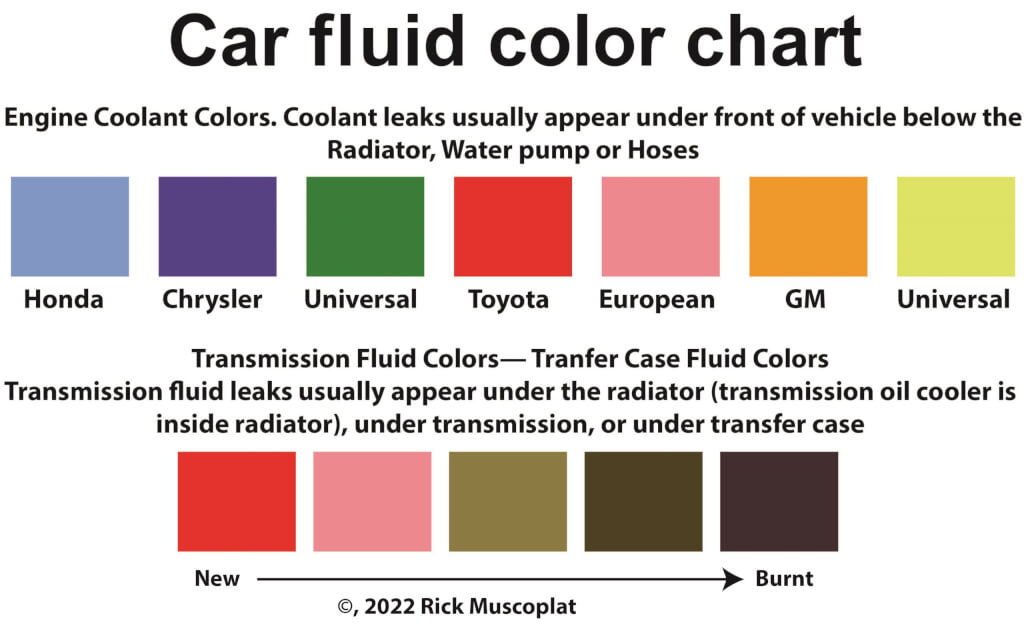
Transmission fluid is one of the few fluids where color really does tell you a lot.
Normal progression:
• Bright red → fresh
• Pink → aging
• Brown → overheated
• Dark brown/black + burnt smell → failing
Where Transmission Fluid Leaks
Where it leaks:
• Axle seals
• Cooler lines
• Transmission pan
From experience, once transmission fluid smells burnt, you’re already dealing with heat damage—not just old fluid.
What I look for:
• Slipping transmission
• Delayed shifting
• Fluid discoloration
How It Feels
Transmission fluid feels light and slippery, less viscous than motor oil. If it smells burnt, have it checked immediately.
Brake Fluid: Why Color Isn’t Always a Reliable Indication of Condition
This is where a lot of people go wrong.
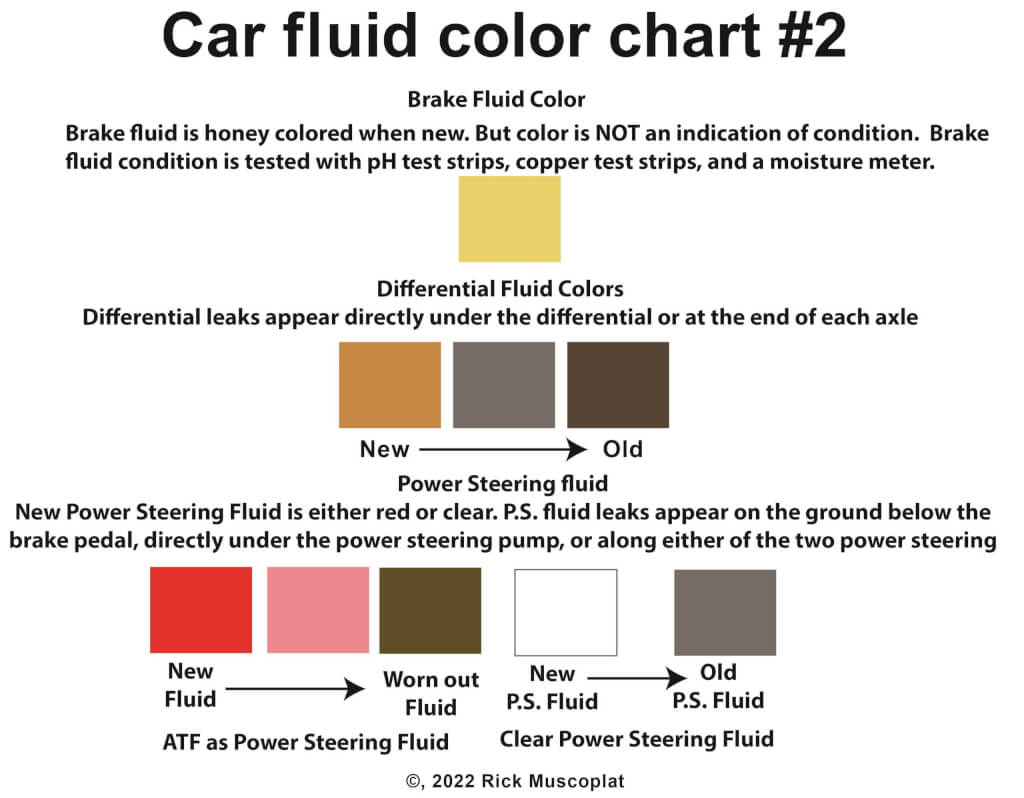
Brake fluid starts out:
• Clear to light amber
Over time, it can turn:
• Dark amber or brown
Or, it can stay honey colored and still contain moisture, copper, and have the wrong pH balance
So, color alone does NOT tell you brake fluid condition, and you should never get talked into changing your brake fluid based on a color chart.
There are reliable ways to test the condition of brake fluid:
Refractometer— measures the amount of water in the brake fluid
Moisture meter — an inexpensive tool with prongs that you dip into the fluid to test the moisture content.
Test strips: Some test strips measure the fluid’s copper content, which indicates that brazing from the steel lines has begun to seep into the fluid. Or strips can measure the fluid’s pH to indicate the condition of the corrosion inhibitors.
Where Brake Fluid Leaks
Check for leaks near the calipers, wheel cylinders, or along rusted brake lines. Puddles under each wheel or along the frame rails are strong indicators of a brake fluid leak.
Brake Fluid Feel and Texture
Brake fluid feels thin and slightly slippery, with no distinct smell. It absorbs moisture easily, so any leak must be repaired immediately.
Engine Oil Colors: What Dark Oil Really Means
Fresh motor oil is light amber to honey-colored. It darkens naturally with mileage, turning grayish or brown.
It is a common misconception that an oil’s color indicates how “dirty” it is. This is not true. This is a common tactic used by quick-lube shops and service centers to convince you that your engine needs a complete flush. The truth is: any motor oil will turn black after a short period of use. Some oils may stay “clean” longer than others, but eventually they will all turn black.
Motor oil turns dark due to:
1) Soot and combustion byproducts — Combustion byproducts are the #1 contributor to motor oil discoloration. All oil and all engines generate soot and fuel dilution during cold starts. If you do lots of cold starts and short trips, your oil will turn dark faster. That alone is not a reason to change your oil.
2) Oxidation — All motor oil darkens with exposure to heat and oxygen in the engine
3) Contamination from old oil — Engines retain .5-1 quart of oil after you’ve drained the oil from the pan.
4) Detergent Additives — Modern motor oils contain detergent and dispersant additives that suspend contaminants and prevent them from forming sludge on engine surfaces. Dark oil is often partly a sign these additives are working — they’re holding dirt and combustion byproducts in suspension rather than letting them stick to your engine internals.
The only way to accurately determine an oil’s lubricating value or contamination level is through a spectrographic oil analysis. Oil analysis is a common practice in commercial, industrial, and fleet operations and can also be used for passenger cars, light trucks, and other applications.
Common Oil Leak Locations
Look for leaks at the valve cover gasket, oil pan gasket, rear main seal, or timing cover. Oil drips directly below the engine are easy to spot.
Texture and Smell
Engine oil feels slick and slippery. It may have a fuel-like odor if diluted by unburned gasoline.
Power Steering Fluid: Red or Clear
Some vehicles use red (ATF-based) power steering fluid; others use clear or amber hydraulic fluid. Clear fluids eventually turn gray with age, which doesn’t necessarily mean they need to be changed.
Leak Locations
Power steering fluid leaks commonly occur at the pump, hoses, or steering rack located near the firewall or under the brake booster.
Feel and Odor
Power steering fluid feels lightly oily. If it smells burnt or looks dark brown, inspect the system for overheating or contamination.
Clear Water Under the Car: Normal Condensation
Don’t panic if you see clear, odorless water dripping near the passenger footwell area. That’s just air conditioner condensation, not a leak. This is the one puddle on your car fluid color chart you don’t need to worry about.
Puddle Size and What It Means
• 3 inches or larger: A serious leak—check fluid levels immediately and schedule service.
• 1–2 inches: A minor drip—monitor and inspect soon.
• Small drops: Often residue or condensation—observe for change.
Why Understanding Car Fluid Colors Matters
Knowing car fluid colors and using a car fluid color chart helps you act before a small leak becomes a costly repair. Whether you’re spotting a red transmission leak or a green coolant puddle, fluid condition by color is one of the simplest diagnostic tools any driver can use.
©, 2022 Rick Muscoplat
Posted on by Rick Muscoplat