
Stripped Oil Drain Plug Repair: The Two Permanent Fixes
How to Fix a Stripped Oil Drain Plug the Right Way
Quick Summary
There are only two reliable ways to fix a stripped oil drain pan: replace the oil pan or install a TimeSert insert. Oversized drain plugs, rubber expanders, epoxy, and Helicoils might slow the leak temporarily, but they don’t restore thread integrity, and they all fail eventually. Modern aluminum oil pans are especially vulnerable, which is why correct torque and proper repair methods matter more than ever.
Article
Learn the Two Best Ways to Fix a Stripped Oil Drain Plug (And What to Avoid)
After decades of turning wrenches, I can tell you that a stripped oil drain plug is one of the most common—and most misunderstood—oil change failures I see. It usually starts innocently enough: a plug that won’t snug up like it used to, a faint oil mist on the pan, or a drip that shows up a week after an oil change. Ignore it, and you’re looking at oil loss, underbody mess, and eventually engine damage.
What’s changed in recent years is how often this happens. Late-model vehicles use lightweight aluminum oil pans, and aluminum simply doesn’t forgive overtightening the way old stamped steel pans did. Once the threads start to pull, the clock starts ticking. That’s why choosing the correct stripped oil drain plug repair matters.
Option #1: Replace the Oil Pan (The Gold Standard Repair)
From a purely mechanical standpoint, replacing the oil pan is the best way to fix a stripped oil drain plug. You’re restoring the engine to factory condition with new threads, a properly sealed surface, and no compromises.
On some engines, oil pan replacement is straightforward: drain the oil, remove the pan bolts, clean the gasket surface, and reinstall. On others, it’s a nightmare involving subframe drops, exhaust removal, or engine support fixtures. Labor is the biggest downside, not the repair itself.
When access is reasonable, and the pan cost isn’t outrageous, I have no problem recommending replacement as the ultimate stripped oil drain plug repair. But it’s not always practical.
Why Oversized Drain Plugs Are a Short-Term Bandage at Best
I want to get this out of the way early: oversized self-tapping drain plugs are not a real fix. Yes, they’ll stop the leak—for a while. But every time you remove and reinstall one, the shallow threads they cut get weaker. Eventually, the plug stops sealing, or worse, pulls out completely. I’ve seen plenty of oil pans ruined because someone tried to save a few bucks on what should have been a permanent stripped oil drain plug repair.
If you’re going to drill and rethread a pan, you might as well do it right the first time with a timesert.
Option #2: Install a TimeSert Insert (My Go-To Repair)
When oil pan replacement doesn’t make sense, a TimeSert insert is hands-down my preferred solution for a stripped oil drain plug. This isn’t a wire coil or a temporary thread saver—it’s a solid steel insert that permanently restores the drain plug threads.
TimeSert inserts are designed to lock into the oil pan and provide full-depth
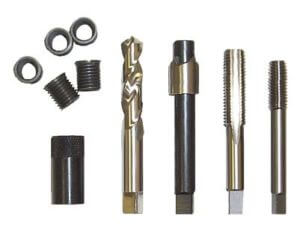
TimeSert Oil pan drain plug kit
internal threads for a standard drain plug. Once installed, they’re stronger than the original aluminum threads and seal exactly the way the factory intended. In my shop experience, this is the most reliable stripped oil drain plug repair short of replacing the pan.
What an Oil Drain Plug Insert Really Is (And Why TimeSert Wins)
A TimeSert is not a Helicoil. Instead of a spring-like wire insert, it’s a solid, machined sleeve that threads into the oil pan and mechanically seats against a counterbored shoulder. That shoulder is critical—it prevents movement, prevents leaks, and keeps the insert from backing out with the drain plug.
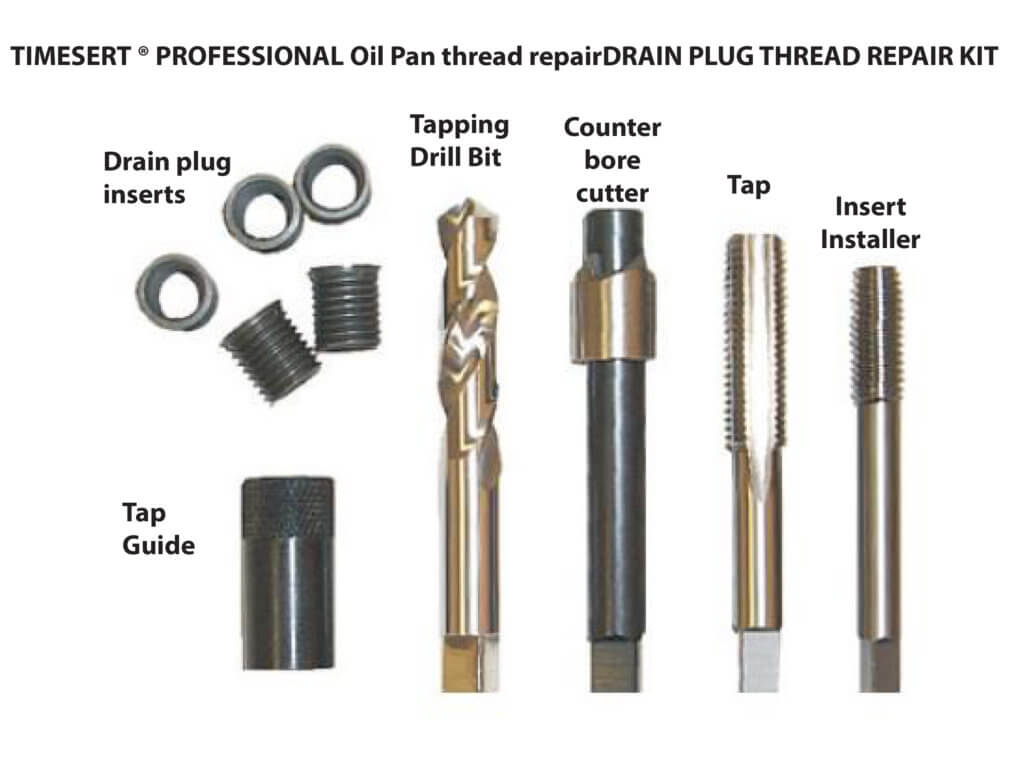
The kit includes a drill bit, a counterbore cutter, a tap, and an installation driver. Yes, it’s more expensive than a gimmick fix, but you’re paying for a permanent repair of a stripped oil drain plug, not a delay tactic.
How to Install a TimeSert for a Stripped Oil Drain Plug
When I perform this repair, I treat it like engine work—not a shortcut job.
1) I grease the drill flutes to capture aluminum chips and drill the damaged hole to the proper size.
2) Then I cut the counterbore so the insert sits flush with the pan surface.
3) After tapping the new threads, I clean everything meticulously,
4) Then I thread in the insert and drive it home until it locks in place.
Once installed, the drain plug torques normally, seals properly, and behaves exactly like a factory thread. That’s what a correctly stripped oil drain plug repair should do.
Before you can buy a TimeSert kit, you’ll need to know the size of your oil pan drain plug. See this chart to find the size. Then purchase a TimeSert kit here.
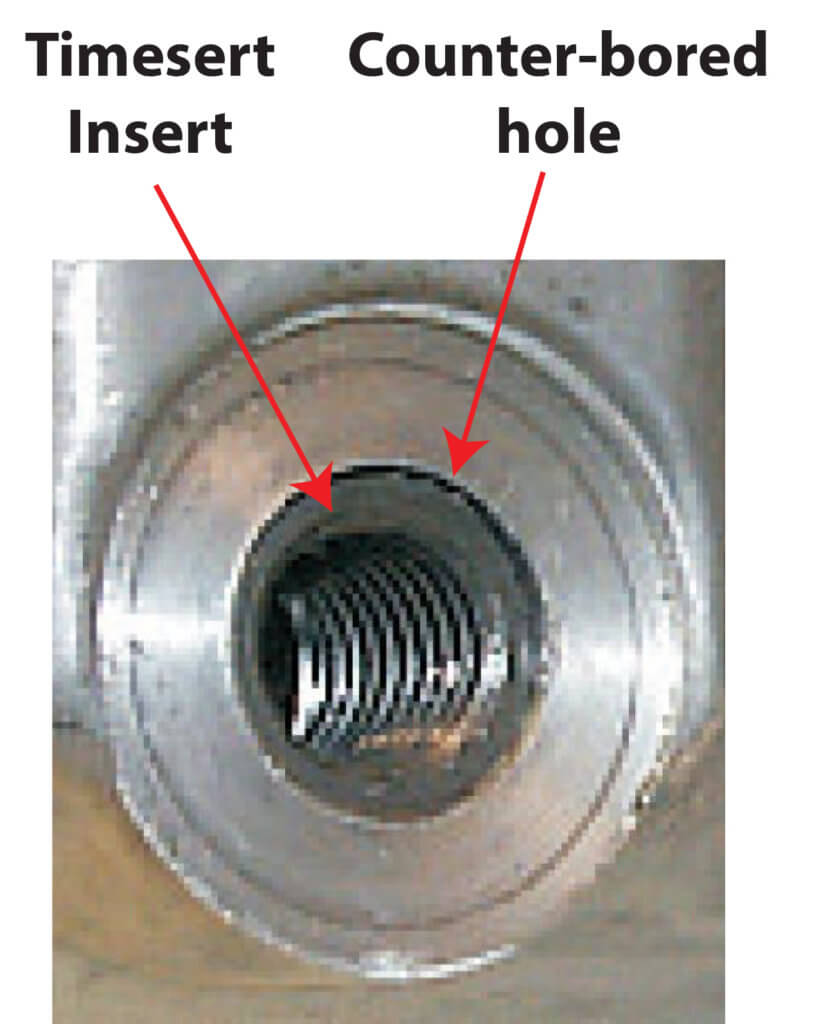
Timesert Installed
Other options for fixing a stripped drain plug
I don’t like any of these for long-term use, but I’ll include them with the pros and cons of each
Self Tapping Oversize drain plug
An oversized drain plug is a combination drain plug and tap that cuts new threads into your existing oil pan. You start the new plug into the old thread and tighten it. The tapered end literally
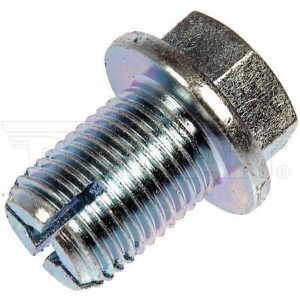
Dorman Brand Oversized Oil Drain Plug
cuts new threads into the oil pan, and the upper portion of the bolt seals against the pan. Does it work? Yes. Does it last? Yes, but only for about six oil changes. Here’s why:
1. To work properly, the oversized drain plug must be perfectly square to the stripped opening. If it’s not, the new bolt head won’t sit flush with your oil pan, and it won’t seal.
2. It cuts shallow threads. To tap a hole properly, you need to drill out the old threads and use a tap that cuts deep enough into the metal to make real threads. An oversized drain plug doesn’t cut deep enough threads. It’s a temporary fix.
Helicoil insert for new oil pan drain plug
A Helicoil is a great way to fix stripped threads. You drill 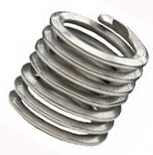 the stripped threads out, tap threads into the new hole, then thread in the heli-coil. This method works for most applications. But it isn’t the best solution for oil drain plugs. Here’s why. The Helicoil is constantly submerged in oil. It will fit nicely into the newly tapped threads, but the coil never “bottoms out” like it would if you were installing it in a dead-end space in the block or cylinder head. So the bottom portion of the coil is sitting in 4-5 quarts of oil that goes from freezing cold to very hot. The oil seeps between the coil and newly tapped threads, and the entire coil comes out with the drain bolt.
If you’re going to drill, cut new threads, and install an insert, use a Timesert instead of a Helicoil
Expanding rubber oil drain plug
Several companies make a rubber oil drain plug that 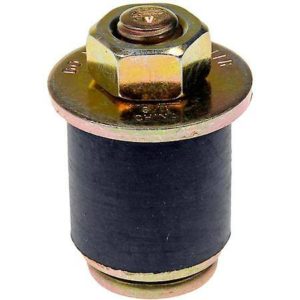 fits into the oil pan opening and expands as you tighten the hex nut. They’re cheap, but they don’t last. They’re a temporary fix. Yeah, they’ll get you out of a jam. Never count on a rubber plug for the long term.
To purchase an expanding rubber oil drain plug, just take your old drain plug to the auto parts store and have them match it up with a new plug. OR, refer to this oil drain plug size chart
JB Weld and oversized oil pan drain plug
I see this a lot on forums. Guys use the oversized bolt to tap new threads. Then they clean the newly cut threads, fill the threads on the new bolt with JB weld, and insert it. The theory is that the epoxy fills in the gaps. Personally, I think this is a stupid idea. I’d rather fix it right the first time.
Why we’re seeing more stripped drain pans these days
Carmakers have switched to lighter-weight aluminum oil pans, which have dramatically increased the number of stripped drain pans. Other steel oil pans could handle a bit of overtightening without stripping, but the aluminum pans can’t. Using a torque wrench to tighten an oil drain plug is critical on an aluminum pan.
1. Over-Tightening
One of the most common causes of stripped oil drain plugs is over-tightening. Many people mistakenly believe that the tighter the plug, the better the seal. However, over-tightening can damage the threads on the plug and the oil pan, leading to stripping. This is particularly problematic with aluminum oil pans, which are softer than steel and more prone to damage.
2. Worn Threads
Aluminum drain pan threads wear over time due to repeated use. This wear and tear can weaken the threads, making them more susceptible to stripping. Using improper tools or techniques can accelerate this wear, leading to frequent stripped plugs.
©, 2019 Rick Muscoplat
Posted on by Rick Muscoplat