
How to Perform a Crankshaft Position Sensor Relearn Procedure
Step-by-Step Crankshaft Position Sensor Relearn Process
Quick Summary
Any time you replace a crankshaft position sensor, you must perform a relearn procedure. That step allows the ECM to recalibrate its understanding of crankshaft-to-camshaft timing. Skip it, and you can end up chasing misfires, poor performance, or false trouble codes. The relearn doesn’t fix mechanical issues like timing chain stretch—but it tells the computer how to compensate for them. In my experience, this is one of the most overlooked but critical steps in modern engine diagnostics.
Why the Crankshaft Position Sensor Relearn Procedure Is Critical
Replacing the sensor without doing the relearn is like installing a new distributor and never setting the timing. The crankshaft position sensor feeds the ECM precise data about crankshaft position and speed. But here’s the part many people miss—the ECM also learns the relationship between the crankshaft and camshaft over time. That relationship changes as timing chains stretch and components wear.
When you install a new sensor, that learned relationship is lost. The crankshaft position sensor relearn procedure allows the ECM to rebuild that data so it can:
• Accurately detect misfires
• Properly control ignition timing
• Maintain smooth engine operation
Without that relearn, I’ve seen engines come back with P0300 random misfire codes—even though nothing is mechanically wrong.
When I Always Perform a Crankshaft Position Sensor Relearn Procedure
Over the years, I’ve learned not to cut corners here. I automatically perform
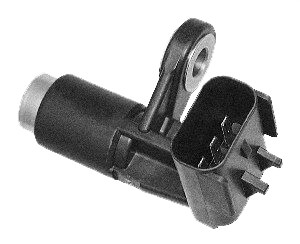
Crankshaft position sensor
a relearn anytime I’ve touched anything that affects crank or cam timing.
That includes:
• Replacing the crank sensor
• Installing a new engine or ECM
• Replacing timing chains, gears, or tensioners
• Diagnosing unexplained misfires
In fact, many manufacturers now recommend doing a crankshaft position sensor relearn procedure before diagnosing a P0300 code, just to rule out learned timing discrepancies .
What the Relearn Is Actually Doing
This is where I see a lot of confusion, even among experienced techs. The relearn process allows the ECM to:
• Measure crankshaft acceleration patterns
• Compare them to camshaft timing signals
• Build a “misfire profile” unique to that engine
You may hear it called:
• Misfire profile relearn
• Toothed wheel correction
• Adaptive relearn
Different names—but the same idea. The ECM is recalibrating how it interprets crankshaft signals to detect even slight variations accurately.
How I Perform a Crankshaft Position Sensor Relearn Procedure
Step 1: Hook Up a Bi-Directional Scan Tool — This isn’t a guess-and-go procedure. I always use a professional scan tool that can command the relearn.
I navigate to:
• Crank relearn
• Misfire relearn
• CKP variation relearn
Depending on the vehicle, it might be labeled differently.
Step 2: Get the Engine to Operating Temperature — I never attempt a crankshaft position sensor relearn procedure on a cold engine. The ECM needs stable operating conditions to build accurate data.
So:
• Warm the engine fully
• Verify no active trouble codes (other than possibly CKP-related)
Step 3: Follow the RPM Procedure — This is where things get interesting. Most relearn procedures require a controlled increase in engine speed.
• Put the transmission in Park or Neutral
• Apply the brake firmly
• Snap the throttle to a specified RPM (often 3,000–4,000 RPM)
The ECM watches crankshaft acceleration during that event and builds its internal profile. The scan tool will guide you through this process step-by-step .
Step 4: Confirm Completion — Once the crankshaft position sensor relearn procedure is complete, the scan tool will confirm it.
At that point, I:
• Clear any stored codes
• Road test the vehicle
• Recheck for misfires or pending codes
Common Mistakes I See All the Time
I’ve seen more comebacks from skipped relearns than from bad parts. The most common mistakes are:
• Skipping the relearn entirely — Installing a new crankshaft position sensor is not plug-and-play.
• Attempting it without a proper scan tool
• Performing it with a cold engine
• Ignoring existing trouble codes
One of the biggest misconceptions is thinking the engine will “figure it out on its own.” It won’t. The ECM needs to relearn the data.
What Happens If You Skip the Relearn
Here’s what I’ve personally seen in the shop when the crankshaft position sensor relearn procedure is ignored:
• Persistent P0300 random misfire codes
• Rough idle or hesitation
• Poor fuel economy
• False misfire detection
And the worst part? You can waste hours chasing problems that don’t actually exist.
Final Thoughts From the Shop
When I finish installing a crankshaft position sensor, I don’t hand the keys back until I’ve completed the relearn procedure. That’s just how I was trained—and it’s saved me countless headaches.
If you take anything from this, it’s this:
The relearn isn’t optional—it’s part of the repair.
Do it right, and the engine runs as it should. Skip it, and you’re setting yourself up for misdiagnosis.
©, 2020 Rick Musccoplat
Posted on by Rick Muscoplat