
How to perform a GM throttle body relearn procedure
How to Perform a GM Throttle Body Relearn Procedure (The Right Way)
Quick Summary
Why a Throttle Body Relearn Matters on GM Vehicles
Over the years, I’ve diagnosed countless GM vehicles with rough idle complaints that traced back to one overlooked step: skipping the throttle body relearn. General Motors was among the earliest manufacturers to adopt electronic throttle control, often called “drive-by-wire fully.” In these systems, the accelerator pedal no longer connects to the throttle blade with a cable. Instead, the pedal sends an electronic signal to the powertrain control module (PCM), which then commands a motor inside the throttle body to open or close the throttle plate.
That system works extremely well—until learned data gets wiped out.
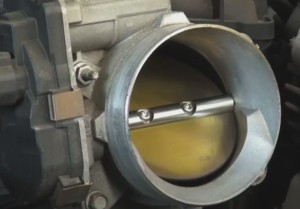
As a GM engine accumulates miles, carbon buildup forms around the throttle plate and bore. The PCM compensates by gradually adjusting the throttle plate’s “home” position to maintain a stable idle. This adaptive learning happens quietly in the background. However, when you disconnect the battery, install a new battery, replace the throttle body, or sometimes even clear adaptive memory with a scan tool, the PCM loses those learned values.
At that point, the engine no longer knows where the throttle plate should rest at idle. That’s when you see idle flare, stalling, surging, or a high idle condition. Performing a GM throttle body relearn procedure forces the PCM to establish a new baseline idle position immediately, instead of slowly relearning it over days of driving.
What Happens If You Skip the GM Throttle Body Relearn Procedure?
I’ve seen drivers ignore this step and hope the vehicle “figures it out.” Sometimes it does—but not without consequences. Without a proper throttle body relearn, the PCM hunts for the correct idle airflow. You may notice fluctuating idle speed, a rough idle when cold, stalling at stoplights, or intermittent check-engine lights.
Yes, the PCM will eventually relearn on its own, but that process can take a week or more of mixed driving. During that time, the vehicle can feel unreliable. Performing the GM throttle body relearn procedure takes only a few minutes and eliminates that frustration.
How the GM Throttle Body Relearn Procedure Actually Works
When you perform a throttle body relearn, you’re giving the PCM controlled run-time periods where it can observe airflow, engine load, and idle speed without driver input. Those timed idle sessions allow the PCM to recalibrate the throttle blade’s minimum air position. This is especially important on a brand-new throttle body, where the physical tolerances differ from those of the old unit.
The procedure below applies to many GM vehicles that do not require a scan tool relearn. Some newer models may require a bi-directional scan tool, but this manual GM throttle body relearn procedure works for a wide range of GM cars and trucks.
Step-by-Step GM Throttle Body Relearn Procedure
I always start with a cold engine if possible, because it gives the PCM a clean learning environment.
1) Start the engine and let it idle in Park for three full minutes — During this time, it’s normal for the idle speed to be higher than usual or fluctuate slightly. Don’t touch the accelerator pedal. Let the engine idle on its own.
2) After three minutes, turn the engine off and leave the key off for at least 60 seconds — This power-down period allows the PCM to store what it just learned.
3) Next, restart the engine and again let it idle in Park for another three minutes — During this second idle period, the idle should begin to stabilize. It’s not uncommon for a check engine light to appear temporarily. If you have a scan tool and see throttle-related codes, clear them after the relearn cycle is complete.
If the idle still doesn’t feel quite right, take the vehicle for a short drive. Drive at speeds above 44 mph and include several gentle acceleration and deceleration cycles. This allows the PCM to fine-tune airflow under real-world conditions. After that drive, perform one final three-minute idle in Park.
At this point, the throttle body relearn should be complete, and idle speed should return to normal.
How to Tell If the Throttle Body Relearn Was Successful
A successful GM throttle body relearn procedure produces a smooth, stable idle with no surging or stalling. The engine should settle into a consistent idle speed within a few seconds of startup. Throttle response should feel predictable, and the engine should no longer hunt for idle when shifting into gear.
If problems persist, I always recommend inspecting for vacuum leaks, dirty throttle bores, or wiring issues at the throttle body connector. A relearn can’t compensate for mechanical or electrical faults.
When a Scan Tool Is Required for a GM Throttle Body Relearn
While this manual throttle body relearn works on many GM platforms, some newer vehicles require a scan tool to initiate the relearn sequence. If the vehicle sets persistent throttle actuator codes or refuses to stabilize idle, that’s a sign the PCM wants a commanded relearn. In those cases, a professional-grade scan tool with GM software access is necessary.
Final Thoughts From the Shop
In my experience, the GM throttle body relearn procedure is one of the most overlooked but critical steps after battery replacement or throttle body service. It costs nothing, takes only minutes, and prevents days of annoying drivability issues. Any time adaptive memory is lost, a proper throttle body relearn should be part of the repair—not an afterthought.
©, 2015 Rick Muscoplat
Categories
- Acadia
- Aura
- Aveo
- Buick
- Cadillac
- Canyon
- Chevrolet
- Cobalt
- Colorado
- Corvette
- CTS
- Cutlass
- Denali
- DTS
- Enclave
- Envoy
- Envoy
- Equinox
- Escalade
- ESV
- G6
- GMC Trucks
- HHR
- Impala
- LaCrosse
- LaSabre
- Lucerne
- Lumina
- Malibu
- Monte Carlo
- Oldsmobile
- Park Avenue
- Pontiac
- Rainier
- Regal
- S-10
- Saturn
- Silverado
- Sonoma
- SRX
- SSR
- STS
- Suburban
- Tahoe
- Terrain
- Terraza
- Torrent
- Trailblazer
- Traverse
- Uplander
- Venture
- Verano
- XLR
- XLR-V
- Yukon