
Seatbelt Pretensioner Failure: Symptoms, Causes, and Repair
How a Seatbelt Pretensioner Works During a Crash
Quick Summary
A seatbelt pretensioner’s job is simple but extremely important: it instantly tightens the seatbelt during a collision, pulling the driver or passenger firmly into the seat before the airbag deploys. This reduces forward motion and improves the airbag’s effectiveness.
Modern vehicles use either retractor-mounted pretensioners, buckle-mounted pretensioners, or a combination of both. Each design uses a small pyrotechnic gas generator—similar in concept to an airbag inflator—to rapidly retract the belt.
The most important thing to understand is this: a deployed or failed pretensioner cannot be repaired or bypassed by DIYers. It must be replaced with a new unit or a rebuilt unit. Attempting to bypass it with resistors or removing internal components is dangerous and illegal in many areas. Proper diagnosis and replacement restore the safety system to factory operation.
Article
Seatbelt Pretensioner: How It Works, Why It Fails, and How to Relace It
As someone who has spent decades diagnosing automotive safety systems,
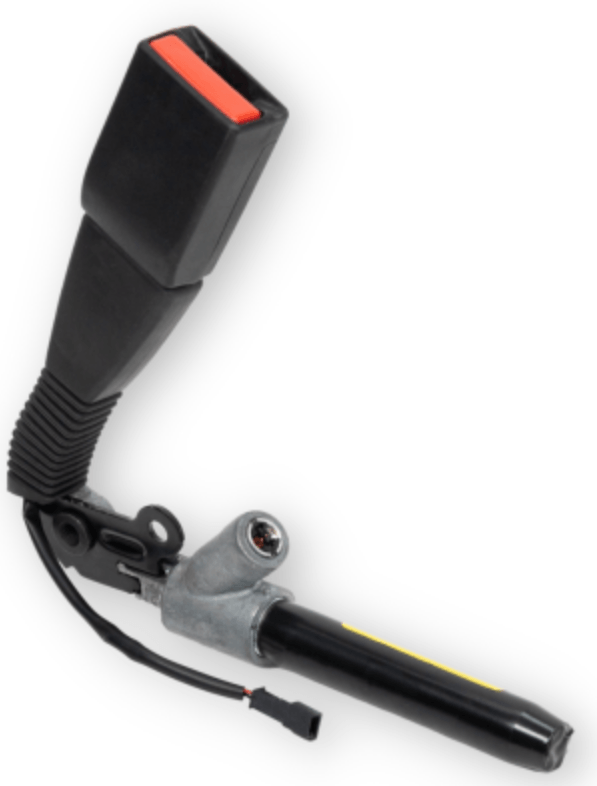
Buckle-style seatbelt pretensioner
I can tell you that the seatbelt pretensioner is one of the most misunderstood safety components in modern vehicles. Most drivers know airbags deploy in a crash, but very few realize that it actually activates first, tightening the belt in a fraction of a second to position the occupant properly before the airbag inflates.
In this guide, I’ll walk you through exactly how a seatbelt pretensioner works, the different types used in vehicles, the most common causes of failure, and what’s involved in diagnosing and replacing one.
How a Seatbelt Pretensioner Works
The seatbelt pretensioner is designed to eliminate slack in the belt during a crash. When a collision occurs, the vehicle’s airbag control module detects the sudden deceleration through crash sensors and immediately triggers several safety systems.
The first system that activates is the seatbelt pretensioner.
Inside the pretensioner is a small pyrotechnic gas generator, very similar to the one found in an airbag inflator. When the crash sensors signal deployment, the gas generator ignites, producing a rapid burst of gas. That gas drives a mechanical system that tightens the seatbelt.
The goal is simple: pull the occupant firmly back into the seat before the airbag deploys. By doing this, the pretensioner ensures the occupant is in the correct position for the airbag to cushion the impact rather than cause injury.
Without the seatbelt pretensioner, the body would move forward before the belt locks, reducing the airbag’s effectiveness.
The Three Main Types of Seatbelt Pretensioner Designs
Over the years, automakers have used several designs for the seatbelt pretensioner. Although they all perform the same job, they operate in slightly different ways.
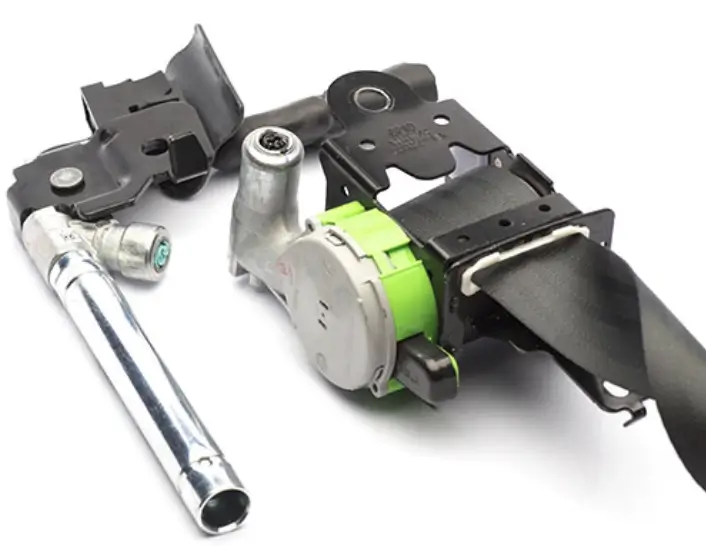
• Retractor-Mounted Pretensioners — One of the most common designs places the seatbelt pretensioner inside the seatbelt retractor. In this design, the gas generator pushes steel balls or a piston through a tube. That movement rotates a ring gear attached to the seatbelt spool. When the gear rotates, the spool rapidly retracts the belt, tightening it against the occupant. It’s an elegant design because it works directly with the existing seatbelt mechanism.
• Buckle-Mounted Pretensioners — Another design places the seatbelt pretensioner on the buckle side of the seatbelt. Instead of retracting the belt spool, the gas generator drives a piston inside a cylinder connected to the buckle by a cable. When the piston moves, it pulls the buckle downward toward the seat, tightening the belt across the occupant’s body. This design is commonly found in vehicles from manufacturers such as Ford.
Buckle-style seatbelt pretensioner
• Dual Pretensioner Systems — Some vehicles use two pretensioners on the same seatbelt—one in the retractor and another in the buckle assembly. This dual system provides even tighter control of the occupant’s movement during a crash. Higher-end vehicles often use this design for improved crash protection.
The Most Common Causes of Seatbelt Pretensioner Failure
Although the seatbelt pretensioner is designed to last the life of the vehicle, failures do happen. In my experience, these are the most common reasons.
Collision Deployment — The most obvious cause is a crash. Once a seatbelt pretensioner deploys, it cannot be reused. The gas generator has already fired, and the mechanism is permanently locked. The entire pretensioner assembly must be replaced or rebuilt.
Electrical Circuit Problems — The pretensioner is part of the vehicle’s airbag system. It connects to the airbag control module through a wiring harness. Common electrical failures include:
• High resistance in connectors
• Damaged wiring under the seat
• Corroded connectors
• Loose terminals
When this happens, the vehicle will usually display an airbag warning light.
Faulty Crash Sensors or Airbag Module
Sometimes the seatbelt pretensioner itself is fine, but the airbag module detects an electrical issue in the circuit and sets a fault code. Professional scan tools can identify whether the problem is the pretensioner or the wiring.
Water Damage — Water intrusion—especially from flooded vehicles—can damage pretensioner connectors and trigger faults.
How to Diagnose a Seatbelt Pretensioner Problem
Diagnosing a seatbelt pretensioner problem usually starts with a scan tool. When the airbag warning light is on, the airbag control module stores a diagnostic trouble code indicating the fault. Common codes include:
• Pretensioner circuit high resistance
• Pretensioner circuit low resistance
• Pretensioner deployment detected
Technicians often use a diagnostic resistor to simulate the pretensioner during testing. If the code disappears with the resistor installed, the pretensioner itself is faulty. However, that resistor must only be used for testing
Leaving it installed permanently to bypass the pretensioner is extremely dangerous and illegal in many areas.
How to Replace a Seatbelt Pretensioner
Replacing a seatbelt pretensioner is usually straightforward, but it must be done carefully because you’re working with a pyrotechnic device.
For more information on seatbelt pretensioner rebuilding, see this post
The typical steps include:
• Disconnect the vehicle battery.
• Wait several minutes to allow the airbag system to power down.
• Remove interior trim panels around the seatbelt mount.
• Disconnect the pretensioner electrical connector.
• Remove the mounting bolts.
• Install the new pretensioner assembly.
• Clear airbag codes with a scan tool.
In many cases, the seatbelt pretensioner and seatbelt assembly are replaced together.
Final Thoughts From a Technician
After working on thousands of vehicles, I can confidently say the seatbelt pretensioner is one of the most important safety devices in your car. It works silently in the background, but when a crash happens, it can mean the difference between a survivable accident and a serious injury.
If your airbag light is on or a seatbelt pretensioner fault appears in the scan data, don’t ignore it. That warning means part of the vehicle’s safety system is disabled.
And when it comes to the seatbelt pretensioner, the rule is simple:
diagnose it correctly and replace it properly—never bypass it.
©, 2026 Rick Muscoplat
Posted on by Rick Muscoplat