
Bad Car Alternator Symptoms You Should Never Ignore
How to Diagnose Bad Car Alternator Symptoms Fast
Quick Summary
The most common bad car alternator symptoms include dim or flickering lights, a battery warning light, repeated dead batteries, electrical failures, strange noises, and stalling.
But here’s what most people miss:
• Alternators rarely fail on their own
• High resistance, heat, and overload are the real root causes
• If you don’t diagnose the system properly, you’ll replace the alternator—and it will fail again
I’ll walk you through exactly how I identify bad car alternator symptoms and how I pinpoint the root cause every time
The Most Common Bad Car Alternator Symptoms I See
1. Battery Warning Light (Don’t Ignore It) — The battery or ALT light is often the first clue. But here’s the mistake most people make—they assume it means a bad battery. It doesn’t.
It means the charging system isn’t working correctly, which can include the alternator, wiring, or voltage regulator.
2. Dim or Flickering Lights — One of the most reliable bad car alternator symptoms is unstable lighting.
• Headlights dim at idle
• Interior lights flicker
• Brightness changes with RPM
That’s a classic sign of inconsistent alternator output.
3. Dead Battery (That Keeps Coming Back) — If you’ve replaced the battery and it still goes dead, stop right there. That’s not a battery problem—that’s one of the most common bad car alternator symptoms. The alternator isn’t recharging the battery, so it’s doing all the work until it dies.
4. Electrical Systems Acting Weird — When voltage drops, everything electrical suffers:
• Slow power windows
• Weak blower motor
• Radio cutting out
• Displays flickering
These are early bad car alternator symptoms that many people ignore.
5. Slow Cranking or No Start — A weak charging system leads to a discharged battery.
You’ll notice:
• Slow cranking
• Click/no start
• Frequent jump-starts
Again, this is often misdiagnosed—but it’s one of the most important bad car alternator symptoms.
6. Grinding or Whining Noise — This is where experience matters. A whining or grinding noise from the alternator area usually means:
• Worn bearings
• Belt issues
• Internal failure
That’s a mechanical failure—not just electrical.
7. Burning Smell (This One Is Serious) — If you smell burning rubber or electrical insulation, don’t ignore it.
That means:
• Belt slipping
• Alternator overheating
• Internal windings failing
This is one of the most dangerous bad car alternator symptoms.
8. Engine Stalling While Driving — This is the one that strands people. Once the alternator stops producing power:
• The battery drains
• Voltage drops
• The engine stalls
At that point, you’re done driving.
My Professional Diagnostic Strategy (How I Confirm the Cause)
Here’s where most DIYers and even some techs get it wrong—they replace the alternator without testing the system. That’s why failures come back.
Step 1: Verify Charging Voltage — I always start with a multimeter.
Engine off → ~12.6V
Engine running → 13.5–14.5V
If it’s below that, I know I’m dealing with bad car alternator symptoms.
Step 2: Check Voltage Drop (This Is Critical) — This is where I separate amateurs from pros.
I check:
• Battery terminals
• Grounds
• Charging cables
High resistance is the #1 cause of alternator failure—not the alternator itself.
Even clean-looking terminals can have hidden resistance.
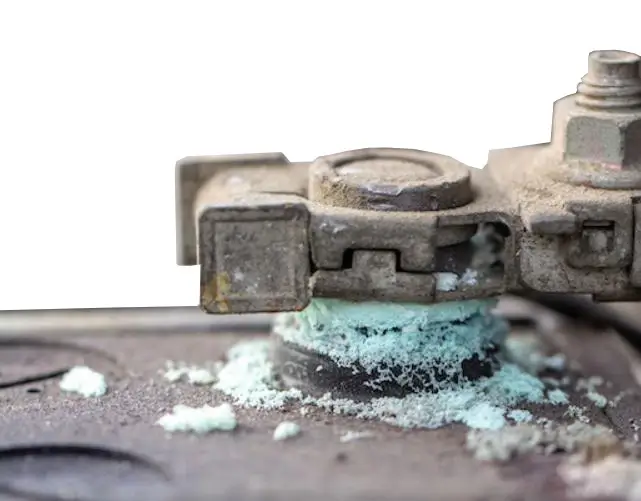
Corroded battery terminals due to a cracked battery case and a battery leak
What causes repeated alternator failures?
• A dead battery cell— This is the #1 cause of repeat failures. A dead cell forces the alternator to constantly recharge the battery, causing it too overheat.
• Excessive resistance— Excessive resistance. In addition to battery terminal corrosion, internal battery resistance can significantly shorten your alternator’s lifespan. Even if your battery voltage tests at or near a full state of charge, internal resistance may still be too high.
What Actually Causes Bad Car Alternator Symptoms
From my experience, alternators fail for a reason:
• High electrical resistance
• Excessive heat
• Overloading (charging dead batteries)
• Worn belts or tensioners
• Corroded connections
Alternators don’t just “go bad”—they get killed.
Stop-and-Go Driving and High Electrical Loads
Modern vehicles are packed with electrical accessories, and that matters. While a typical alternator may be rated for 150–160 amps at highway speeds, it can produce only a fraction of that output at idle.
In heavy traffic, with headlights, wipers, climate control, seat heaters, and defrosters running, the alternator often can’t keep up. The battery fills the gap, discharging repeatedly. Those constant discharge-and-recharge cycles generate heat and dramatically shorten alternator life.
This driving pattern is an overlooked contributor to bad alternator symptoms and one of the quieter, most common causes of alternator failure.
How a Worn Belt Tensioner Destroys Alternators
Engines don’t produce smooth, steady rotation—they create pulses every time a cylinder fires. The harmonic balancer and the damper inside the automatic belt tensioner are designed to absorb those pulses.
Once the tensioner damper wears out, usually before 100,000 miles, the belt begins to oscillate. That vibration is transmitted directly to the alternator bearings, causing premature wear. I’ve seen brand-new alternators fail simply because a worn tensioner was left in place.
If you’re seeing repeat bad alternator symptoms, always inspect the belt and tensioner.
My Bottom Line on Alternator Failures
Alternators fail because something else in the system is wrong. Heat, resistance, vibration, and overload account for nearly all cases I see. Understanding the most common causes of alternator failure lets you fix the real problem—not just replace parts.
When you address the root cause, alternators last longer. When you don’t, they fail again and again.
©, 2020 Rick Muscoplat
Posted on by Rick Muscoplat