
Black Motor Oil Explained: Common Misconceptions
Why Motor Oil Turns Black (And Why It’s Not Always Bad)
Quick Summary
Black motor oil is normal in many cases, especially in modern engines.
• Oil turns dark due to oxidation, heat, and contamination.
• Detergent additives are designed to make oil turn black by holding contaminants in suspension.
• Rapidly turning black can indicate fuel dilution, soot, or contamination issues.
The only way to know if black motor oil is still good is through motor oil analysis—not color alone.
The Truth About Black Motor Oil: What Causes It and What It Really Means
I get this question all the time: “Why is my oil black already? I just changed it.” And I’ll be honest—most people assume black motor oil means it’s bad. That’s not just wrong… It’s one of the biggest misconceptions I see in automotive maintenance.
So let me walk you through exactly what causes black motor oil, what it actually means, and when you should (and shouldn’t) be concerned.
Why Black Motor Oil Happens So Quickly
Here’s something most people don’t realize: your engine never fully drains during an oil change. Even after you pull the drain plug, there’s still oil trapped in:
• Turbocharger lines
• Valve train components
• Hydraulic lifters
• Variable valve timing (VVT) systems
So when you add fresh oil, it immediately mixes with the old oil still inside the engine.
How much oil stays in the engine when you drain the oil pan?
The image below shows the oil capacity specification for a 2010 Acura TSX with the 2.4L engine (no Turbo)
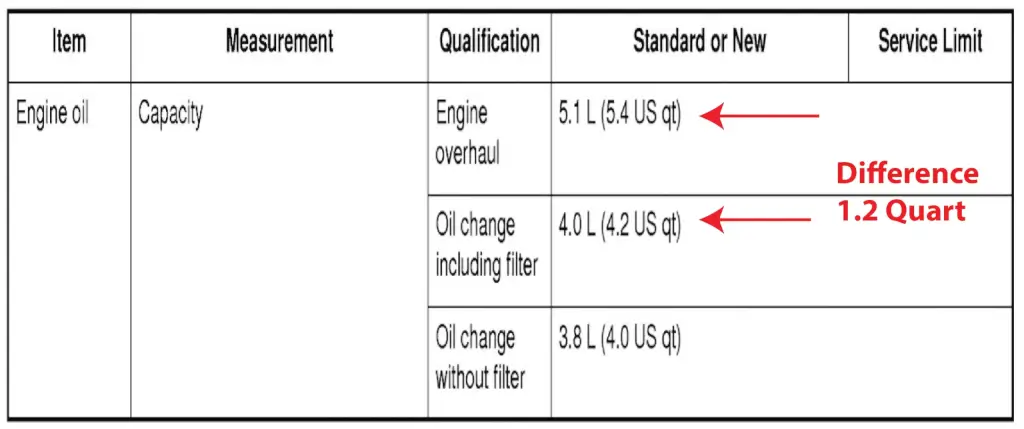
Notice the 1.2-quart difference between how much oil the engine requires when performing a complete overhaul versus the oil required during an oil change. In other words, a bit over a full quart of oil remains in the engine AFTER you’ve drained the oil from the pan.
Now, the amount remaining also depends  on how long you let the engine drain. Some oil will always remain in the lifters, oil pump, VVT actuators, and VVT solenoids. However, some oil will drain down if you let it sit for a while. You’ve seen this before when you try to start an engine that’s been sitting for six months or more. It rattles like a string of tin cans behind a “Just Married” car. That’s proof that the oil has drained from the lifters because the rattling noise stops as oil pressure builds and refills those components.
That’s why I let the oil drain a bit longer than just waiting until just a thin stream comes out of the oil pan drain. I let it drain for about 10 minutes.
The Real Reasons Motor Oil Turns Black
Now let’s get into the actual science behind black motor oil—because this is where most people get it wrong.
1. Oxidation from Heat — Oil naturally darkens as it oxidizes. Heat and oxygen chemically break down the oil, and the higher the temperature, the faster it happens. This is a completely normal process.
That means black motor oil doesn’t automatically mean failure—it often means the oil is doing its job.
2. Detergents Doing Their Job — Modern engine oils are loaded with detergents and dispersants.
Their job is to:
• Capture carbon deposits
• Suspend soot and contaminants
• Prevent sludge formation
And here’s the key point: Those contaminants are what turn oil dark.
So when you see black motor oil, what you’re often seeing is a clean engine and effective oil chemistry.
3. Combustion Byproducts (Soot and Carbon) — Every engine produces carbon. Some of it gets past the piston rings (blow-by) and ends up in the oil. Diesel engines, in particular, will turn the oil black almost immediately due to soot loading. Gas engines do it too—just more slowly.
4. Contamination — Black motor oil can also be caused by contamination, including:
• Dirt (silicon)
• Fuel dilution
• Moisture
• Coolant leaks
Contamination is one of the most common reasons oil changes color, especially when solid particles or other fluids enter the system. This is where color alone becomes misleading.
5. Additives and Oil Formulation — Not all oils start the same color. Some oils are naturally darker depending on:
• Base oil type
• Additive package
• Viscosity grade
That means black motor oil might simply reflect how the oil was formulated and how it’s reacting in your engine.
When Black Motor Oil Is Normal (And Nothing to Worry About)
In my experience, these situations are completely normal:
• Oil turns dark shortly after an oil change
• High-mileage engines
• Engines with strong detergent oils
• Diesel engines (almost immediate black motor oil)
• Engines that run hot but within normal limits
If everything else is operating correctly, black motor oil is often a good sign—not a bad one.
When Black Motor Oil Signals a Problem
Now here’s where I start paying attention. Black motor oil becomes a concern when it’s paired with other symptoms:
• Rapid Darkening + Fuel Smell — This can indicate fuel dilution from leaking or dirty injectors.
• Thick, Sludgy Oil — That’s oxidation gone too far—usually from overheating or poor maintenance.
• Gritty Texture — Indicates dirt contamination, often from a bad air filter.
• Milky or Gray Appearance — This suggests coolant contamination—not just black motor oil.
Why You Should Never Judge Oil by Color Alone
This is the biggest mistake I see. Color tells you something—but not enough.
Oil color change only indicates that the oil’s chemistry has been altered, not that it has failed.
• Black motor oil does NOT mean bad oil.
• The Only Way to Know for Sure: Motor Oil Analysis
• If I really want to know what’s going on, I don’t look at color—I test it.
Motor oil analysis tells me:
• Wear metals
• Fuel dilution levels
• Contamination
• Additive condition
• Viscosity changes
That’s how you separate normal black motor oil from a real problem.
Final Thoughts: Black Motor Oil Isn’t the Enemy
If there’s one takeaway I want you to remember, it’s this:
• Black motor oil is usually a sign that the oil is doing its job.
• It’s capturing contaminants, protecting your engine, and keeping everything clean.
• But—and this is important—color alone doesn’t tell the whole story.
• If you want real answers, you need real data.
©, 2024 Rick Muscoplat
Posted on by Rick Muscoplat