
What Causes Brake Rotor Warp: Debunking the Myth
Brake Rotor Warp: Debunking the Common Misconceptions
I’m here to set the record straight about brake rotor warp. If you’ve ever experienced brake pedal pulsation or “judder,” you might have heard the term “warp” thrown around. But let me tell you, brake rotor warp is a myth. It’s time to stop believing that heavy braking can warp a brake rotor.
Brake Rotor Warp Doesn’t Happen
Here are the cold, hard facts about brake rotor warp and brake system temperatures. There isn’t a street vehicle on planet Earth that can produce the kind of temperature required to warp a brake rotor; race cars, yes; street cars, no.
BRAKE TEMPERATURE FACTS
It takes at least 1,000° – 1,200°F even to begin to distort a cast iron rotor. That is well above the normal operating temperature of most brake rotors, which typically hover between 300°F during normal braking and around 500°F during heavy braking. Just to clarify, I’m talking about street brake pads and rotors, not racing pads or braking temperatures during a race.
Plus, brake rotor distortion is different than what most people think of when they use the term brake rotor warp. Distortion is temporary, and unless rapidly cooled by water, the rotor will return to its normal shape. To permanently warp a rotor, however, you would need temperatures over 1,800°F, and, as I said above, you won’t find that kind of heat with ordinary street brakes.
Brake pads simply can’t generate the heat needed to warp a brake rotor.
At 550°F – 650°F— The organic binding resins in the friction material begin to melt and smear, creating a lubrication effect that reduces braking. The melted resin is what causes a “glazed” pad. At higher temperatures, the melting resins and the metallic elements begin to vaporize, resulting in “off-gassing. ” Off-gassing also acts as a lubricant, causing brake fade or loss of braking power. You can smell the melting brake pad resin odor in this temperature range.
At 850°F— Brake pads begin to smoke. Again, 850°F is not hot enough to warp a rotor.
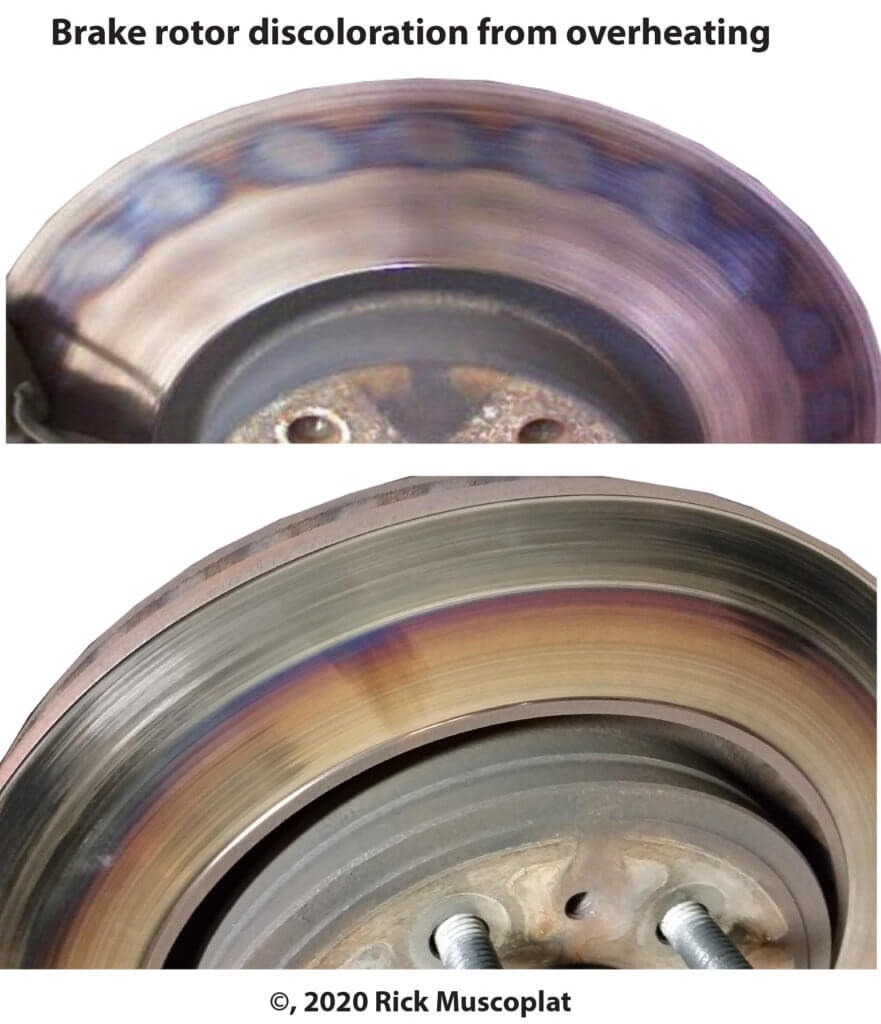
At 1,100°F— The brake pad friction, the material begins to oxidize (burn up). The rotors react with moisture and oxygen in the air to form iron oxide, causing blue spots on the rotor.
At 1,250°F—Brake rotors turn cherry red.
At 1,400°F you’re finally reaching the point where you overheat the rotor to the point where it can soften.
In other words, long before your vehicle has reached the temperature needed to warp a rotor, your pads would be burned up, and your rotors would have blue marks on them.
To warp a rotor, you have to change the metallurgy, and that takes almost 2,000°F. There’s no street vehicle braking system that can generate that kind of heat

Whitepaper by Carroll Centric Smith, Consulting Engineer a StopTech Brakes, dispelling the myth that brake rotors warp from heat. Click on the image to download the entire PDF

Click on the image to download the PDF of Mark Phillips’ article that dispels the myth of brake rotor warp
What are the melting temps of brake rotors?

Click on the image to download Stop the Warped Rotor Myth and Service Brakes the Right Way by Chris Crowell
In order for a brake rotor to warp, it must soften. You’d have to generate brake temperatures of at last 1,800°F to cause warp. If that happened, you’d also see rotor discoloration and brake pad destruction.
G3000 Gray Cast Iron Melt temperature 2093°F Most common material for brake rotors
G4000 Gray Cast Iron Melt temperature 2093°F Most common material for brake rotors
Brake rotor temperature distribution
As long as both brake pads are exerting equal force on the rotor face, both inboard and outboard rotor faces will have the same temperature. As you can see in these brake rotor temperature illustrations, the greatest rotor heat is at the outer circumference of the rotor, not the face. The reason for this hot zone is that the cooling fins are moving the heat from the inside diameter to the outermost circumference of the rotor.
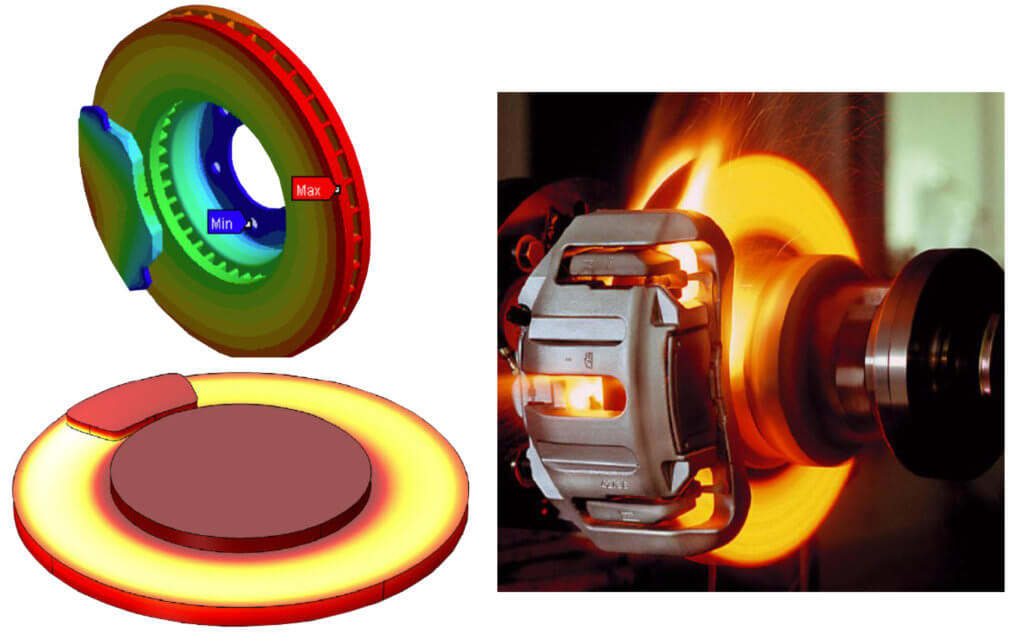
Brake rotor heat distribution
What about rotor quenching (hitting water after heavy braking) causing warp?
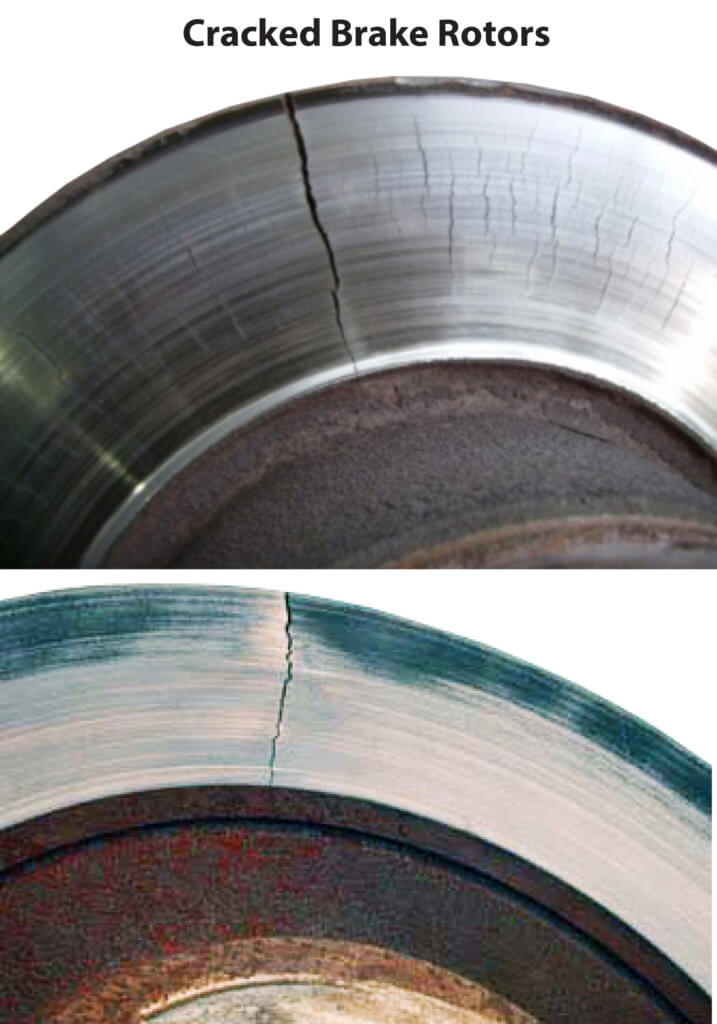
The brake rotor warp theory is that you overheat a rotor through heavy braking and then hit a puddle, which causes the rotor to warp. When hot metal is quickly quenched by hitting water, it contracts, causing the rotor to crack, not warp.
Just like hot glass that’s quenched by water, the internal stresses in a rotor will cause the metal to crack. Even then, you’d still see the signs of overheating, burned pads, and possible discoloration. Cracking after overheating is far more common than warping.
If the brake pads aren’t charcoal, then your brakes never reach a temperature high enough to warp the rotors.
Rotor warp is actually disc thickness variation.
Let’s look at what causes brake pedal pulsation and why it’s confused with brake rotor warp. The brake caliper is mounted to the steering knuckle or rear knuckle. In order for the brakes to work as designed, the brake rotor must be perfectly parallel with the wheel hub, knuckle, and caliper.
Brake rotor lateral runout
However, if the wheel hub is corroded or the lug
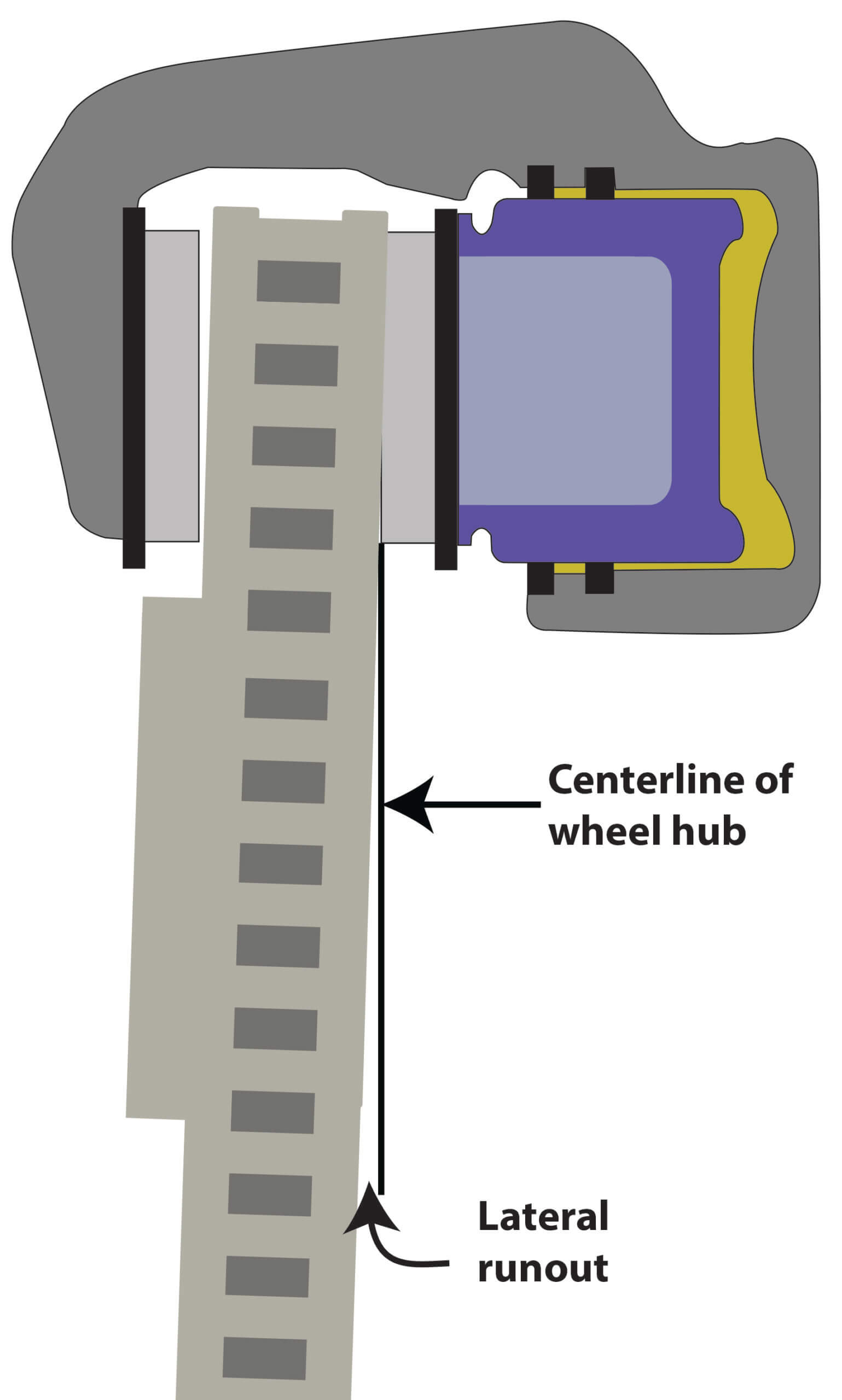
When the brake rotor doesn’t sit perfectly parallel with the wheel hub and is cocked, you get lateral runout where opposite sides of the rotor hit just one brake pad
nuts are improperly torqued, the rotor can sit perfectly parallel with the wheel hub. The result is lateral runout.
If the image to the right you see that the brake rotor isn’t perfectly parallel with the wheel hub. When rotating, one side of the rotor face hits the inboard brake pad while the opposite side barely touches or doesn’t touch the outboard brake pad.
Depending on the type of friction material used, the inboard brake pad can either leave a deposit of friction material film on the rotor or wear it away. Adherent brake pads leave an extra deposit of film, while abrasive brake pads wear away the rotor.
When the rotor makes a 180° rotation, the opposite occurs; the outboard pad leaves an extra film or wears the rotor while the inboard pad barely touches the rotor face.
This added film thickness or wear is referred to as disc thickness variation (DTV).
Disc thickness variation
How much lateral runout does it take to create enough deposit formation or wear and DTV? Not much. As little as .006 lateral runout can cause brake pedal pulsation and it happens in as little as 3,000 miles after installing new brakes and rotors.
The most common causes of lateral runout and DTV
Not cleaning the wheel hub before installing the rotor
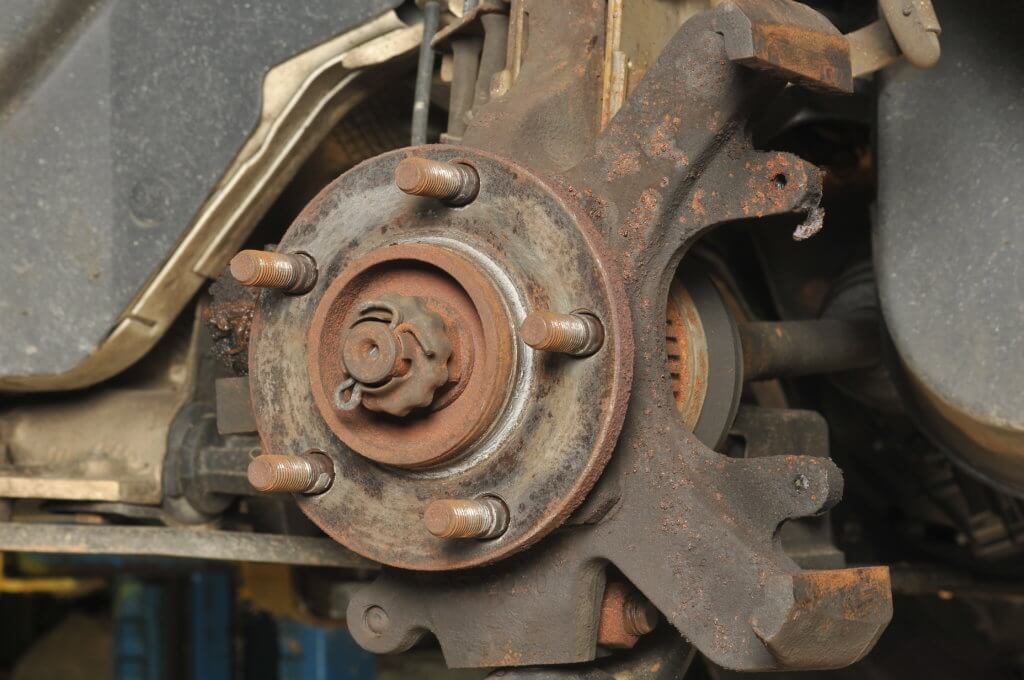
A corroded wheel hub can cause lateral runout, disc thickness variation, and brake pedal pulsation.
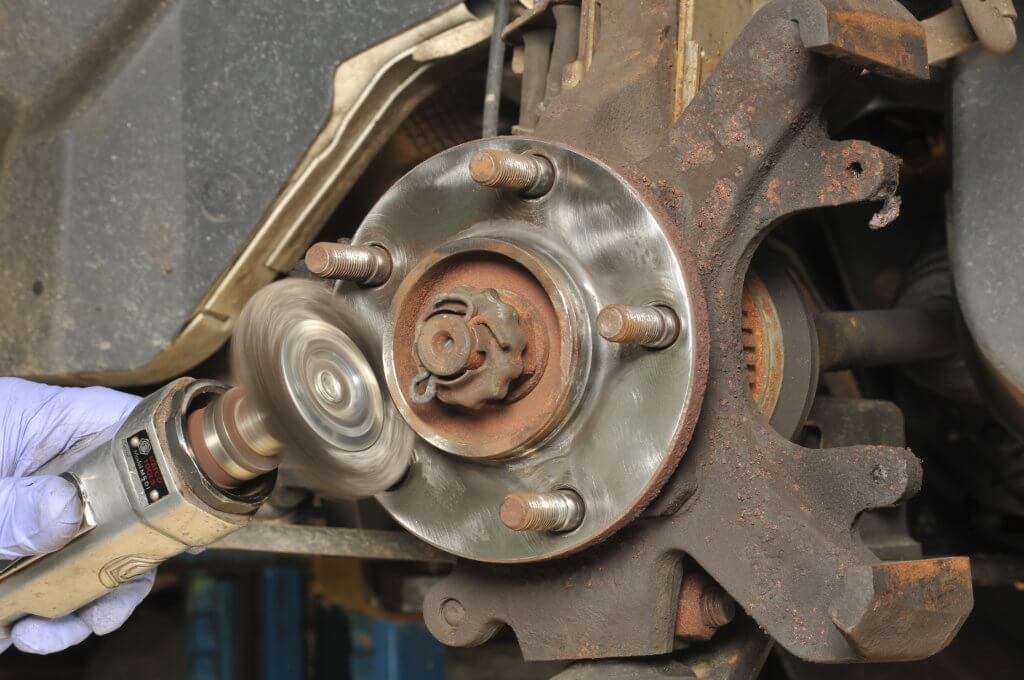
Cleaning the wheel hub to remove corrosion ensures a parallel fit between the rotor and the hub.
Not cleaning corrosion off the inside of the rotor hat
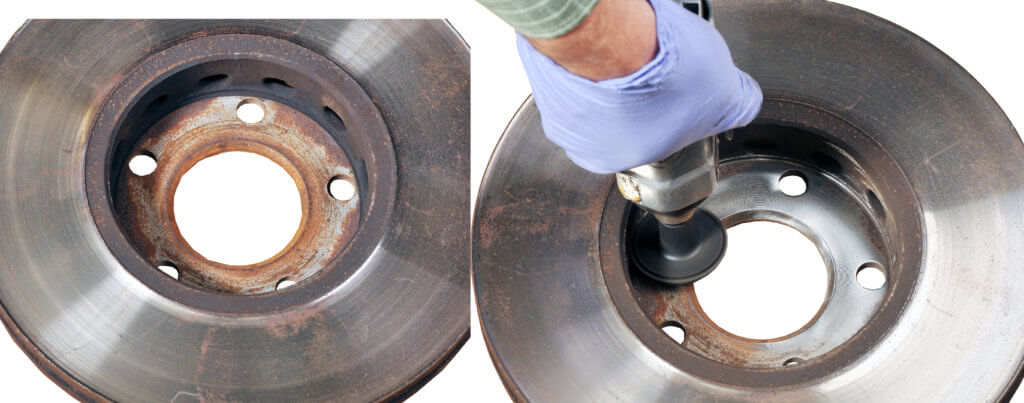
Use a polishing pad to remove corrosion in the rotor hat area
Not using a torque wrench to tighten lug nut
If the lug nut torque is uneven, it can cock the rotor, causing lateral runout.
A worn wheel bearing can also cause repeat brake pedal pulsation
Again, the rotor must be perfectly parallel with the wheel hub in order to run true. But what if the wheel bearing is worn and the wheel hub isn’t true to the steering knuckle that holds the brake caliper?
In that case, the rotor will have lateral runout compared to the caliper. That will either wear opposite sides of the rotor (if you use abrasive friction material) or have pad deposits on opposite sides of the rotor (if you use adherent brake pads).
Check the wheel bearing using a dial indicator to check for lateral runout.
©, 2021 Rick Muscoplat
Posted on by Rick Muscoplat