
Why Is My Check Engine Light On? The Real Answer
Check Engine Light On? Here’s What It Really Means (And What I Do First)
Quick Summary: What You Must Know
If your check engine light comes on, your vehicle’s computer has detected a problem affecting performance, emissions, or system operation. A steady light usually means you can keep driving for now, but it still needs to be diagnosed and fixed. A flashing light is serious—it indicates a misfire issue that’s serious enough to destroy your catalytic converter if you keep driving. The only real way to find out why your check engine light is on is to pull the trouble codes and follow a proper diagnostic process—not guess or replace parts.
Why Is My Check Engine Light On? The Real Answer
As someone who’s diagnosed thousands of vehicles, I can tell you this: when drivers ask why their check engine light warning came up, they’re usually expecting a simple answer. There isn’t one.
Your vehicle’s computer—often called the PCM or ECM—is constantly testing multiple systems. When it detects something out of range, it sets a diagnostic trouble code and turns on the light.
This isn’t just about emissions anymore. Modern vehicle computers monitor:
• Fuel delivery
• Ignition system
• Airflow and sensors
• Exhaust and catalytic converter efficiency
• Transmission operation
• ABS and traction systems
• Network communication between modules
That means a check engine light condition can be caused by more than just an oxygen sensor or emissions fault.
What a Check Engine Light And Trouble Codes Actually Mean
The biggest misconception I see is that a light and trouble codes indicate which part failed. They don’t. What it really means is that the computer detected data that’s outside the normal operating range for the conditions.
That could be caused by:
• A failed component
• A wiring issue
• A mechanical problem
• Or even a system reacting correctly to another failure
The code simply points you in the right direction—it does NOT give you a diagnosis. It never tells you to replace a part.
Steady vs Flashing — This Changes Everything
Steady Check Engine Light — If your check engine light is on and your engine and transmission are running normally, the condition is not an emergency, and you can continue driving until you can get it into a shop for a diagnosis
• The issue is usually not immediately destructive
• The vehicle may still run normally
• You can typically drive it short-term
But don’t ignore it. Small issues turn into expensive repairs.
Flashing Check Engine Light — A flashing light is a completely different situation. It almost always means:
• Severe engine misfire
• Raw fuel entering the exhaust
• Catalytic converter overheating
If you keep driving, you can destroy the catalytic converter in minutes.
What to do if you have a flashing check engine light
Back off the throttle immediately — misfires occur most often when the engine is under load. If you back off the throttle and the flashing stops, you can limp it to a shop. However, if the light still flashes, call for a tow. The tow will be much cheaper than replacing a damaged catalytic converter.
When I see a check engine light on, I don’t guess—I follow a process:
Step 1: Pull the Trouble Code — You need a scan tool or code reader. That’s non-negotiable. Most auto parts stores will scan the code(s) for free. Just remember, a code is not a diagnosis.
Step 2: Check Freeze Frame Data — OBD-II freeze frame data is a snapshot of your vehicle’s sensor readings captured at the exact moment the fault was detected and a code stored.
What data is typically captured
• Engine RPM – how fast the engine was spinning
• Vehicle speed – how fast you were going
• Engine load – how hard the engine was working (%)
• Coolant temperature – engine warm-up state
• Fuel trim (short & long term) – how the ECU was adjusting the fuel mixture
• Manifold absolute pressure (MAP) – intake air pressure
• Throttle position – how far the throttle was open
• Oxygen sensor readings – exhaust gas composition
• Time since engine start – was it a cold start issue?
Step 3: Check and Record Live Data and View Mode $06 Data— This is where real diagnostics happen:
• Live Data Fuel trims
• Live DataSensor readings, like O2, MAF, MAP, TPS sensors
Mode$06 Data
Mode $06 is one of the most powerful—but most misunderstood and underutilized diagnostic tools built into OBDII. For example, Mode $06 can show you the actual test data from the vehicle’s onboard monitors—data that’s been building over time but hasn’t gotten bad enough yet to trigger a trouble code. In other words:
Step 4: Test Before Replacing Parts — This is where most DIYers make their biggest mistakes. Getting a code and replacing whatever part is listed in the code is NOT a diagnosis. The code only indicates that the sensor data is out of spec. It does NOT mean that the sensor is faulty. The problem could be caused by something else in the engine, and the sensor is telling the truth. In other words, once you have the code, your next step should be to go online and search for what tests to perform, rather than automatically replacing parts.
Think of diagnosis this way: You get your blood pressure checked. It’s high, and you jump to the conclusion that you need a new heart instead of finding out why the reading is high. That’s what 90% of DIYers do wrong: they automatically replace whatever part is listed in the trouble code.
The biggest mistakes DIYers make when getting a check engine light
1) Continuing to drive with a flashing check engine light
2) Automatically replacing whatever part is listed in the trouble code without doing any testing.
3) Trusting Parts Store Clerk Advice — They sell parts—they don’t diagnose. If they actually knew how to diagnose, they’d be working in a shop making decent money, instead of working at a parts store making $14/hour.
The Bottom Line on a Check Engine Light On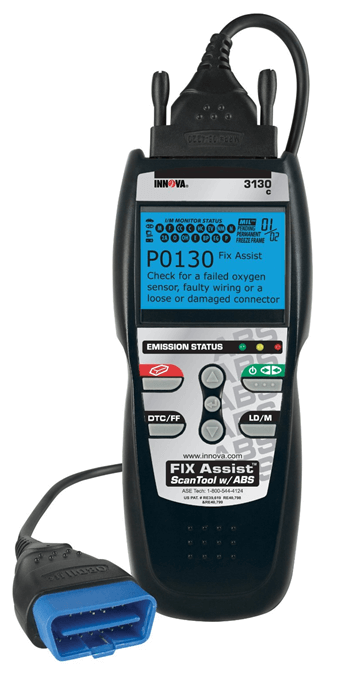
When your check engine light warning appears, your vehicle is telling you something is wrong—but it’s not telling you exactly what.
If you want to fix it correctly:
Read the code
Understand the system
Test before replacing anything
That’s how I do it in the shop—and it’s the difference between a real fix and wasting money
© 2012 Rick Muscoplat
Posted on by Rick Muscoplat