
Discover the Best Lock Lubricants for Your Car
Choosing the Best Lock Lubricant for Your Car
Over time, exposure to dust, moisture, and temperature fluctuations can cause your car door and ignition locks to become stiff or even seize up. To keep your car locks functioning smoothly, using the right lubricant is essential. This article will guide you through the best lock lubricant for your car, what to consider when choosing a lubricant, and how to apply it effectively to ensure long-lasting performance.
Why The Right Lock Lubricant Matters
Car locks are composed of small metal parts that need to move freely for the lock to operate correctly. Using the wrong lubricant can cause the small parts to gum up and not move properly, preventing you from unlocking your car or starting the entine.
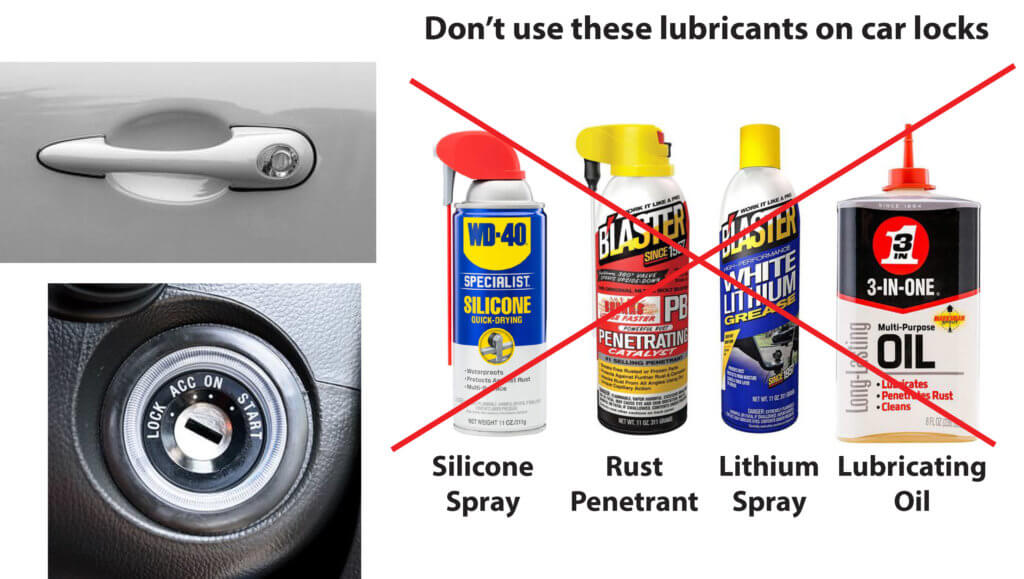
Avoid all petroleum-based and silicone lubricants
They work great at first to free up sticky lock cylinders. However, because these lubricants attract and hold dust and debris, they eventually cause more wear and can actually make the lock gum up, stick, and become harder to turn.
Don’t use: WD-40, PB Blaster, Silicone Spray, 3 in 1 oil.
The Graphite lubricant for locks or dry Teflon lube for locks are your best choice
Powder graphite is the best lock lubricant.
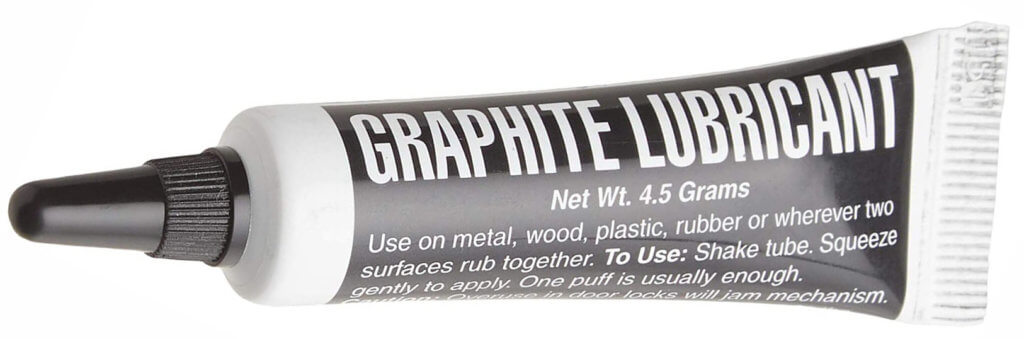 Simply squeeze a few puffs into the lock cylinder. Then insert the key in and out several times before rotating the lock. That will spread the dry graphite powder throughout the lock.
Avoid this mistake when using powdered graphite to lubricate your locks
More graphite is not better! Many people pump multiple puffs of graphite into the lock, packing it with dry powder to the point where the graphite jams up the moving lock parts. Don’t overdo it with the graphite; puff in just enough to get the lock moving freely.
Dry Teflon lube spray is the second best lock lubricant
Dry Teflon lube spray is a combination of Teflon power in a solvent base. 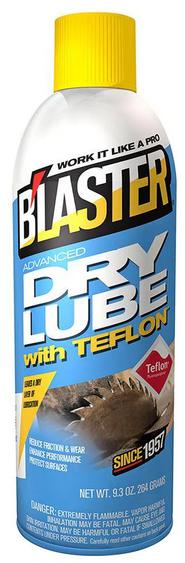 It settles to the bottom of the spray can so you must shake it well before using it.
After shaking, spray it directly into the keyway, insert your key, and rotate it several times. The solvent evaporates, leaving a thin film of white Teflon powder throughout the lock cylinder to ensure smooth operation.
©, 2022 Rick Muscoplat
Posted on by Rick Muscoplat