
DOT 5.1 Brake Fluid Explained: Compare DOT 3, 4 and 5.1
DOT 5.1 Brake Fluid vs DOT 3 vs DOT 4: What’s the Difference?
Quick Summary
If you’re hearing more about DOT 5.1 brake fluid, there’s a reason—modern vehicles demand better braking performance than ever before. DOT 5.1 offers higher boiling points, lower viscosity for faster ABS response, and better overall performance under heat compared to DOT 3 and DOT 4. It’s fully compatible with older glycol-based systems, which means you can safely use it in many older vehicles. But it’s not always necessary, and understanding when—and why—to use it is the key to making the right call.
What DOT 5.1 Brake Fluid Really Is
I’ve worked with every type of brake fluid over the years,
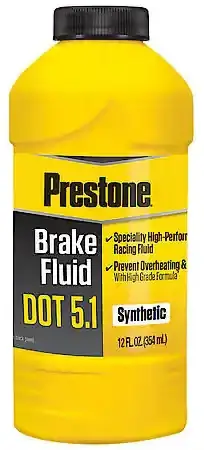
Click on the image to learn more about DOT 5.1
and DOT 5.1 is one of those upgrades that actually makes sense—if you understand what it’s designed to do.
First, let’s clear up the biggest misconception: DOT 5.1 is NOT the same as DOT 5.
• DOT 5 = silicone-based (not compatible)
• DOT 5.1 = glycol-based (compatible with DOT 3 and DOT 4)
That distinction matters because DOT 5.1 can be used in systems designed for DOT 3 or DOT 4 without causing damage.
What Makes DOT 5.1 Brake Fluid Different
The difference isn’t just marketing—it’s chemistry and performance. It was engineered to meet the demands of modern braking systems, especially those with:
• ABS (Anti-lock Braking Systems)
• Automatic Emergency Braking
• ESC/ESP (Electronic Stability Control)
• Traction control systems
These systems cycle brake pressure rapidly—far faster than any older brake system ever had to handle.
Lower Viscosity (This Is a Big Deal)
It flows more easily than DOT 3 or DOT 4. That matters because:
• ABS valves open and close rapidly
• Fluid must respond instantly
• Thicker fluid slows system response
• Lower viscosity = faster, more precise braking control.
The Boiling Point Advantage (Why It Matters in the Real World)
Brake fluid performance always comes down to heat.
DOT 5.1 brake fluid:
• Dry boiling point: 500°F
• Wet boiling point: 356°F
Compare that to:
• DOT 3: ~401°F dry / 284°F wet
• DOT 4: higher than DOT 3, but still below DOT 5.1
That extra margin matters when you’re:
• Towing
• Driving in the mountains
• Repeatedly braking in traffic
• Running high-performance vehicles
Once brake fluid boils, you get vapor—and vapor compresses. That’s when the pedal drops and braking power disappears.

Why Carmakers Switched to DOT 5.1
This isn’t just about performance—it’s about system evolution. Modern braking systems are no longer simple hydraulic systems. They’re electronically controlled precision systems.
It was introduced because:
• ABS and traction systems generate rapid pressure pulses
• These pulses create heat and demand a faster fluid response
• Older fluids couldn’t keep up under extreme conditions
• Automatic Emergency Braking (AEB)can apply full brake pressure in an emergency situation, causing fluid overheating and brake fade. AEB requires a fluid that reduces brake fade
So carmakers needed a fluid that:
• Flows faster
• Resists heat better
• Maintains consistent pressure
DOT 5.1 brake fluid checks all those boxes.
DOT 5.1 Is NOT the Same as DOT 5
This is where many people make a costly mistake. Despite the similar names, DOT 5.1 and DOT 5 are not interchangeable. DOT 5 is silicone-based and does not mix with any glycol-based fluid. Mixing the two will ruin the braking system.
If your vehicle originally specified DOT 3 or DOT 4, you can safely upgrade to DOT 5.1 brake fluid—but never to DOT 5. The “5.1” designation merely refers to its performance level, not its chemical base.
Does DOT 5.1 Handle Moisture Better?
All glycol-based brake fluids absorb moisture—that’s unavoidable. But DOT 5.1 brake fluid is designed to:
• Maintain a higher boiling point even with moisture present
• Degrade more slowly under real-world conditions
That doesn’t mean you can ignore maintenance—it just means you get more consistent performance between services.
Can You Use DOT 5.1 Brake Fluid in Older Vehicles?
This is one of the most common questions I get. And the answer is: Yes—with one important condition.
If your vehicle uses:
DOT 3 or DOT 4 → You can upgrade to DOT 5.1 brake fluid because they’re all glycol-based, they’re chemically compatible.
But here’s my professional take:
Just because you can doesn’t always mean you should.
When It Makes Sense
• You tow or haul heavy loads
• You drive in mountainous terrain
• You want improved brake performance margin
• You’re already doing a full flush
When It Doesn’t Matter Much
• Normal daily driving
• Light-duty vehicles
• Flat terrain, low heat stress
In those cases, DOT 3 or DOT 4 does the job just fine.
What Is LMA (Low Moisture Activity) Brake Fluid?
You may have seen LMA on some premium fluid labels. Low-Moisture Activity fluids are formulated to resist water absorption even more than standard glycol fluids, maintaining a higher boiling point for longer periods. DOT 5.1 brake fluid naturally fits into this category due to its superior chemical formulation and resistance to moisture-induced degradation.
Final Thoughts: Is DOT 5.1 Brake Fluid Worth It?
From my experience, DOT 5.1 brake fluid is one of the few upgrades that actually delivers real benefits—if your driving conditions justify it.
It gives you:
• Better heat resistance
• Faster ABS response
• More consistent braking feel
But it’s not magic. It still absorbs moisture, still needs maintenance, and still requires proper testing—not guesswork.
If you’re already doing a brake fluid flush, stepping up to DOT 5.1 brake fluid is often a smart move.
©, 2023 Rick Muscoplat
Posted on by Rick Muscoplat