
The Oxygen Sensor Monitor Explained
The Fastest Way to Complete an Oxygen Sensor Monitor Drive Cycle
Quick Summary:
An oxygen sensor monitor in an OBD-II system is a built-in self-test that checks whether the engine’s oxygen sensors are working properly and responding as they should. The oxygen sensor monitor only runs under specific conditions:
• No major fuel trim or misfire faults present
• The ECM detects that the oxygen sensor’s heater is working
• Engine fully warmed up
• Stable speed and loadIf those conditions aren’t met, the monitor may show “Not Ready,” which can cause your vehicle to fail an emissions test until the issue is resolved.
Once the oxygen monitor parameters are met, the test begins and runs for a set period of time under set driving conditions. This is referred to as a drive cycle.
Article
An oxygen sensor monitor in an OBD-II system is a built-in self-test that ensures the engine’s oxygen sensors are operating correctly and responding as they should. The testing procedure only runs when specific conditions are met—including no major fuel trim or misfire issues, the oxygen sensor’s heater functioning properly, the engine fully warmed up, and vehicle speed and load remaining stable—and if these conditions aren’t satisfied, the monitor may remain “Not Ready,” which can result in a failed emissions test until the underlying issue is corrected.
What the Monitor Does
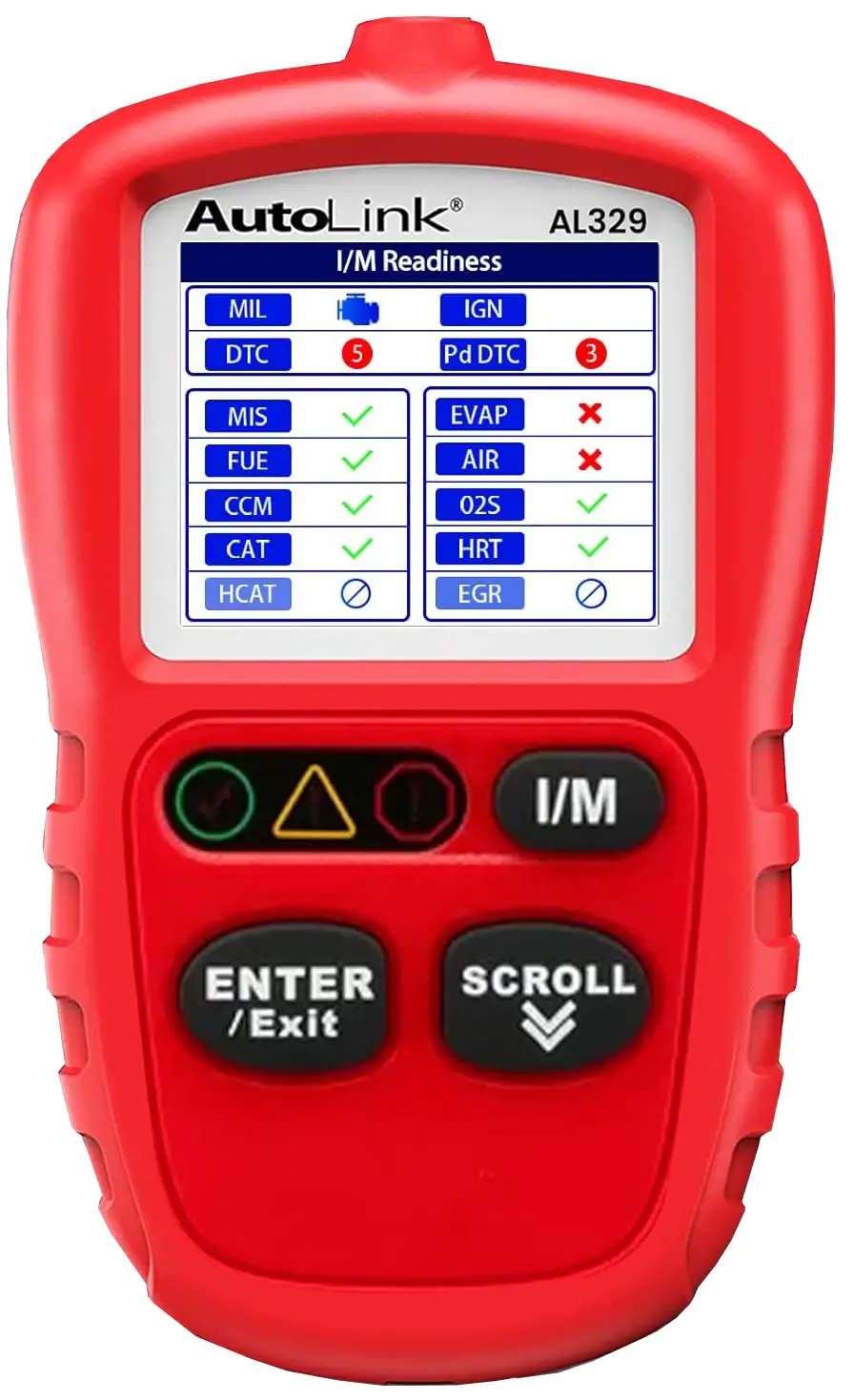
See the ✔ to the right of O2S? That means the oxygen sensor monitor has completed its testing, and the sensors have passed. If there’s a red X, your vehicle can’t be emissions tested.
The oxygen sensor monitor is a key part of the emissions self-diagnostic system built into every modern vehicle. Its sole purpose is to evaluate the performance of the oxygen sensors. These sensors continuously report exhaust oxygen levels to the engine control module (ECM).
The ECM uses that data to determine whether the engine is running rich or lean and then adjusts fuel delivery to maintain the ideal 14.7:1 air-fuel ratio. Without a properly functioning oxygen sensor monitor, your vehicle wouldn’t know if its fuel mixture is correct—or if you’re polluting more than you should.
Typical Oxygen Sensor Monitor Drive Cycle
Every carmaker designs its own drive cycle. The drive cycle shown below is fairly typical and puts the sensors through all the conditions they would normally encounter in a commute.
• Cold start — The cycle will only start after the engine has been sitting for several hours (coolant and air temperature must be similar). Do not touch the accelerator during startup.
• Allow the engine to idle for 2–3 minutes so the oxygen sensor heaters can reach full operating temperature (many newer AFR type sensors can reach operating temperature in less than a minute, depending on ambient temperature
• Drive at a steady cruise – Stage 1 — Drive at 45–60 mph with light throttle for 10–15 minutes. This brings the sensors and catalytic converter to full operating temperature. During this time, the ECM checks the switching speed of the oxygen sensor voltage.
• Deceleration phase — Lift off the throttle and coast down to about 20 mph without braking heavily. This introduces a lean condition that helps test sensor responsiveness.
• Steady cruise – Stage 2 — Accelerate gently and hold 45–60 mph again for another 5–10 minutes. The ECM compares upstream and downstream oxygen sensor activity.
• Stop-and-idle period — Pull over and idle for 2–3 minutes. This helps verify heater function and low-load switching behavior.
Why the Monitor May Not Complete
Sometimes drivers ask me why their oxygen sensor monitor shows “not ready” after a repair. Common causes include:
Weak battery or cleared codes. Clearing the codes resets all the monitors
Exhaust leaks prevent proper readings
Fuel trim issues will cause the monitor to abort early
Aftermarket parts or spacers can delay sensor switching activity
Short trips prevent the monitor from see all the driving parameters
I always recommend performing a proper drive cycle after repairs to ensure the oxygen sensor monitor completes successfully.
What Success Looks Like
After completing the steps, an OBD-II scan tool should show:
Oxygen Sensor Monitor — Complete
Oxygen Sensor Heater Monitor — Complete
If either remains Not Ready, the vehicle may have:
An exhaust leak
Fuel trim issues
Sensor heater problems
Aftermarket spacers / anti-foulers
Short trip driving that never warms the exhaust fully
What the Monitor Checks For
The oxygen sensor monitor doesn’t just check for voltage changes from the oxygen sensors; it also checks several critical functions:
1) Sensor switching activity — The oxygen sensor monitor expects rapid voltage changes. If the oxygen sensor stays high or low too long, it indicates a mixture problem.
2) Reaction speed — The ECM tests how quickly the sensor responds during fuel trim changes.
3) Comparison between front and rear sensors — On vehicles with catalytic converters, the upstream sensor should switch rapidly, while the downstream sensor should remain stable. If both behave similarly, catalytic converter efficiency may be degraded.
When the oxygen sensor monitor detects abnormal behavior, it logs a diagnostic trouble code and turns on the check engine light.
Why oxygen sensors require a heater to operate properly
The oxygen sensor must reach a temperature of at least 600-650°F to read properly. To maintain a proper minimum temperature, modern oxygen sensors incorporate a heater to keep the sensor at that temperature.
©, 2022 Rick Muscoplat
Posted on by Rick Muscoplat