
Clean a MAF sensor — step by step guide for DIYers
How to Clean a MAF Sensor And Get Quicker Starts
Quick Summary
The key to cleaning a MAF sensor is to use the proper cleaning spray and avoid touching any sensitive sensing elements. Done correctly, cleaning restores accurate airflow readings and proper fuel delivery without replacing an expensive part.
Article
How to Clean a MAF Sensor
I’ve personally brought countless engines back to smooth idle and quick starts by showing people how to properly clean a MAF sensor. The problem isn’t the cleaning—it’s the methods people use that end up killing the sensor.
Let’s start with the basics so you understand what you’re dealing with.
What a MAF Sensor Does—and Why Accuracy Matters
The mass air flow sensor’s job is deceptively simple but critically important. It measures the volume and mass of air entering the engine so the engine computer can calculate exactly how much fuel to inject. If the airflow data is wrong, everything else is wrong—fuel trim, ignition timing, idle quality, and throttle response.
Inside the housing is an intake air temperature sensor and either a hot-wire or a hot-film (plate). That wire or plate is electrically heated to a precise temperature. As air flows across it, the air cools the element. The engine computer monitors how much electrical power it takes to keep the element at that set temperature. From that information—along with air temperature—it calculates airflow in grams per second.
When the sensor is clean, those calculations are extremely accurate. When it’s dirty, the data lies.
Why MAF Sensors Get Dirty in the First Place
Over time, even with a good air filter, contaminants build up. Microscopic fibers from the filter, dust that sneaks past, and oil vapors from the crankcase ventilation system all pass through the MAF housing. Anything that lands on the hot wire or plate gets baked on every time the engine runs.
That coating acts like insulation. The sensor still works—but it reports less airflow than is actually entering the engine. The result is lean fuel mixtures, hesitation, poor cold starts, stalling, and the classic drivability complaints that lead people to search for MAF sensor cleaning, how to clean a MAF sensor, and what cleaner to use on a MAF sensor in the first place.
How to Clean a MAF Sensor Without Damaging It
This is where most people go wrong. The sensing element inside a MAF sensor is incredibly thin—far thinner than a human hair. Touch it once with a rag, cotton swab, or your finger, and you’re buying a new sensor.
Proper MAF sensor cleaning involves no physical contact at all.
The only safe method is to use an aerosol cleaner specifically designed for mass airflow sensors. This answers the most important question right up front: what cleaner to use on a MAF sensor? The answer is a dedicated MAF sensor cleaner—nothing else.
Brake cleaner, carb cleaner, throttle body cleaner, and electronics cleaner are all wrong. They’re either too aggressive, leave residue, or damage the sensor coating.
Where the MAF Sensor Is Located
The MAF sensor is always located in the intake tract between the air filter and the throttle body. In most vehicles, it’s mounted directly to the air filter housing or clamped into the intake duct.
Once you see it, you’ll recognize it immediately: a plastic housing with an electrical connector and airflow direction arrow molded into it.
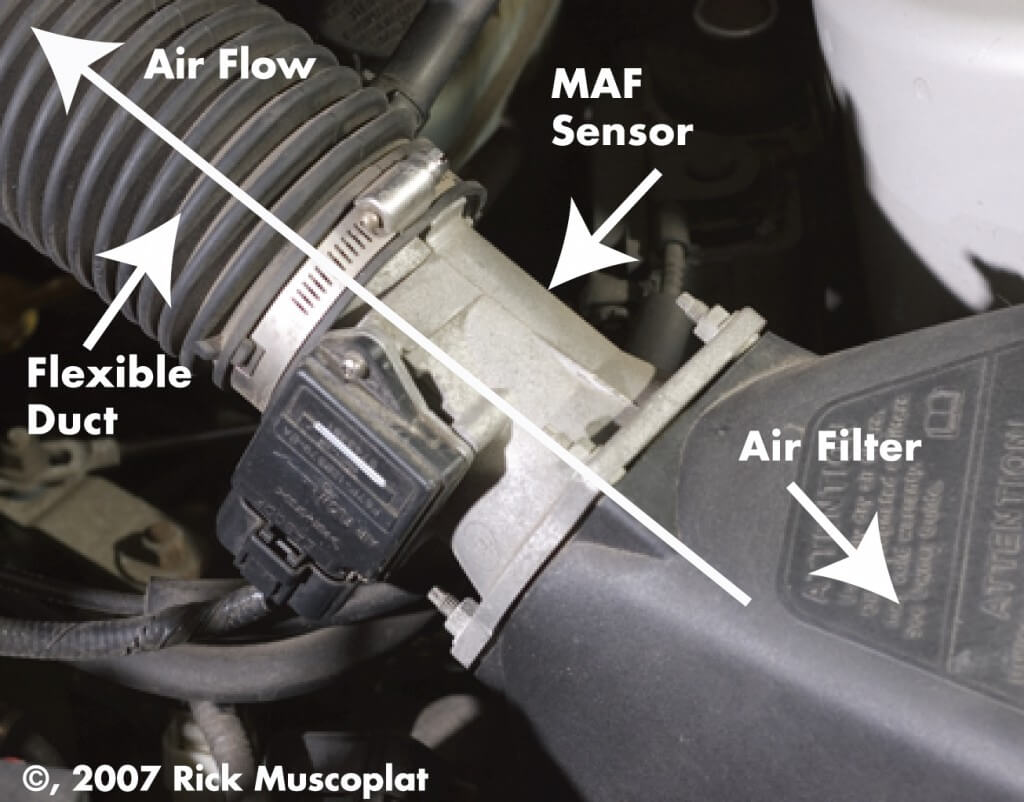
Removing the Sensor Safely
I always start by turning the key off and disconnecting the electrical connector. Press the locking tab and gently wiggle the connector free—never pry on it.
The sensor housing is usually secured with clamps, screws, or bolts. Loosen them carefully and remove the sensor from the intake duct. At no point should you shake, tap, or blow air through it.
Once removed, look inside the bore. You’ll see a small opening where the hot wire or plate lives. That’s the only part you’ll be cleaning
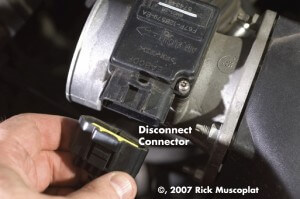
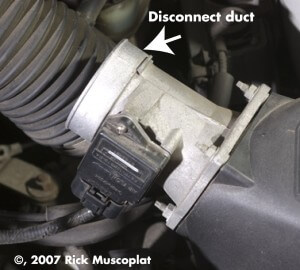 Then disconnect the sensor’s electrical connector
Press down on the tab on the connector and wiggle it out of the sensor.
Locate the sensor element
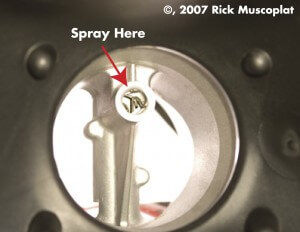
The Correct Way to Spray the Sensor
This is the heart of how to clean a MAF sensor correctly.
Attach the straw to the aerosol can and aim it directly at the sensing element inside the housing. Spray short bursts until the element is thoroughly soaked. Rotate the sensor slightly so the cleaner reaches all angles—but do not let the straw touch anything inside.
Never use compressed air. Never wipe it. Never try to “help” the cleaner along. The force of air or physical contact will instantly snap the wire.
This step alone is why using the correct product—what cleaner to use on a MAF sensor—matters so much. MAF cleaner is formulated to dissolve contaminants and evaporate without residue.
Drying Time Is Not Optional
After spraying, set the sensor down in a clean, safe place and let it air dry for at least 30 minutes. I don’t rush this step—ever. Residual solvent inside the sensor can damage it the moment electrical power is restored.
Reinstallation and Final Checks
Once the sensor is completely dry, reinstall it in the intake duct, making sure the airflow arrow points in the correct direction. Reconnect the wiring harness until it clicks securely.
If any mass airflow–related trouble codes are stored, clear them before starting the engine. Then start the vehicle and let it idle for a few minutes. A short test drive will confirm whether the MAF sensor cleaning restored normal airflow readings and drivability.
In most cases, you’ll notice smoother idle, quicker starts, and better throttle response almost immediately.
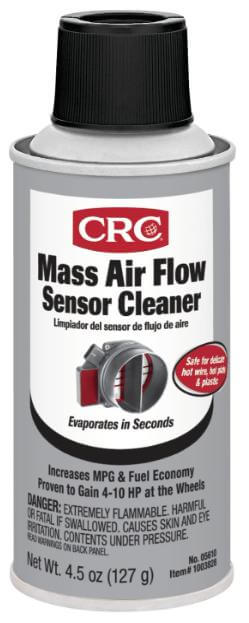 Find CRC MAF Sensor Cleaner at any auto parts store or online at Amazon
© 2012 Rick Muscoplat
Posted on by Rick Muscoplat