
How To Get Your Car Out Of Limp Mode
Limp mode: What Every Driver Needs to Know
Limp mode is a self-protection method that activates when the vehicle computer determines there’s a transmission problem that could possibly cause further damage. Limp mode is designed to prevent the transmission from shifting to a higher gear while limiting vehicle speed to a maximum of 30-45 MPH. That allows you to get the vehicle to a shop and prevent more expensive damage. However, there are 4 ways to get your car out of limp mode.
Four Ways to get out of limp mode
There are several things you can do to get out of limp mode, but all are temporary fixes. If the problem is serious, your car will enter limp mode again. Furthermore, bypassing limp mode when your car has a serious issue may cause more damage to your engine or transmission, costing more to fix in the long run.
1) Turn off your car and let it rest to cool the transmission— Find a safe place to pull over, and turn off your car. Leave your car off for at least 15 minutes. Then restart the car and see if you can shift into high gear.
2) Check your transmission fluid level. Some carmakers will put the vehicle into limp mode if it detects a low transmission fluid level. If you find a low level, top it off. Then restart and see that clears the problem
3) Disconnect the negative battery terminal— Disconnect the negative battery terminal and wait for about a half hour to reset your car’s computer and clear the trouble codes. After a half hour, reconnect your battery and shift gears to see if you can drive normally.
4) Use a scan tool to clear the trouble code—Use an OBD2 scanner to scan your car for codes. If you find transmission-related trouble codes, clear them to see if that fixes the problem.
What causes a transmission to enter limp mode?
The ECM or TCM computers constantly compare commanded input and output sensor values to determine if the transmission is operating properly. A mismatch between the input speeds and expected output speeds means there’s an internal problem causing slipping.
Slipping can be caused by a worn band or clutch, low fluid pressure in a clutch pack piston or band servo, or a faulty solenoid. The computer identifies the most likely causes, sets at least one trouble code, and then prevents those bands and clutches from operating to prevent further transmission damage.
How do you know if you’re in limp mode?
First, you’ll see a check engine light or service engine soon, OR you’ll see a warning message on the
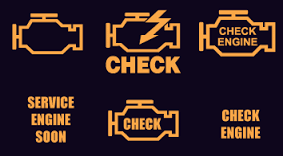
Different types of “Check Engine” lights
driver information display. You’ll also notice high engine RPMs, decreased gas mileage, and limited speed of only 30-45 MPH.
What do you do once your car is in limp mode?
You can’t fix a limp mode problem on the side of the road. Drive it to a repair shop. If you’re on a trip, call a tow truck and get it to a shop.
• Get off the highway and switch to city streets to get home or to a shop—You can’t keep up with highway-speed traffic when the vehicle is in limp mode. Avoid becoming a hazard to other drivers.
• Keep your speed as low as possible— Slowing your speed will prevent transmission fluid overheating
• Avoid driving long distances—If you can’t get home or to a shop in a reasonable period of time, call a tow truck. A tow will be cheaper than major transmission damage.
Get the trouble codes read
Scanning the computer for trouble codes is your first step in diagnosis. The trouble code will tell you if the problem is sensor or circuit-related. Otherwise, drive home and call a service center to have your vehicle towed
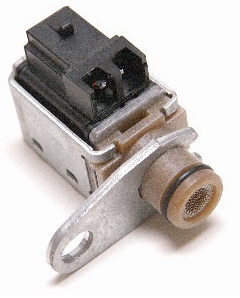
Individual Shift Solenoid
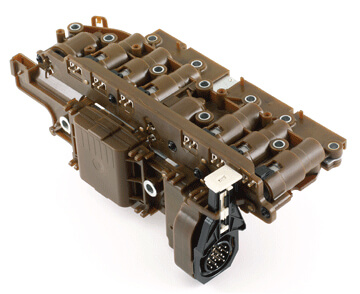
Solenoid pack
©, 2018 Rick Muscoplat
Posted on by Rick Muscoplat