
How to Save Money with DIY Spark Plug Replacement
How to Replace Spark Plugs Like a Pro: Step-by-Step Expert Guide
Quick Summary:
If you want your engine to start easily, run smoothly, and get the best fuel economy, you must know how to replace spark plugs properly. I’ll walk you through when to replace spark plugs, which types to use, how to check the spark plug gap, and why using the correct torque is critical. You’ll also learn why anti-seize is no longer recommended and how to avoid costly mistakes when performing spark plug replacement.
Article:
Replacing spark plugs isn’t just about removing the old ones and screwing in new ones. Done wrong, it can cause misfires, damaged cylinder heads, or even blown-out plugs. I’ll explain how to replace spark plugs safely and effectively, what tools to use, and which spark plug types are best for your engine.
When Should You Replace Spark Plugs?
A common myth is that all spark plugs last 100,000 miles or more. That’s not true for most modern engines. When platinum spark plugs first came out, long intervals worked fine for older distributorless ignition (DIS) systems. But today’s engines—especially those with turbochargers, coil-on-plug ignitions, and lean-burn combustion—run much hotter.
The spark plug replacement interval on modern turbocharged 4 cylinder engines can be as low as 40,000 to 60,000 miles, even when using iridium spark plugs. Always check your owner’s maintenance guide for the manufacturer’s recommendation. If your vehicle idles roughly, misfires, or shows poor fuel economy before that interval, it’s time to test and replace spark plugs early.
Types of spark plug replacements
• Copper Spark Plugs— Copper spark plugs have a copper core with a nickel alloy electrode. They offer the best conductivity and are still favored in certain high-performance or older engines. But their short lifespan (often under 30,000 miles) makes them less practical for daily drivers.
• Platinum spark plugs— Introduced in the 1980s, platinum plugs last much longer thanks to their high melting point. They resist erosion from high-voltage ignition systems and can often last up to 100,000 miles in ideal conditions.
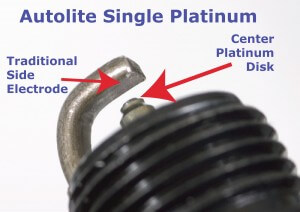 • Double platinum spark plugs— These plugs contain a platinum-tipped center and side electrode. They were designed to provide longer life when used in waste-spark distributor-less ignition (DIS) systems, where the spark in the firing cylinder jumps from the center electrode to the side electrode, and in the partner cylinder, from the side electrode to the center electrode.
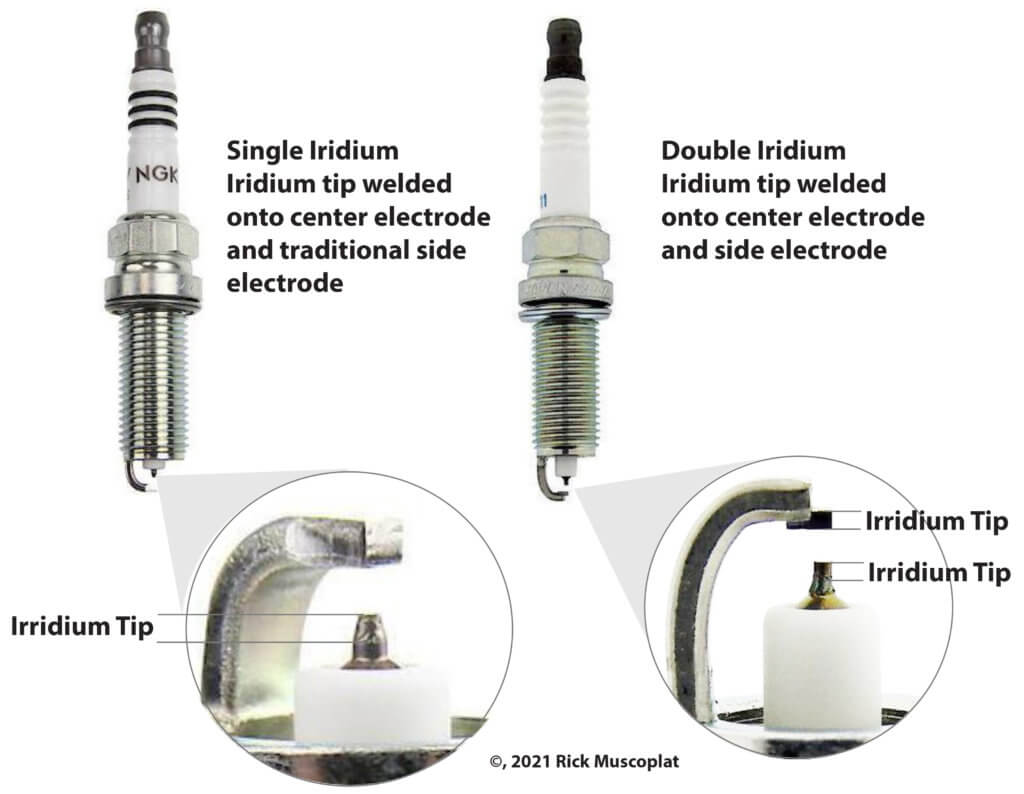
Iridium spark plugs and double iridium
Iridium plugs are the gold standard today. Iridium is six times harder and eight times stronger than platinum, with a melting point over 700°F higher. These spark plugs deliver excellent durability and performance, especially in turbocharged engines. Expect to pay $8–$15 per plug, but they’re worth every penny.
Ruthenium Spark plugs— Ruthenium is the newest alloy used by NGK in its RUTHENIUM HX line. NGK claims improved combustion efficiency, faster starts, smoother idle, and superior resistance to oxidation and corrosion. Ruthenium plugs may soon become the next industry standard for extended life and performance.
Ruthenium has a high melting point of 4233°F, slightly lower than that of Iridium. But when alloyed with other metals, it becomes much more corrosion- and oxidation-resistant than current iridium and platinum alloys.
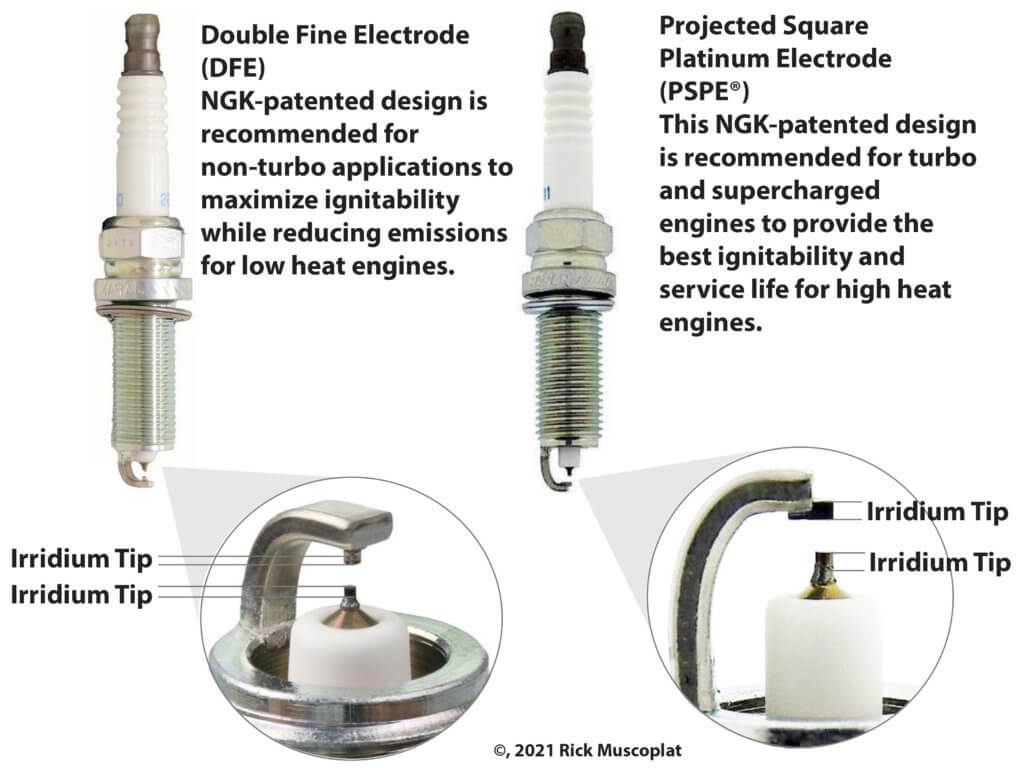
NGK Ruthenium spark plug tip designs
How to Replace Spark Plugs Step-by-Step
Step 1: Gather the right tools:
• A spark plug socket (with rubber insert or magnetic core). The plugs used on late model engines are smaller and longer than older plugs, so you’ll probably have to buy new spark plug sockets.
• A ratchet and extensions
• A torque wrench rated for low torque. 50-150 ft/lbs torque wrenches won’t work for spark plug installation. You’ll need a 3/8″ drive wrench rated in inch/lbs
• A spark plug gap tool (many Iridium plugs are pre-gapped and can’t be re-gapped)
• Dielectric grease (for coil boots)
• Compressed air or vacuum to clean debris away from the plug before loosening
Step 2 – Access and Remove Old Plugs
Remove the engine cover if necessary. Then disconnect each coil-on-plug connector. Before removing the ignition coil and plug, blow away debris from the plug well to prevent dirt from entering the cylinder. Turn the plug counterclockwise using a spark plug socket, extension, and ratchet.
TIP: Lay the plugs on your work bench in the order you removed them so you can compare the look of the plugs to detect cylinder problems.
Step 3 – Inspect and Gap New Plugs
Even if the plugs say “pre-gapped,” it’s smart to verify the gap with a proper spark plug gap tool. Only adjust if the manufacturer allows it. Some plugs have fragile fine-wire electrodes that can easily break.
Step 4 – Install the New Spark Plugs
Hand-thread each plug to prevent cross-threading. Then tighten using a torque wrench to the manufacturer’s spec—often between 7 and 15 ft-lbs for aluminum heads. Never guess the torque.
Why Torque Matters in Spark Plug Replacement
Under-torquing spark plugs can cause them to loosen over time. I’ve seen plugs blow out of aluminum cylinder heads, taking the threads with them—a $1,000 repair. Over-torquing is just as bad, as it can crack the porcelain, distort the shell, or strip the threads. Always use a torque wrench.
Should You Use Anti-Seize on Spark Plugs?
Years ago, it was standard practice to apply anti-seize on spark plug threads. Not anymore. Modern plugs have nickel or trivalent plating that prevents corrosion. Using anti-seize now can lead to over-torquing, since it lubricates the threads and skews torque readings. If the plug manufacturer doesn’t recommend it, don’t use it.
Spark Plug Upgrades – What’s Worth It?
You can always upgrade spark plugs, but never downgrade. If your vehicle came with iridium or double-platinum plugs, don’t switch to copper or single-platinum plugs. Upgrading to ruthenium or fine-wire iridium can improve combustion efficiency and throttle response.
Final Thoughts on How to Replace Spark Plugs
Learning how to replace spark plugs correctly isn’t hard, but it does demand care. Always start with the right plug type, check the gap, and ALWAYS use a torque wrench! I can’t tell you how many DIYers get into trouble thinking they can tighten the plugs without one. Then, when the plug blows out of the cylinder head, they’re shocked that they’re looking at a $1,000 repair. Finally, skip the anti-seize unless instructed. Doing spark plug replacement right will restore smooth acceleration, better fuel economy, and longer engine life.
Use a proper spark plug gapper tool
See this post on how to choose a gapper tool
© 2012 Rick Muscoplat
Posted on by Rick Muscoplat