
P0014 Code: Causes, Symptoms, and How to Fix It Fast
Step-by-Step P0014 Code Diagnosis
Quick Summary
• A P0014 code means your camshaft timing is over-advanced on Bank 1, usually tied to a VVT (variable valve timing) problem
• The most common causes are dirty oil, a clogged VVT solenoid, or a failing cam phaser
• Always start with oil condition and level—it fixes more P0014 problems than anything else
• Don’t get fooled by single-cylinder misfire codes—this is often a system-wide timing issue
• In my experience, cheap aftermarket VVT solenoids often fail early—use OE parts
What the P0014 Code Really Means (From a Diagnostic Perspective)
When I see a P0014 code, I don’t jump straight to replacing parts. I know this code—“Camshaft Position ‘B’ Timing Over-Advanced (Bank 1)”—is almost always a system performance issue, not just a bad component.
The engine computer is telling you one thing — The camshaft is more advanced than it should be, and it can’t control it properly. That points directly to the variable valve timing system, where oil pressure and electronic control work together to adjust cam timing on the fly.
Here’s the key insight most people miss — This is usually an oil-related problem before it’s a mechanical one.
Common P0014 Code Symptoms I See in the Shop
From hands-on experience, a P0014 code diagnosis usually starts with driver complaints like:
• Check engine light (almost always the first clue)
• Rough idle or unstable engine speed
• Loss of power or sluggish acceleration
• Poor fuel economy
• Engine misfires—sometimes subtle, sometimes severe
One important detail — A P0014 camshaft timing issue can absolutely trigger misfire codes, even though the ignition system is fine.
How to diagnose and fix a P0014 code
• Check the Oil— Inspect the engine oil level and condition. Low oil or dirty oil can affect the operation of the variable valve timing (VVT) solenoid. If the oil is low, top it up and clear the code to see if it returns. If the oil is dirty, change it and the filter. Then, clear the code and drive the vehicle to see if the code returns
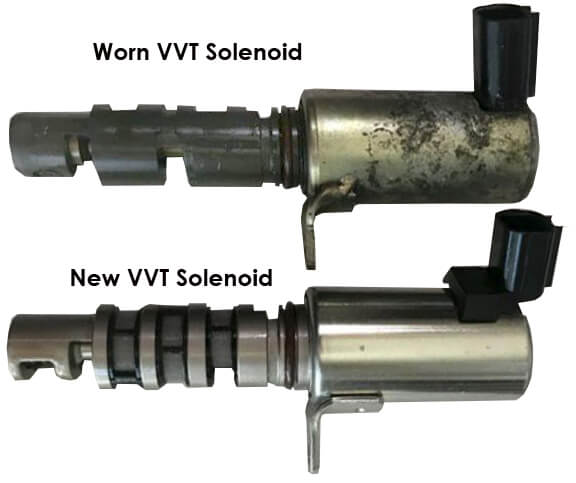
• Remove the VVT solenoid and check for a clogged screen— The VVT solenoid works by pulsing engine oil pressure into the camshaft phaser chambers. If you have any amount of sludge or debris in your oil and it has clogged the solenoid screen, you’ll get a P0014 code.

Notice the metal particles clogging the screen on this VVT solenoid oil control valve.
VVT solenoid oil control valve
• Check the oil control valve pressure sensor (if equipped)— A leaking diaphragm in the oil pressure sensor can cause a loss of pressure to the VVT solenoid that will set a P0014 code. If the sensor is leaking, replace it. But use extreme caution when tightening the sensor. It is tapered, and over-tightening can crack the casting, costing a small fortune to repair.
• Replace the VVT solenoid— The internal valve must move freely and rapidly. Aside from a clogged screen or leaking oil pressure sensor, a worn VVT solenoid is the next most common cause of the P0014 code. Tip: Spend the money to buy an OE sensor. Aftermarket sensors have a high early failure rate.
• Inspect the Camshaft Position Sensor— Check the camshaft position sensor for proper operation. A faulty sensor can be tested with a multimeter to ensure it provides the correct signal.
• Check the Timing Chain or Belt— Inspect the timing chain or belt for wear or stretching. Replace any components that show signs of excessive wear.
A P0014 cam phaser trouble code will also cause misfire codes. You would think that the most common misfire code would be P0300 for random misfires. That’s common, but it’s not always the case. Sometimes it only takes one cylinder to exceed the misfire threshold. In that case, you’ll get a specific cylinder misfire code. Don’t make the mistake of thinking you’ve only got a problem in one cylinder. If your scan tool can read Mode $06 data, check the history of misfires for each cylinder. In many cases, you’ll see that every cylinder is accumulating misfire codes. However, since the PCM is programmed to set a code only when misfires exceed a certain threshold within a certain time period, the other cylinders may simply not have exceeded that threshold.
Finally, another tell-tale sign of a failing cam phaser is oil in the electrical connector.
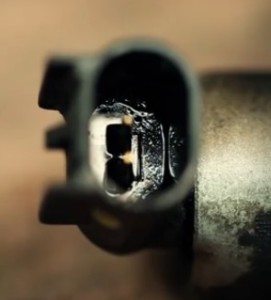
Oil in the electrical connector of cam phaser
Remember, the cam phaser is exposed to full line oil pressure and pulses the solenoid at a duty cycle to move the cam actuator. If the cam phaser seal fails, oil can seep backward into the electrical connector. If you see oil, don’t clean the cam phaser. Replace it!
©, 2015 Rick Muscoplat