
Understanding Tie Rod Ends: Functions and Components
The Role of Tie Rod Ends in Steering
A tie rod transfers motion from the steering gear to the steering knuckle. Rack and pinion steering gears have a flexible inner tie rod end and an outer tie rod end. A recirculating ball steering gear transfers motion to the linkage through the pitman arm. The pitman arm moves the linkage to the outer end connected to the steering knuckle
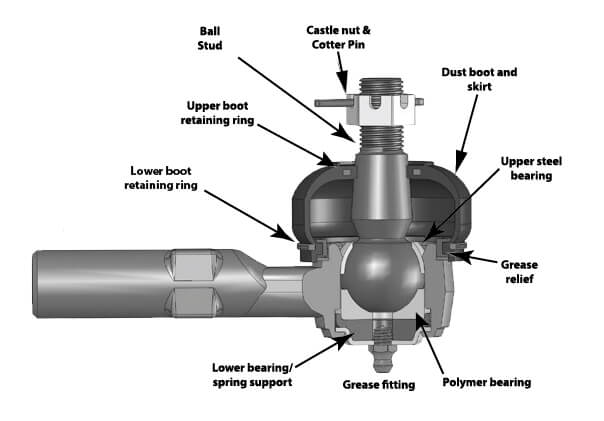
This is a cut-away view of an outer tie rod end. Notice the ball-and-socket design, which allows for up-and-down movement and left-and-right turns.
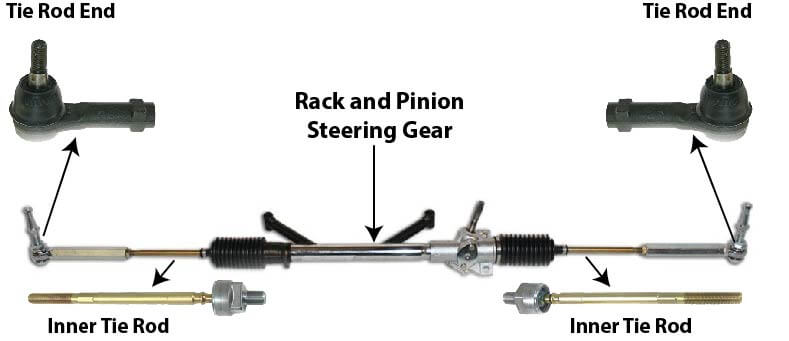
Understanding how the inner tie rods and tie rod ends work in a rack and pinion gear system
• Inner Tie Rod— The inner tie rod connects directly to the rack and pinion assembly. It moves linearly along with the rack, pushing or pulling the outer tie rod to steer the wheels.
• Outer Tie Rod End— The tie rod ends are crucial for allowing the wheels to pivot up and down and turn left and right. They are typically ball-and-socket joints that enable smooth rotation and provide flexibility as the wheels move up and down with the suspension. This connection allows the tie rods to transmit the steering force while accommodating changes in suspension geometry.
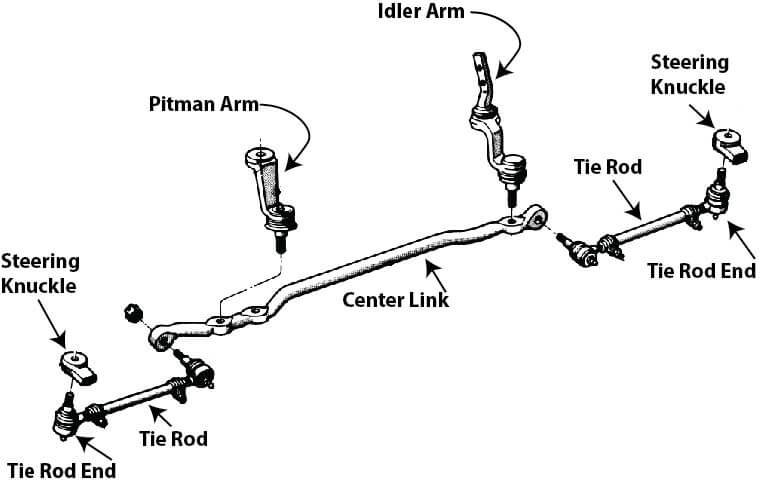
Understanding how tie rods and connecting rods work in a conventional steering gear setup
Depending on the configuration, traditional recirculating ball steering gears use many more components between the gear and the steering knuckle. Most use a pitman arm to move a drag link, center link, idler arm, and tie rods.
What causes it to go bad?
The tie rod shaft never goes bad, unless it rusts so badly that it snaps.
So the tie rod end is most common failure point. The single most common cause of tie rod end failure is loss of grease due to damage to the protective boot. Once the boot is compromised, the grease leaks out and water, salt and grit get into the ball and socket joint and grind it up.
Tie rod boots can be damaged by adding too much grease, which causes the boot to rupture and tear. Using the wrong tool to remove a tie rod can also damage the boot.
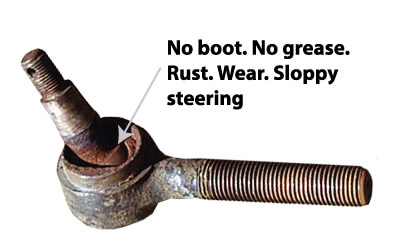
An example of a worn tie rod end that’s rusted and causing sloppy steering
However, the boot can age and crack.
What are the symptoms of a bad tie rod?
• Play in the steering wheel is the most common sign of tie rod wear. You’ll find yourself constantly correcting your steering just to stay within your own land.
• Uneven and excessive tire wear. Since the tie rod is responsible for keeping your tires pointing straight ahead when driving straight, tie rod wear can cause the tires to move left or right when the vehicle is moving straight. That causes tread “feathering”.
• Noise. In extreme wear cases, a worn ball-and-socket can make a creaking sound when turning.
• Catastrophic failure. An extremely worn, flexible ball-and-socket joint can separate while driving, preventing you from steering. The lack of input to the wheel can cause the wheel to turn to it’s maximum angle, causing a crash and serious injury.
Replacement cost
Tie rod replacement cost varies widely depending on the type of steering system (rack and pinion versus traditional recirculating ball). Tie rod ends generally cost about $50 and usually install in less than a half hour. But an inner tie rod for a rack and pinion gear can cost more and take more than an hour to install. Anytime a steering component is replacement, you must perform an alignment, which adds about $100 to the repair.
©, 2018 Rick Muscoplat
Posted on by Rick Muscoplat