
Understanding the P0496 Code: EVAP System Diagnostic
How to Fix a P0496 Code: The Expert’s Step-by-Step Guide to Diagnosing a Stuck Purge Valve
Summary: A P0496 code is triggered when the ECM detects too much purge flow during a non-purge event. The cause is usually a stuck open purge valve. The open position can be due to a faulty valve or a ruptured charcoal canister, where charcoal particles are being sucked up into the valve and the engine.
What the P0496 Code Means
Let’s get right to it—when you see a P0496 trouble code, your vehicle’s computer (ECM) is telling you that fuel vapor is entering the engine when it shouldn’t be. In plain English, P0496 means “EVAP flow during a non-purge condition.”
In normal operation, the purge valve controls when fuel vapors are drawn from the charcoal canister into the engine. The computer opens the purge valve only during certain conditions—usually after the engine has warmed up and when it needs to burn off the stored vapors.
But when the ECM detects vapor flow into the engine, even though it hasn’t commanded the purge cycle, it logs a P0496 code. That tells me the purge valve is likely stuck open, leaking vacuum into the EVAP system when it should be closed.
Understanding the EVAP System and the Purge Valve’s Role
The EVAP (Evaporative Emissions) system captures fuel vapors from the tank and routes them to a charcoal canister. Later, those vapors are drawn into the intake manifold and burned during normal combustion.
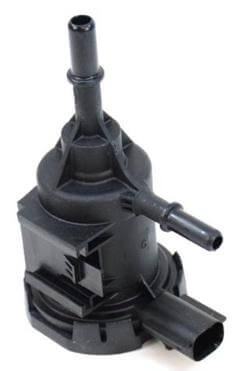
Purge valve
The purge valve—also called the purge solenoid—is the electronically controlled gateway that makes this happen. When the valve is closed, no vapors flow. When the ECM opens it, vacuum draws the stored vapors into the engine.
A P0496 code happens when the ECM senses this flow at the wrong time—typically due to a purge valve stuck partially or fully open.
What Causes a P0496 Code
In my experience, here are the most common reasons I see a P0496:
Faulty purge valve— The internal diaphragm or solenoid sticks open, allowing constant vapor flow.
Charcoal contamination— The charcoal canister breaks down and sends particles into the purge line, preventing the valve from sealing.
Faulty fuel tank pressure sensor— A bad signal can confuse the ECM into thinking vapor flow is happening.
Leaking EVAP hoses or vent solenoid— Less common, but a stuck vent valve or cracked hose can also cause a false P0496.
Symptoms You’ll Notice with a P0496 Trouble Code
When a P0496 code sets, you’ll often notice one or more of these symptoms:
• Check Engine Light (CEL): Always the first sign.
• Rough idle: A stuck purge valve introduces extra fuel vapors, upsetting the air/fuel ratio.
• Hard starting after refueling: Excess vapors flood the intake, creating a rich condition.
• Poor fuel economy: The continuous vapor flow results in unburned fuel and wasted mileage.
• Occasional stalling or hesitation: The ECM can’t maintain proper mixture control when vapors enter unexpectedly.
If you’ve recently filled up your tank and your car cranks longer than usual before starting, that’s a classic P0496 purge valve symptom.
How I Diagnose a P0496 Code
Here’s my step-by-step diagnostic approach when dealing with P0496:
Step 1: Confirm the Code
I start with a scan tool. If P0496 is stored, I also check for related EVAP codes like P0441 or P0446, which can indicate broader EVAP system issues.
Step 2: Test the Purge Valve
I disconnect the purge valve and test it using a handheld vacuum pump. When the valve is not energized, it should hold a vacuum. If it leaks down immediately, it’s stuck open internally.
Next, I energize the valve with jumper wires or a scan tool’s output test function. It should now open and release the vacuum instantly. If it doesn’t open or respond, the solenoid coil is faulty.
If the purge valve fails either test, replace it—it’s the most common cause of P0496.
Step 3: Check for Charcoal Contamination
When I remove the purge valve, I always look for tiny black charcoal particles. Those come from a deteriorating charcoal canister. If you find them, replace both the purge valve and the canister; otherwise, the new valve will soon fail again.
Step 4: Inspect the EVAP Hoses and Vent Valve
I visually inspect all EVAP hoses for cracks and check the vent valve near the fuel tank for proper operation. A stuck vent valve can trap pressure in the system and trigger the same P0496 fault.
Step 5: Verify the Repair
Once the bad part is replaced, I clear the code and perform a drive cycle. If the EVAP monitor completes without the P0496 returning, the repair is confirmed.
How to Fix a P0496 Code
In most cases, the fix is straightforward—replace the purge valve.
Here’s what’s involved:
Locate the purge valve. It’s usually mounted on or near the intake manifold.
• Disconnect the electrical connector and vapor lines. Be gentle with the plastic fittings; they can get brittle with age.
• Remove the old purge valve (often just one or two bolts).
• Install the new purge valve—I prefer OEM or quality aftermarket brands like ACDelco, Standard Motor Products, or Dorman.
• Reconnect everything and clear the trouble code.
When It’s Not the Purge Valve
If replacing the purge valve doesn’t fix your P0496, investigate the fuel tank pressure sensor circuit further. The ECM relies on this sensor to determine when vapor flow occurs. A faulty reading can trick the computer into thinking a purge event is happening.
You can test the sensor with a scan tool that displays live data. If the pressure readings fluctuate erratically or don’t change with tank pressure, replace the sensor.
Professional Tip: Always Check After Refueling
I often see the P0496 appear right after refueling. If you have a hard start after filling the tank, suspect the purge valve first. Excess vapors are being drawn into the intake before the engine even starts.
Don’t ignore this code—it can cause long-term fuel trim issues and damage the catalytic converter from running too rich.
Final Thoughts on the P0496 Code
The P0496 trouble code is one of the most common EVAP system faults, and nine times out of ten, it’s caused by a stuck purge valve. The good news is that this is a

AC Delco 22865590 vent solenoid
simple and inexpensive repair once properly diagnosed.
So, if your car throws a P0496, don’t panic. Follow these diagnostic steps, confirm the purge valve is leaking, and replace it with a quality part. Once done, clear the code and drive—your EVAP system will be back to doing its job of keeping fuel vapors out of the atmosphere and your engine running clean.
©, 2022 Rick Muscoplat
Posted on by Rick Muscoplat