
Why warming up an engine in winter is obsolete
Why idling to warm your engine in winter harms it
As temperatures drop and winter sets in, many drivers have a long-standing habit of idling their engines to warm up their vehicles before driving. This practice, though common, is not only outdated but also counterproductive and harmful to both your vehicle and the environment. Modern engines are designed differently than those of decades past, and the old advice to idle your car for several minutes in cold weather no longer holds true. In fact, idling your engine in winter can lead to a range of issues that impact fuel efficiency, engine health, and the environment. This article explores why you shouldn’t idle your engine to warm it up and what you should do instead.
Idling to warm up an engine was for carbureted engines
A carburetor is an atomizer. It uses an engine vacuum to draw fuel from the carburetor bowl and spray it into the intake manifold as droplets. But that fuel can’t burn well until it’s vaporized, and that’s where the warm-up requirement came into the picture. Without a warm-up, driving a cold, carbureted engine caused stalling and flooding. If you want to see how warm-up helped a carbureted engine, scroll to the bottom of this article.
But a warm-up is not needed on late-model vehicles
Port fuel injectors do a much better job of atomizing and vaporizing the fuel than the older carburetors, so they don’t need a warm-up to vaporize the fuel properly.
On gasoline direct injection engines, where the fuel is injected directly into the hot combustion chamber, vaporization is instantaneous.
That’s why warm-up is obsolete
For most late model fuel-injected cars and trucks, idling to warm up your engine is not recommended by any carmaker. In most cases, 30-seconds is all you need. In other cases, carmakers recommend no longer the two minutes of idling after a cold start. Idling longer than that is actually bad for your engine.
Debunking the Cold Oil Myth
The other reason given for warming up your engine in winter is to warm up the oil to get better oil flow and protection. However, the instant your oil light goes out after starting your engine, you have enough oil pressure to lubricate the moving parts. Giving the engine about 30 seconds of idle time is all you need to get oil to the top engine of the engine, so you can drive it.
Myth: Idling your engine warms the oil
Idling your engine warms the coolant, not the oil. Oil is warmed much faster by driving, not by idling. Oil gains heat from friction, and there’s very little friction in an idling engine.
Start it. Buckle Up. Turn on Your Defrosters. Put it in Drive and Go
I’m not suggesting you put the pedal to the metal 30 seconds after start up, but you will get much faster oil warm up and flow if you start driving with a light foot for about a mile. After than, you’ve got more than enough oil flow for regular driving.
How the carburetor warm-up process worked
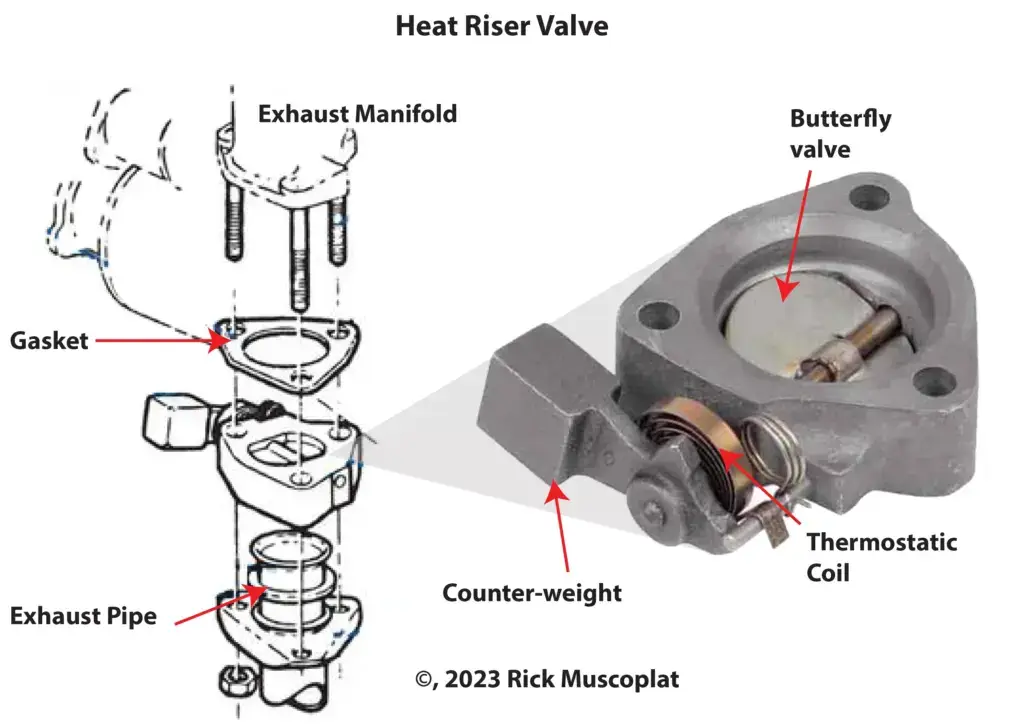
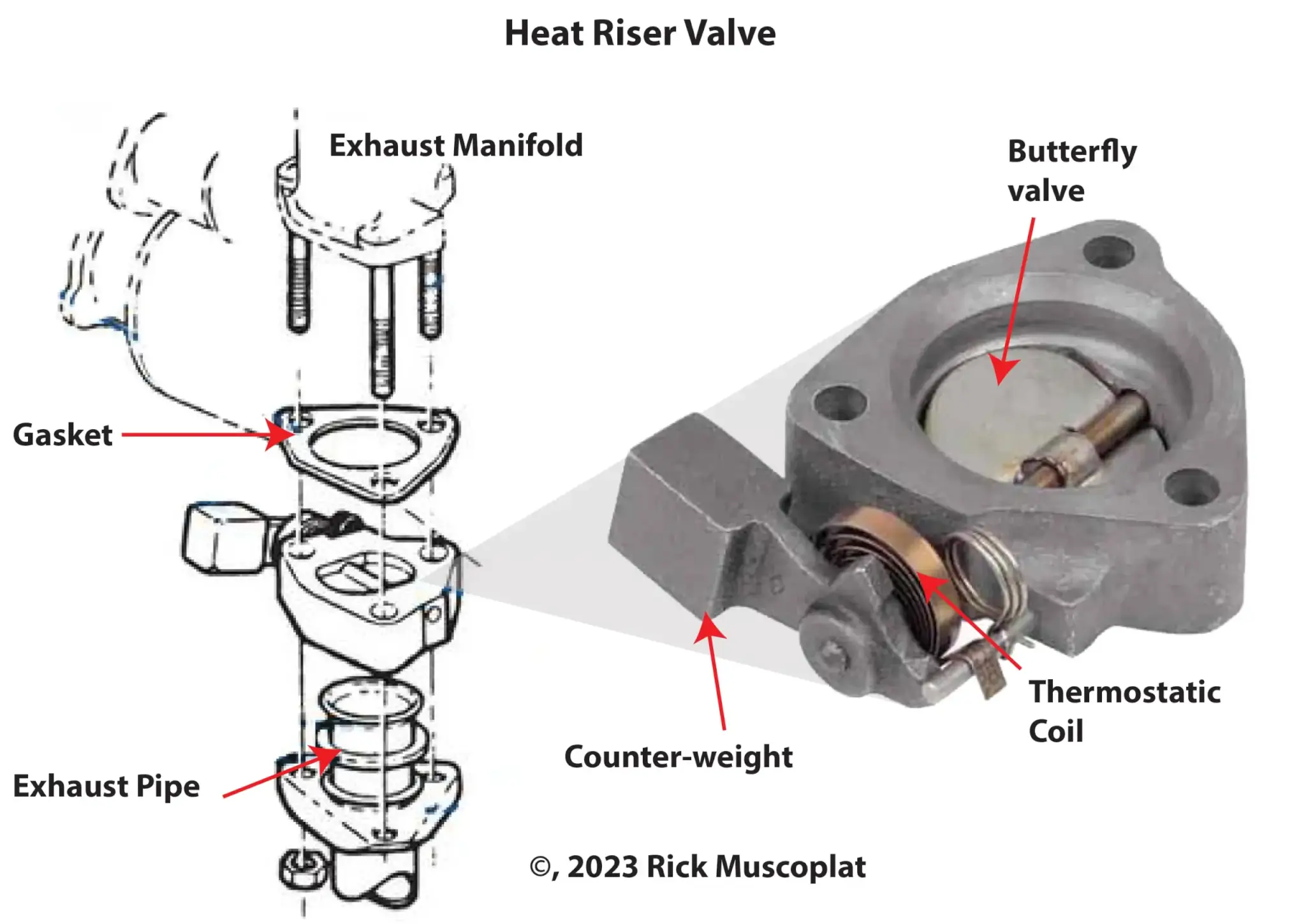
The heat riser valve
Since the carburetor dumped the atomized fuel into the center of the intake manifold, engineers had to find a way to heat up the area directly under the carburetor. The answer was the “heat riser valve;” a thermostatically controlled mechanical valve that closed off a one bank of the engine’s exhaust manifold to prevent that heat from going out the tailpipe. Instead, the heat riser routed the hot exhaust gas up to the area directly under the carburetor.
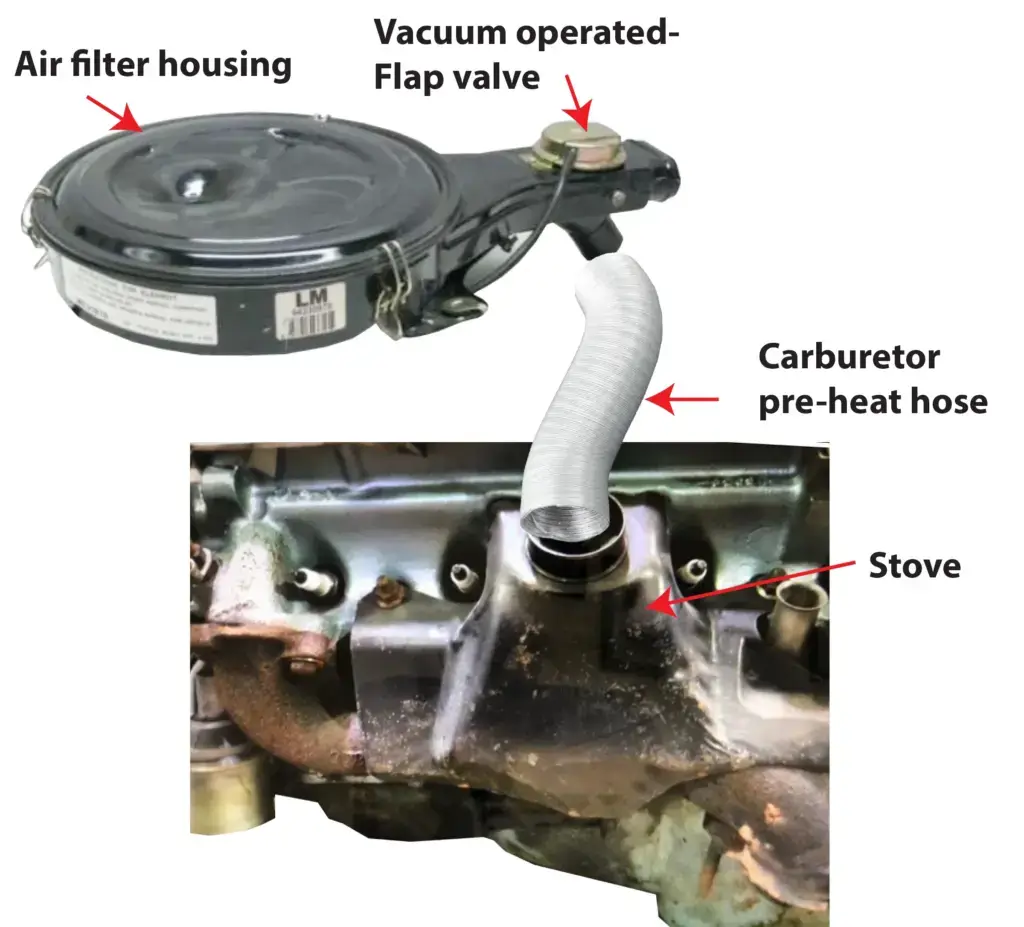
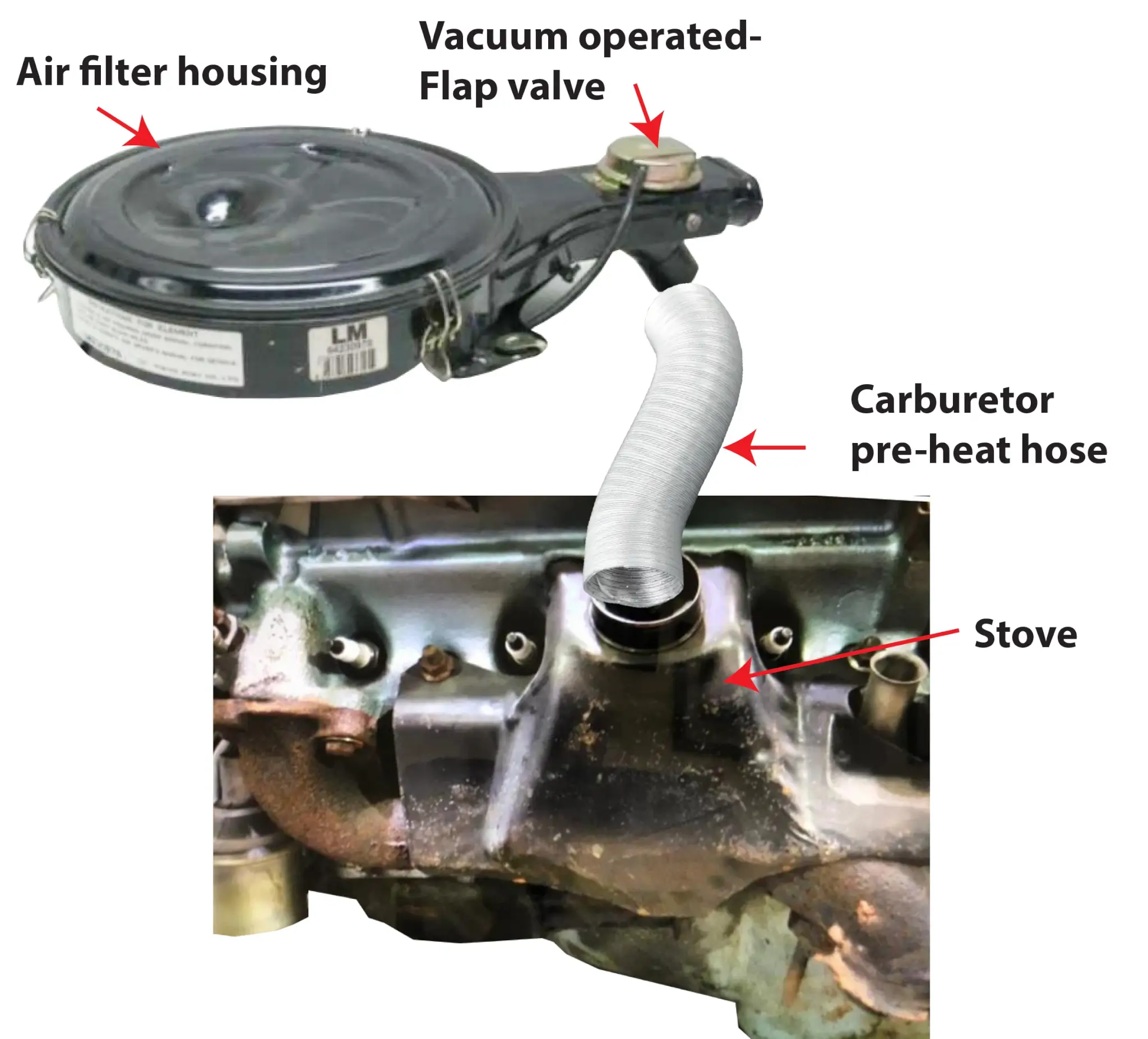
Carburetor pre-heat
Plus, they installed shrouds around the exhaust manifold to capture heat to warm the underhood air before it entered the air cleaner. Heating the intake with hot exhaust gas and pre-heating the air into the air cleaner helped the fuel vaporize.
©, 2023 Rick Muscoplat
Posted on by Rick Muscoplat