
Why Your Car Won’t Start in Cold Weather
Car Won’t Start When Cold? Expert Fixes
Quick Summary: What to Check First
When a car won’t start in cold weather, I always look at four systems first:
• A weak or discharged battery
• Worn spark plugs or weak ignition
• Carbon buildup or restricted airflow
• Incorrect oil viscosity or faulty sensors
Article:
Cold weather stresses every part of your starting system. Your oil thickens, your battery output drops, and the air/fuel mixture becomes harder to ignite. When a car won’t start when cold, it’s rarely just one issue—it’s usually a combination of reduced battery power and harder-to-ignite fuel. I’ll walk you through the exact causes I see in the real world and explain how to get a car started in cold weather without damaging the engine or wearing out your starter.
Weak or Discharged Battery: The #1 Reason a Car Won’t Start When Cold
When a car won’t start in cold weather, the most common culprit is a weak battery. Cold temperatures slow the chemical reaction inside the battery, reducing its ability to deliver the 100–200 amps your starter needs. Don’t assume the battery is good just because the dash lights come on—those lights can illuminate with as little as 5 amps and around 10 volts.
Key Rules I Follow
• A fully charged battery should read 12.6 volts.
• Anything below 12.2 volts is discharged, especially dangerous when a car won’t start when cold.
• Thickened oil makes the engine harder to crank, increasing the current demand on an already struggling battery.
How to Get a Car Started in Cold Weather When the Battery Is Weak
If the battery is dead, connect a jumper pack or jumper cables—but don’t start it immediately. Leave the booster connected for at least 15 minutes to recharge the dead battery partially. If you skip this step, the dead battery will pull down the booster’s voltage, and your car won’t start when cold, no matter how long you crank it.
Once the engine starts, drive it at highway speed for 20–30 minutes to charge the battery. Then clean the terminals and test both the battery and charging system with a proper tester—not just a voltmeter.

Once you get the engine started, drive it at highway speeds for at least 20-30 minutes before shutting if off. Then do a complete battery terminal cleaning. Next, have the battery and charging system tested.
Worn Spark Plugs Make a Car Harder to Start in Cold Weather
Worn plugs often work fine during mild weather but fail during the first severe freeze. Cold air and cold fuel require a hotter, stronger spark to ignite. When spark plugs are eroded or carbon-fouled, ignition voltage increases—and the coil may not be able to supply it.
This is one of the most overlooked reasons a car won’t start when cold.
Why Spark Testing in Open Air Is Misleading
A plug that sparks outside the engine may fail miserably under compression. That’s why you need an inline spark tester—not the old “hold it against the engine block” trick.
Carbon Buildup in the Electronic Throttle Body Restricts Airflow
When temperatures drop, a dirty throttle body becomes a major reason a car won’t start in cold weather. Carbon buildup narrows the throttle
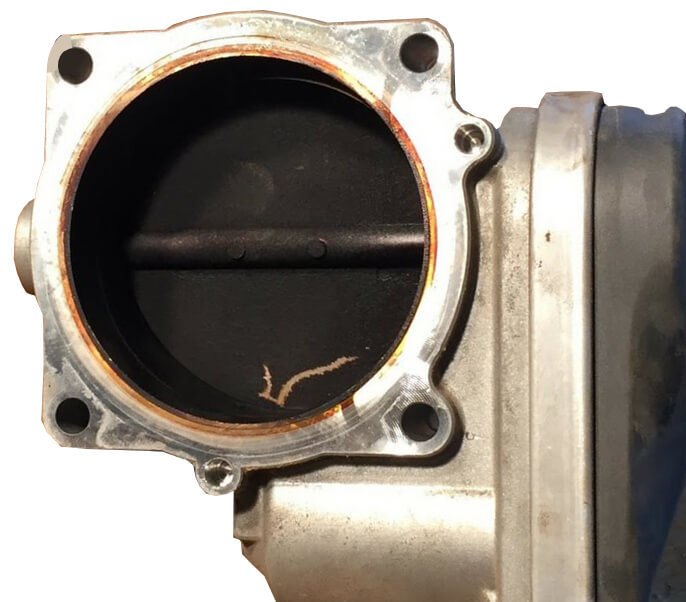
Carbon buildup in an electronic throttle body
bore, restricting the airflow the ECM expects during cold-start conditions.
If your car won’t start when cold, removing the intake duct and visually checking for carbon is one of the quickest and most effective checks. Cleaning the throttle body and performing the correct throttle body relearn procedure can immediately restore cold-start performance.
See this article for a step-by-step guide on how to clean carbon buildup from a throttle body.
Wrong Oil Viscosity Can Prevent a Cold Engine from Cranking Fast Enough
Oil thickens as temperatures fall. If you’re using summer-weight oil in mid-winter, your engine may not spin fast enough to start. I’ve seen many cases where the only reason a car won’t start in cold weather is due to 10W-40 oil in an engine that should have been running 0W-20 or 5W-30 for winter.
Switching to the manufacturer’s recommended winter oil often solves the problem instantly.
Faulty Sensors Can Prevent a Car from Starting in Cold Weather
When the PCM calculates the wrong fuel mixture, especially in freezing temperatures, the engine won’t fire. The computer uses data from several sensors to determine how much fuel to inject:
• Engine Coolant Temperature (ECT) Sensor
• Intake Air Temperature (IAT) Sensor
• Mass Airflow (MAF) Sensor
• Manifold Absolute Pressure (MAP) Sensor
If any of these sensors feed incorrect data, the PCM may over-fuel (flooding the engine) or under-fuel (creating a lean no-start). This is a major contributor to why a car won’t start when cold even if the battery and ignition are fine.
Tips to start your car in cold weather
1. How to Start a Flooded Engine — If the engine cranks but won’t fire, there’s a good chance it’s flooded. To clear it:
• Press the accelerator pedal to the floor
• Hold it there while cranking
This activates “clear flood mode,” shutting off the injectors and allowing the engine to dry out. After 5–10 seconds, release the pedal and try again.
2. Use Starting Fluid (Sparingly) — Starting fluid is more ignitable than cold gasoline. A short shot may give you just enough burn to get the engine running. If it doesn’t respond in one or two tries, stop—too much can wash down cylinder walls or cause backfire.
3. Test for Proper Spark and Fuel Injector Operation — Free-air spark tests are unreliable in cold weather. Use inline testers or coil-on-plug testers for accurate results. If spark and injector pulse are present, combustion should occur—opening the door to a more targeted diagnosis if the car won’t start when cold persists.
If you want to check an ignition coil’s condition, I recommend these test tools.
4. Evaluate the Battery and Charging System — Cold weather exposes underlying battery and alternator issues.
• Inspect for corrosion
• Clean all terminals
• Use a modern battery tester to check both state-of-charge and state-of-health
• A weak alternator that can’t recharge the battery is often the hidden reason a car won’t start in cold weather the morning after it ran fine.
Lisle 20610 inline spark plug tester $11 From Amazon
This tester works great on older vehicles with spark plug wires. Install the Lisle 20610 inline spark tester between the spark plug wire and the spark plug. Then crank the engine and watch the spark jump across the gap in the window area
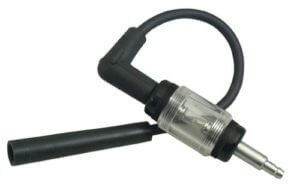
Inline spark plug tester
Test coil-on-plug ignition system
If your car has a coil-on-plug ignition, you’ll need a special tester to see if the coil is firing. Waekon-76562 Quick Variable Sensitivity ignition coil tester is designed to give a visual indication every time a coil on plug coil fires.
Just hold the sensor end on the coil and watch for the visual indication. Yes, the tool is expensive, but its’ the only way to test a COP style ignition coil.
$100 at jbtools.com

Waekon 76562 coil on plug tester
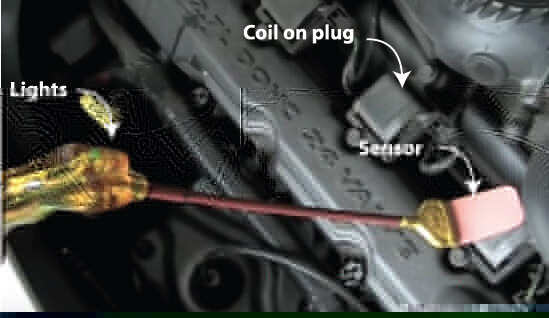
Waekon coil on plug tester in use on engine’s fuel injectors
You’ll also need a special tool to check for fuel injector firing. The Waekon 76462 Universal Electronic fuel injector tester ($103 at Amazon) works just like a coil tester. Place the probe on the injector, and it lights up when the injector fires.
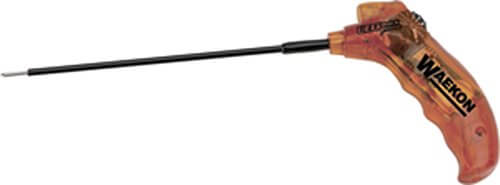
Fuel injector tester
If the coil and fuel injectors fire
If the ignition coil and fuel injector fire, you should get combustion and the engine should fire up.
However, other issues can prevent a car from starting in cold weather. Let’s talk about those.
Here’s how to check the condition of your battery and your car’s charging system
• Perform a Visual Inspection— Check for the presence of corrosion. A blue/green or white coating on the battery terminals and posts indicates corrosion, which creates high electrical resistance. That high resistance prevents your battery from getting a full
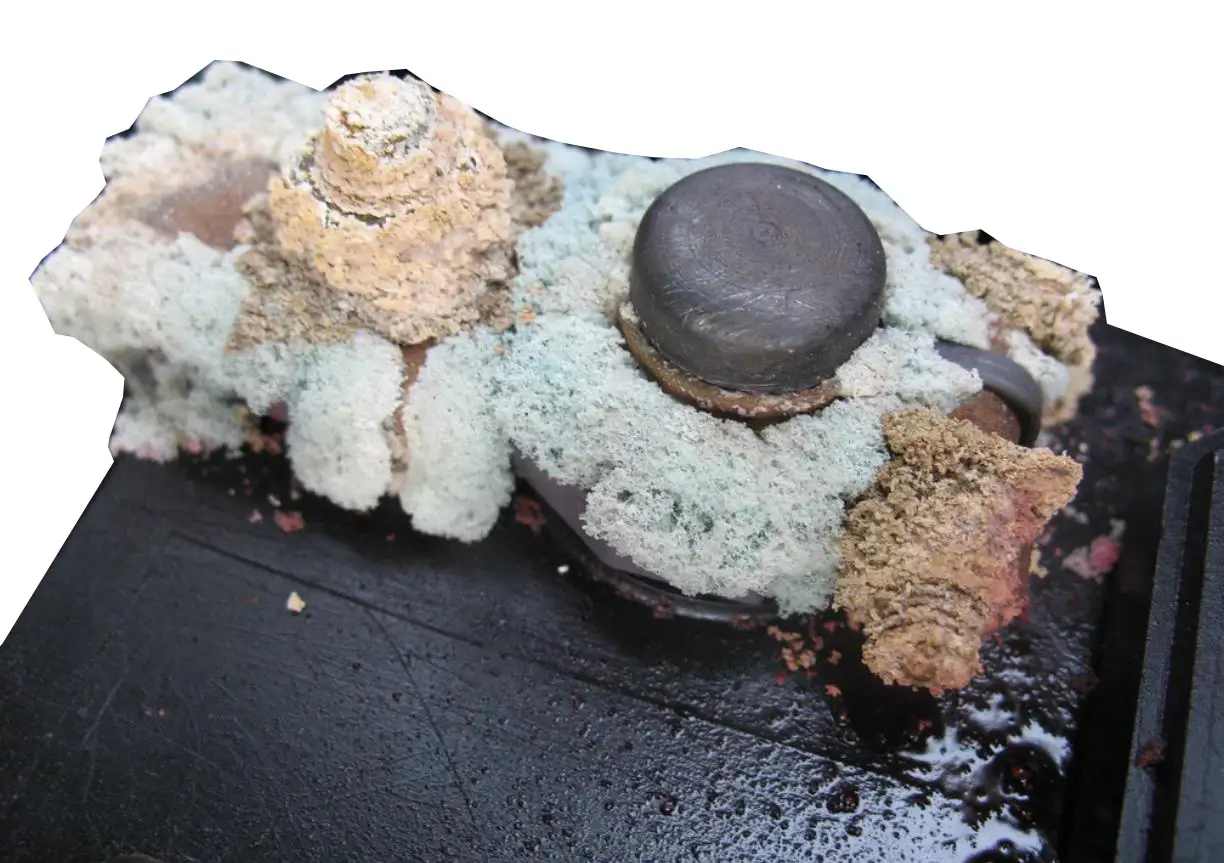
Notice the corrosion and the wetness on the top of the battery. This car battery is leaking between the case and the post
charge, and it also prevents your starter from getting all the power it needs.
If you find corrosion, remove the battery terminals and clean them and the posts following the step-by-step guide I show in this article. Then reconnect the terminals and perform a throttle body relearn procedure (search for the correct procedure online by year, make, model, and engine specification).
• Test the battery and charging system using a modern battery and charging system tester— You’ll find all kinds of battery testing advice online. Most of it tells you to test the battery voltage. Battery voltage is only one part of the picture, though. It only tells you the battery’s state of charge. It doesn’t tell you the battery’s state of health. You need a modern battery tester to get a more complete picture of your battery’s condition.
©, 2018 Rick Muscoplat
Posted on by Rick Muscoplat