
Brake LIne Replacement Cost: What Factors Affect It?
Brake line replacement cost varies by make and model and severity of corrosion
The brake lines that run from the master cylinder to each wheel are made from corrosion-resistant steel. As the brake line ages, leaks can develop. The leaks can’t be repaired—the brake line must be replaced. Brake line replacement cost is based on the cost of the part, ease of running the replacement line from the master cylinder to the wheel, and the time involved in bleeding air from the system after replacement. Here’s how brake lines work and what affects brake line replacement costs.
Brake line replacement cost
Shops can choose a replacement brake line from the dealer or aftermarket parts store or make one on-site. The pricing for brake line replacement depends on which line is leaking and the difficulty involved in removing the old line and installing the new line.
Pre-bent brake line kits are one option
Several manufacturers sell pre-bent brake line replacement kits for vehicles with high failure rates. Buying a pre-bent kit is sometimes a good option. However, the pre-bent kits are designed to follow the same routing as the factory lines. In some cases, the brake lines route over the fuel tank or inside the passenger cabin. In those cases, the labor to remove the components may cost more than the cost to spline in a replacement section.
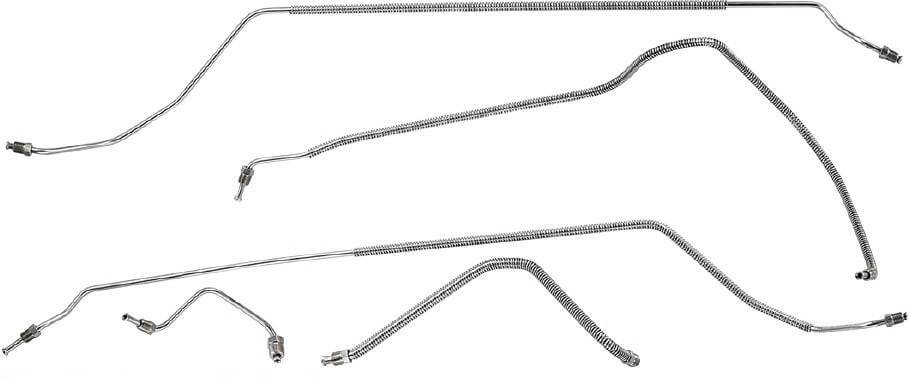
Making a new brake line on-site is another option
Copper-nickel brake line can be bent more easily than

S.U.R.&R. UltraBEND® Flexible Brake Line Tubing
traditional steel brake lines, and it can handle the high pressure found in brake systems.
Run the copper-nickel line in protector areas under the car, install flare fittings, and then apply the correct flare to match the component.
Brake line flare fittings
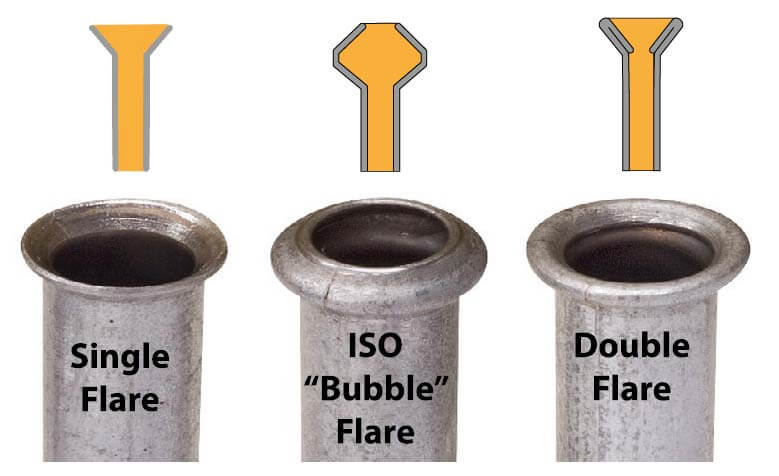
Brake lines must handle extreme pressure so all brake line splices or connections must also be capable of handling the high pressure. Metal brake lines connect using either a double flare or ISO bubble flare. Single flare connections can never be used in an automotive application because they can fail under pressure. Here’s what single, double and ISO bubble flares look like.
The brake line to brake line connection and brake line bracket
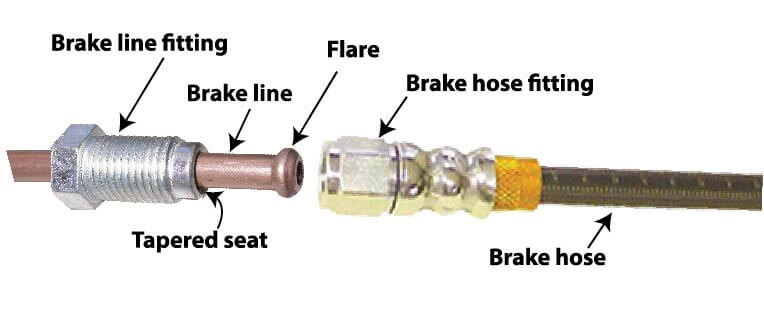
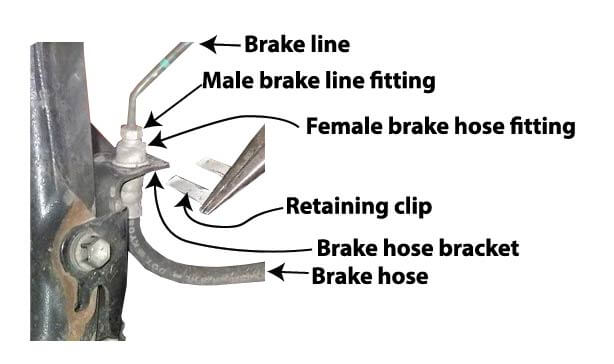
A brake fitting is installed on the brake line before it’s flared. Then the brake line is screwed into a mating fitting on the brake line. This connection must be securely mounted to the vehicle frame to prevent vibration and movement. Car makers install a brake line bracket and the brake line fitting has a slot for a “U” shaped retaining clip.
The brake line and brake line connects to the brake caliper
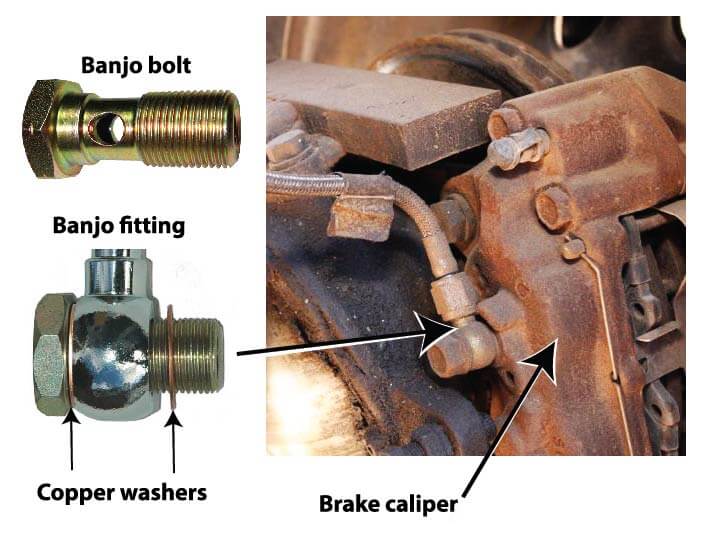
The opposite end of the brake line connects to the brake caliper with a circular “banjo” fitting. The banjo fitting and a corresponding banjo bolt, along with two copper washers allow brake fluid to flow into the caliper under high pressure. The copper washers act as the seals.
©, 2017 Rick Muscoplat
Posted on by Rick Muscoplat