
What a P0121 Code Means and How to Fix It Fast
P0121 Code: What It Means, What Causes It, and How I Diagnose It
Quick Summary
A P0121 code is defined as: a Throttle Position Sensor/Switch A Circuit Range/Performance Problem. This means the ECM is seeing a mismatch between the expected and actual throttle position data. In most cases, the root cause is a faulty throttle position sensor, a dirty or sticking throttle body, or wiring issues. The key to fixing a P0121 code is verifying the signal integrity between the throttle body and the ECM. If you follow a structured diagnostic process, you can pinpoint the problem quickly and avoid unnecessary parts replacement.
What a P0121 Code Really Means In Lay Terms
In plain English, the engine control module (ECM) is receiving a throttle position signal that doesn’t match what it expects based on the engine load, RPM, and accelerator input.
On modern vehicles, this isn’t just a simple sensor reading. The throttle system is part of an electronic throttle control (drive-by-wire) setup. That means the ECM constantly compares multiple signals—accelerator pedal position, throttle position, and sometimes even airflow—to make sure everything lines up.
When those signals don’t agree within a specified range, the ECM sets a P0121 code and may place the vehicle in reduced-power or limp mode.
Symptoms I See With a P0121 Code
In my experience, a P0121 code usually shows up with drivability complaints before it even turns on the check engine light.
You might notice a rough or unstable idle, hesitation when accelerating, or a lack of throttle response. In more severe cases, the vehicle may go into limp mode, limiting speed and throttle opening to protect the engine.
Sometimes the symptoms are subtle—a slight surging or inconsistent throttle feel. That’s why I always rely on scan data, not just how the car “feels.”
The Most Common Causes of a P0121 Code
Over the years, I’ve seen a consistent pattern with the causes of a P0121 code.
• Failing throttle position sensor— This is one of the most common causes of this code. In many vehicles, that sensor is built into the electronic throttle body, so you’re replacing the entire unit rather than just the sensor.
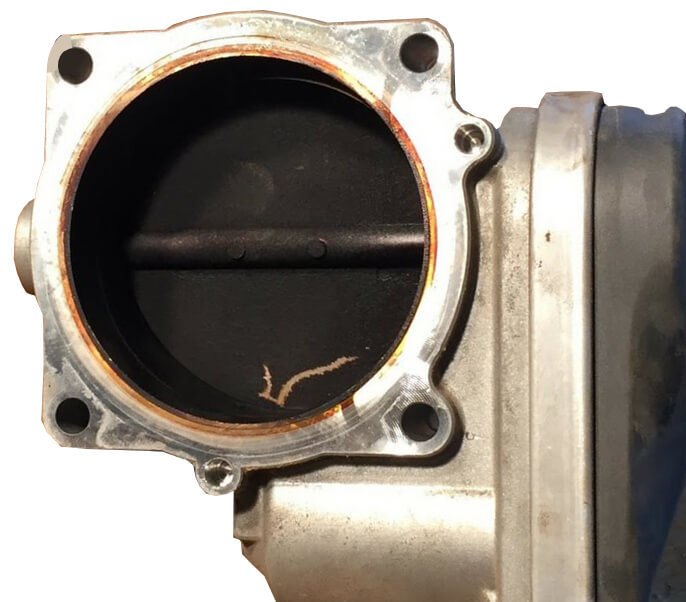
• Carbon buildup in the throttle body — This is another frequent cause. When deposits restrict airflow or cause the throttle plate to stick, the ECM detects a mismatch between the commanded and actual positions and flags a P0121 code.
• Wiring problems — Less common but certainly not unheard of, corrosion in the connectors, a damaged harness, or poor grounds can distort the sensor signal just enough to trigger the code.
• Less common — Issues with the accelerator pedal position sensor or even a faulty ECM, but those are not my first suspects.
How I Diagnose a P0121 Code Step by Step
1) I start with a scan tool and look at live data. I compare the throttle position sensor readings to the accelerator pedal input. Both should move smoothly and proportionally. If I see jumps, dropouts, or inconsistent readings, I know I’m on the right track.
2) I perform a visual inspection of the throttle body. If I see carbon buildup around the throttle plate, I clean it. I’ve fixed many P0121 code issues with nothing more than a proper cleaning and relearn procedure.
3) If cleaning doesn’t resolve it, I move on to electrical testing. I check the reference voltage, ground, and signal return using a multimeter or, preferably, a lab scope. A scope lets me catch momentary glitches that a meter might miss.
4) Then I inspect the wiring harness. I gently wiggle the harness while watching the signal. If the voltage drops out, I’ve found an intermittent connection.
Only after verifying all inputs and outputs do I consider replacing the throttle body.
Why Throttle Body Cleaning Matters
Many technicians underestimate
Carbon buildup in an electronic throttle body
how often a dirty throttle body causes a P0121 code.
As carbon builds up, it restricts airflow and can physically interfere with throttle plate movement. The ECM compensates as much as it can, but eventually the discrepancy becomes too large, triggering the code.
When I clean a throttle body, I always follow up with an idle relearn procedure. If you skip that step, the ECM may still misinterpret airflow and continue setting a P0121 code.
When to Replace the Throttle Body
I only replace a throttle body when I’ve proven it’s faulty.
If the throttle position signal is erratic and I’ve confirmed good wiring and clean internals, the internal sensor is likely failing. Since most sensors are integrated, replacement of the throttle body assembly is the only fix.
I always recommend OE-quality parts. Cheap replacements often lead to repeat failures or poor throttle response, which can bring the P0121 code right back.
My Professional Take on Diagnosing a P0121 Code
The biggest mistake I see is technicians jumping straight to replacing the throttle body without testing. That’s expensive—and often unnecessary.
A P0121 code is fundamentally a data mismatch problem. If you understand how the system communicates and take the time to verify signals, you’ll solve it faster and more accurately.
©, 2026 Rick Muscoplat
Posted on by Rick Muscoplat