
Fuel Gauge Not Working — How to Diagnose and Fix
Why Your Gas Gauge Is Not Working or Reading Wrong
Quick Summary
When your gas gauge doesn’t work, the most common causes are corrosion at the fuel-sending unit connector, a poor ground, wiring damage, or a worn fuel-sending unit inside the tank. In modern vehicles, the body control module and instrument cluster also play a role, so a gas gauge’s incorrect reading doesn’t always mean the sender itself is faulty. The key is testing before replacing parts.
Article
What’s Really Going On When a Fuel Gauge Isn’t Working
Any time I hear someone say their fuel gauge is not working, I immediately ask one question: “Is it dead, stuck, or just inaccurate?” A gauge that reads empty all the time, a gauge that never moves, and a gas gauge wrong by a quarter tank are all failures—but they point to different causes.
Despite how simple a fuel gauge looks on the dash, the system behind it is a chain of electrical events. When any link in that chain fails, the result is a gas gauge that doesn’t work correctly or outright lies to you.
How the Fuel Gauge System Actually Works
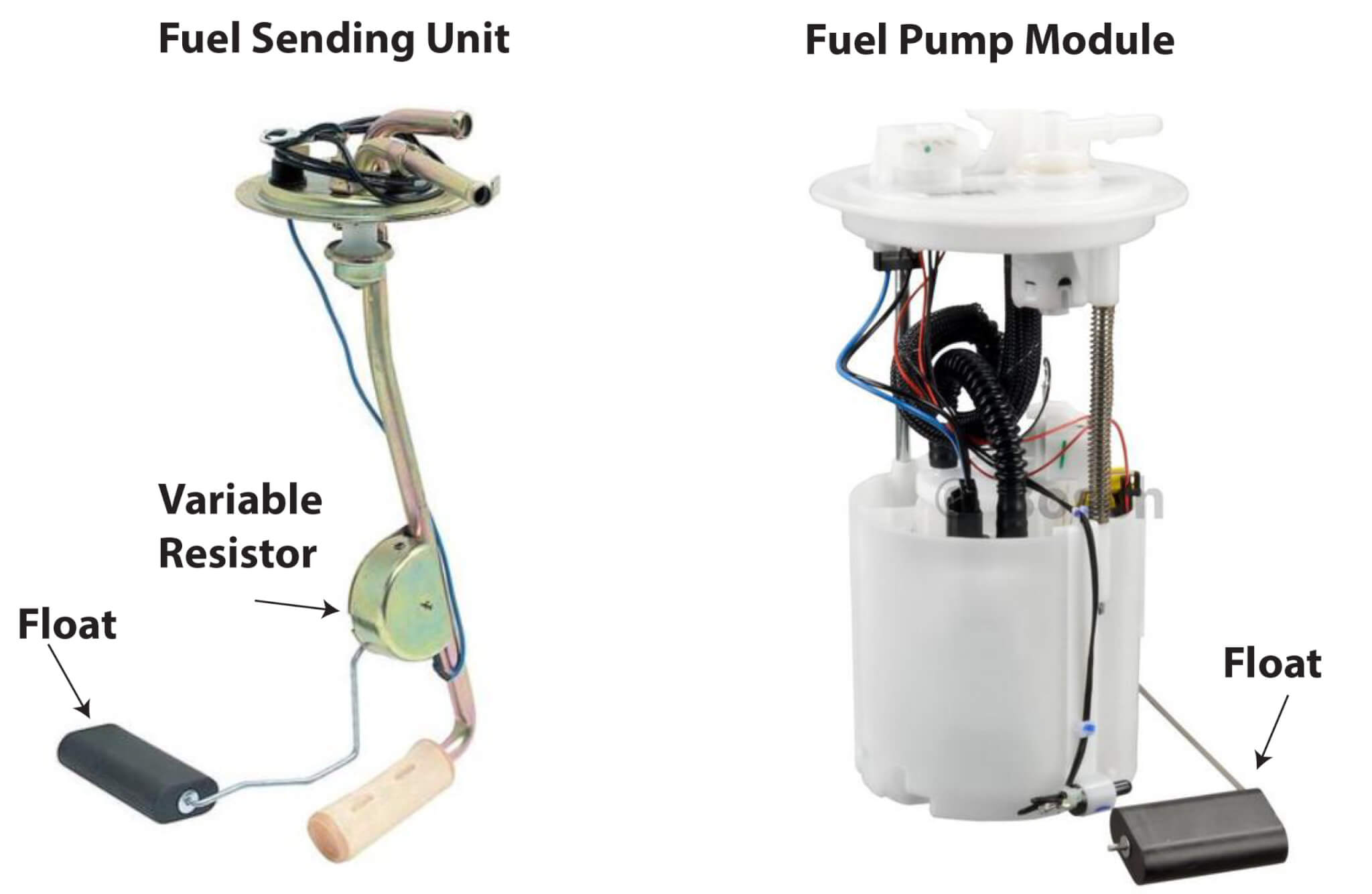
Inside the fuel tank is the fuel-sending unit, integrated into the fuel pump module on nearly all modern vehicles. The sender consists of a float that rides on top of the fuel, a float arm, and a variable resistor. As the fuel level changes, the float moves the arm, thereby changing the resistance. That resistance change alters the voltage signal emitted from the tank.
On older vehicles, the changing resistance is fed directly to the gauge. If the sender’s resistance changed, the needle moved. Simple, mechanical, and easy to diagnose.
On late-model vehicles, things get more complicated. The voltage signal from the sending unit is routed to a body control module or a powertrain control module. That module filters the signal, smooths out fuel slosh, and then sends a digital command to the instrument cluster. When a fuel gauge not working issue appears on these vehicles, the fault can lie with the sender, wiring, module, or even the cluster itself.
That’s why guessing is expensive and testing matters.
Why Corrosion Is the Most Common Cause of a Gas Gauge Not Working
If no one has touched the fuel tank and your gas gauge is not working, the problem suddenly appears, corrosion is the first thing I look for. The fuel-sending unit connector lives in a harsh environment—road salt, moisture, temperature swings—and corrosion increases resistance.
Even a small amount of corrosion can skew the signal enough to make the gas gauge wrong by a noticeable amount. I’ve fixed countless “bad fuel gauge” complaints simply by cleaning terminals and restoring a solid ground.
How I Check the Fuel-Sending Unit Connector and Grounds
I start by locating the fuel pump module connector, usually above the tank or under the rear seat. I disconnect it and inspect the terminals closely. Green or white buildup is a dead giveaway. If I find corrosion, I clean it with electrical contact cleaner and protect it with dielectric grease before reconnecting.
Next, I find the ground point for the fuel pump and sender circuit. A loose or corroded ground can cause a fuel gauge not working symptom to appear and disappear with changes in humidity or temperature. Cleaning and tightening the ground often restores accurate readings immediately.
If the gas gauge still isn’t working, it’s time to break out the meter.
Testing the Fuel-Sending Unit the Right Way
At this point, I consult a wiring diagram and identify the reference voltage going into the fuel-sending unit and the signal voltage coming back out. I measure both with a multimeter.
The return voltage should match the expected value based on the fuel level in the tank. If the tank is half full but the voltage corresponds to empty, the gas gauge’s wrong reading is coming from the sender itself. Inside the tank, the resistor card may be worn or corroded, or the float arm may be bent or stuck.
If there’s no reference voltage at all, I know the problem is upstream—usually a wiring harness issue or a module fault. That’s how I avoid replacing a fuel pump module when the real problem is a broken wire.
Why a Fuel Gauge Can Be Wrong Even When Nothing Is “Broken”
One thing many people don’t realize is that modern vehicles intentionally manipulate fuel gauge readings. The computer averages signals to prevent needle swing during turns and braking. When software glitches occur or battery voltage drops repeatedly, the learned fuel level can drift.
In those cases, a gas gauge’s wrong condition can sometimes be corrected with a scan tool reset or battery disconnect procedure. I’ve seen vehicles where the fuel gauge not working complaint vanished after recalibrating the cluster or performing a module relearn.
When the Fuel-Sending Unit Really Is Bad
If testing confirms the sender is faulty, replacement is the only real fix. Unfortunately, that’s where the job gets expensive. On some vehicles, there’s an access panel under the rear seat. On others, the fuel tank has to be removed, which means draining the fuel, disconnecting lines, and dealing with rusted hardware.
That’s why I almost always recommend replacing the entire fuel pump module instead of just the sender. The labor is the same, and installing a new sender on an old pump is a gamble. A fresh module restores fuel-delivery reliability and eliminates future fuel-gauge issues caused by internal wear.
Why Ignoring a Gas Gauge Not Working Is a Bad Idea
Driving with a gas gauge not working isn’t just inconvenient—it’s risky. Running out of fuel can damage the fuel pump, overheat internal components, and leave you stranded in unsafe conditions. A gas gauge wrong by even a quarter tank can lull you into a false sense of security.
That’s why I always recommend diagnosing the issue as soon as you notice it. The earlier you catch corrosion or wiring damage, the cheaper the fix usually is.
Final Thoughts on Diagnosing a Fuel Gauge Not Working
When a fuel gauge is not working or reading incorrectly, the fix isn’t guesswork—it’s methodical testing. Most problems stem from corrosion, grounds, wiring, or a worn sender. Modern electronics add complexity, but they also provide richer diagnostic data when used appropriately.
A gas gauge reading that’s wrong is your vehicle asking for attention. Listen to it before it turns into a roadside lesson.
© 2012 Rick Muscoplat
Posted on by Rick Muscoplat