
Identifying the Symptoms of a Bad Fuel Pump
Learn the most common symptoms of a bad fuel pump
A fuel pump is the most important component of your vehicle’s fuel system. It is responsible for delivering fuel from the gas tank to the engine at the proper pressure and volume required for performance and efficiency. When a fuel pump begins to fail, it can cause a range of issues that, if left unaddressed, can lead to significant engine problems or even a complete breakdown. Recognizing the symptoms of a bad fuel pump early can save you from more costly repairs and ensure your vehicle remains safe and reliable. This article will explore the common signs of a failing fuel pump and what you can do about it.
Symptoms of a bad fuel pump are different between mechanical and electric fuel pumps
Older cars equipped with carburetors usually have mechanical fuel pumps driven by the camshaft and a follower pin. However, fuel injection engines have an electric fuel pump located in the fuel tank, and it has different failure symptoms than a mechanical fuel pump. Since most vehicles have fuel injection, I’ll only go over the symptoms of a bad electric fuel pump in this article.
The most common symptom of a bad fuel pump: The engine cranks a long time before it fires up
A bad check valve in the fuel pump can cause all the fuel in the fuel rail to drain back into the tank overnight, making it difficult to start your engine in the morning. If your engine starts up normally when warm but cranks up to 10 seconds in the morning or requires multiple attempts to start, that’s a sign of a bad check valve.

Turbine style fuel pump showing the turbine, motor and check valve
How to test for a bad check valve
You can perform a simple test to confirm the problem is related to the check valve.
Let the vehicle sit overnight, and don’t try starting it immediately in the morning. Instead, turn the key to the RUN position for 2-3 seconds, but don’t start the engine. Then turn the key off. Repeat this three times. Then, try starting the engine. If it starts right up, a bad check valve is the culprit. Here’s what you’ve done. Each time you turn the key, the fuel pump runs for about 2 seconds, pushing fuel up to the engine and building pressure. The pump usually has enough fuel pressure to start the engine for the third time.
What’s the fix for a bad fuel pump check valve
The check valve is built into the pump and is not replaceable as a separate part. So you have to replace the entire fuel pump.
Failure to start even when warm is another symptom of a bad fuel pump
A bad fuel pump can fail to run at all or may run but not provide enough pressure or volume to allow the engine to start.
To diagnose a bad fuel pump that has this symptom, check the following:
• Have a friend turn the key to the start position while you listen for the fuel pump to start and run for a 2-second prime cycle. If you don’t hear the pump run, check for power to the pump
• Have a friend turn the key to the start position while you check for power and ground to the fuel pump at the connector on top of the tank. If the pump isn’t getting power, check the fuel pump relay and the fuel pump module. Conduct a voltage drop test on the ground side of the fuel pump circuit to eliminate a grounding issue.
• If you find power and ground in the connector, reconnect the connector to the pump and conduct a fuel pressure and volume test.
Engine sputters at high speed
This symptom can be an indication that the fuel pump isn’t putting out enough volume. That can be caused by a worn pump of a failing fuel pump driver module.
Loss of power when accelerating is a symptom of a bad fuel pump
Low fuel pressure or low fuel volume can cause a loss of power on hills or during period of heavy or rapid acceleration. In other words, the fuel pump can’t keep up with fuel demands when the engine is under heavy load.
Engine surging can be a symptom of a bad fuel pump
In this case, the engine speed increases or decreases without any driver input. DIYers mistakenly blame this on a clogged fuel filter, but the fuel filter is usually not the cause of surging. Clogged fuel filters usually don’t cause erratic symptoms because they’re either clogged or not clogged.
What causes fuel pump failure?
• Driving the vehicle when low on gas—Fuel pumps get hot, and carmakers rely on gas in the tank to cool the electric motor. When you run the vehicle constantly near empty, the fuel pump runs hot and wears out prematurely. Then, when you finally add gas, it stirs up whatever debris was in the tank, and it’s sucked into the pump.
• Corroded electrical connections—electric fuel pumps use a lot of power, so they require good electrical power and ground connections. I’ll never understand why car makers place the ground connection under the vehicle where it’s exposed to road salt conditions, but they do. Once a power or ground connection gets corroded, it creates extra resistance, increasing amperage draw while reducing voltage. That overheats the motor windings and causes them to deteriorate.
Common fuel pump tests
Tools you need to test a fuel pump:
• Fuel pressure gauge
• Digital voltmeter, and, in some cases, a digital scope.
Conduct a fuel pressure and volume test
Connect the fuel pressure gauge to the test port or a testing location
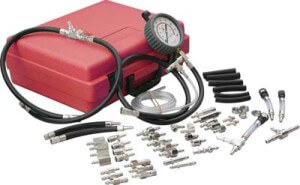
A fuel pressure test gauge kit includes all the fittings you need to connect to your vehicle. But or rent one. BETOOLL Pro Fuel Injection Pressure Tester Kit Gauge
somewhere on the fuel line. Find the factory specs in a shop manual. Turn the key ON several times (engine off) to build pressure and see if the fuel pump reaches the specified pressure. If it does, then take the vehicle for a test drive to make sure it maintains that pressure when under load.
Next, measure how much fuel the pump delivers. Activate the pump and measure the fuel it delivers in 30 seconds. Then, compare the fuel delivery volume to the car maker’s specs. If it fails to deliver the correct volume, replace the bad fuel pump.
Perform a fuel pump leak-down test
If the engine requires an extended crank time when cold, test for check valve fuel leak down. Repeat the test above to build pressure. Then leave the gauge attached and leave the vehicle for several hours or overnight. If the fuel system loses more than 5-10-psi. the check valve if faulty and the fuel pump must be replaced.
Test for good power and ground
On older fuel injected vehicles, test for battery power at the fuel pump connector when turning the key to ON. Then check for good ground. However, newer vehicles with a return-less fuel system don’t provide a constant 12-volts to the pump. Instead, they use a fuel pump driver module that pulses power to the pump to help regulate pressure and volume. If your vehicle has a fuel pump driver module and you don’t read 12 volts at the connector, don’t assume the driver module is bad. Instead, test with a scope.
What is a fuel pump driver module?
In the early fuel-injected engine designs, the fuel pumps were designed to run at full speed and full pressure the entire time the engine ran. As I
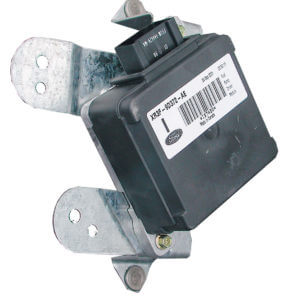
Fuel Pump Driver Module
As described earlier, the fuel pressure regulator bled off the unneeded pressure and either returned it to the fuel tank or bled off the pressure right in it.
Late-model fuel-injected vehicles use an entirely different fuel pump delivery strategy. Instead of running the fuel pump at full speed, full time, these vehicles employ a fuel pump driver module along with a fuel rail pressure/temperature sensor to run the pump only as needed.
The fuel system control strategy is a software program stored in the PCM. Using accelerator pedal position information and fuel rail pressure/temperature inputs, the PCM can direct the fuel pump driver module to regulate fuel pump speed to match engine needs.
The PCM commands a duty cycle command to the fuel pump driver module method, where it pulses voltage to the fuel pump, resulting in a variable speed fuel pump operation. In this type of system, the fuel pump runs only fast enough to meet the engine’s fuel needs. This method conserves power, which results in better MPG.
Unfortunately, many DIYers misdiagnose these systems due to the varying voltage going to the fuel pump. If you use a digital voltmeter to check the voltage of the fuel pump at idle, you may suspect a bad fuel pump or electrical problem where there is none. Here’s how you can get fooled. The engine doesn’t need as much fuel at idle, so the fuel pump driver module pulses power less often to the fuel pump. Since a digital voltmeter can’t track rapid voltage changes, what you see on the screen is an average of the voltage, and that can make you think the fuel pump isn’t getting the proper voltage.
The only way to properly diagnose these systems is to use a scan tool with live data and a scope that can track the voltage pulses.
©, 2015 Rick Muscoplat
Posted on by Rick Muscoplat