
Seafoam engine cleaner: How to use it safely in your engine
Learn how to use Seafoam engine cleaner without causing damage
Sea Foam Motor Treatment is a popular automotive additive used to clean and maintain engine components. Sea Foam touts its ability to remove carbon deposits, gum, and varnish from the engine, improving performance and extending the vehicle’s life. However, while Sea Foam can provide several benefits, it also carries potential risks that should be considered before use. This article explores both the advantages and disadvantages of using SeaFoam engine cleaner in your engine.
Seafoam’s recommended ways to use their motor treatment product
The manufacturer lists three ways the product can be used;
• poured into the crankcase to remove crankcase deposits,
• poured into the gas tank as a fuel injector cleaner
• add to fuel for storage.
There are no risks with using Seafoam in your gas tank as an injector cleaner or fuel stabilizer. However, when using it with your engine oil, there are some risks—more on that in a second. There is a third and far more risky way to use Seafoam engine cleaner, and that method can cause significant damage to your catalytic converter.
The risks of adding Seafoam engine cleaner to your oil
If you add Seafoam to your oil, it can dissolve sludge buildup and deposits in your crankcase. Sounds good, right? Well, adding any kind of cleaner to your crankcase carries some risks, and I’ll explain how using Seafoam engine cleaner or any other “crankcase flush or cleaner” product isn’t entirely risk-free.
My opinion on adding engine cleaning products to your crankcase
I’m not a fan of any engine cleaner you add to your oil. If you take care of your engine with regular oil changes, you don’t need to add cleaners. However, if you neglect your engine and it has sludge and carbon buildup, adding a chemical cleaner or flush product can loosen those deposits and clog oil passages, resulting in catastrophic engine failure. In other words, the “cure” can sometimes be worse than the problem.
How the engine damage occurs
When poured into the crankcase as an additive, engine cleaning chemicals dissolve some sludge and carbon deposits but only loosen others. The loosened deposits can cause problems. Once free, the clumps of sludge and carbon can clog small oil passages, the hydraulic lifters, and the oil filter.
Adding Seafoam to your crankcase isn’t nearly as dangerous as getting a full-on engine flush, but it can still dislodge sludge deposits and damage your engine. In other words, in my opinion, it’s not risk-free and I believe a safer way to clean your engine is to increase the frequency of your oil changes.
The risks of adding Seafoam engine cleaner through a vacuum hose while the engine is running
Many DIYers add Seafoam to a running engine through a vacuum hose. This is not a recommended method and can potentially damage your very expensive catalytic converter.
How adding top-end cleaners through a vacuum hose can damage your catalytic converter
In a fuel-injected vehicle, the ECM determines how much fuel to add based on data from the Mass Airflow Sensor (MAF), the Manifold Absolute Pressure Sensor (MAP), or both. Any time you disconnect a vacuum hose, you allow unmetered air into the engine. The ECM considers this a lean condition based on the upstream oxygen sensor readings. In response to the lean reporting, the ECM adds fuel. However, if you add an engine cleaner to the vacuum hose while the ECM is adding fuel, you’re effectively turning a lean condition into a seriously rich condition. That can result in excessive unburned fuel flow into the catalytic converter, and that extra fuel can cause the converter to overheat and melt, causing total converter failure.
There’s a safer way to use top-end cleaners
The correct way to add any top-end cleaner is by using a straw to spray the cleaner past the MAF sensor elements. This method prevents unmetered air from entering the engine. As you spray, the upstream oxygen sensor picks up the now-richer exhaust mixture, and the ECM immediately cuts the short-term fuel time. This procedure completely eliminates the possibility of converter meltdown.
Compare Seafoam engine cleaner to other brands
According to Seafoam Motor Treatment MSDS product safety sheet, it’s comprised of three liquids;
Pale Oil 40-60%
Naphtha 25-35%
Isopropyl Alcohol 10-20%
So you’re looking at a product containing a lubricating oil, a solvent, and alcohol.
But Seafoam engine cleaner doesn’t contain either of the two most effective fuel-cleaning chemicals
The two most effective fuel injector and fuel system cleaners are polyisbutylamine (PIBA) and polyetheramine (PEA). Seafoam doesn’t contain either of them. The Naphtha and alcohol components can act as solvents to clean deposits from fuel injectors, but they’re not the best cleaners for fuel injectors or carbon deposits. My opinion is that the Seafoam cleaner is far less effective than the more potent fuel system cleaners that contain P.I.B.A. or P.E.A.
The first two products on the list are multi-purpose cleaners Seafoam engine treatment and Gumout Multi-System Tune Up. You’ll see that they’re also oils, Naphtha, and alcohol
Sea Foam Motor Treatment SF-16, SF-128, SF-55 (Sold in bottles at retail stores)
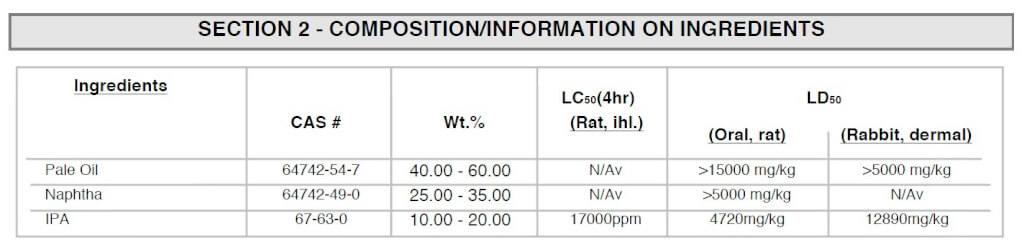
Seafoam MSDS
Gumout Multi-System Tune-Up (Sold in bottles at retail stores)
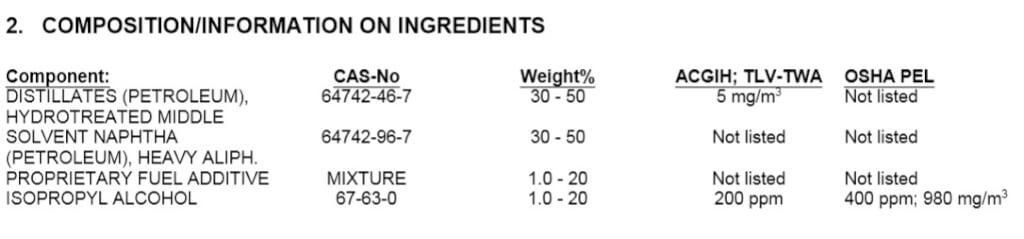
Gumout Multi-System Tune-Up MSDS
Next we have products that are marketed specifically as fuel system cleaning products
Chevron Techron Fuel Injector Cleaner (Sold in bottles at retail stores)
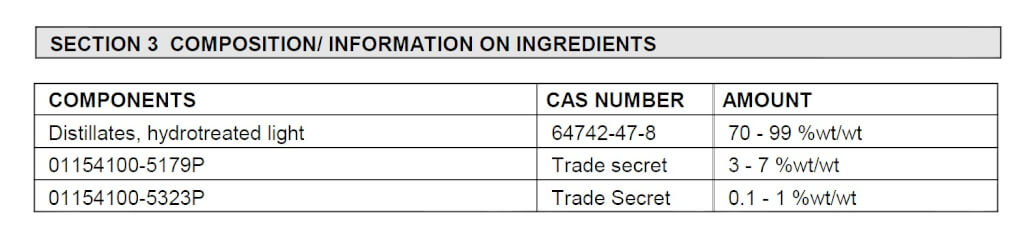
Chevron Techron Fuel Injector Cleaner MSDS
Chevron Techron Concentrate Plus (SC) (Sold in bottles at retail stores)
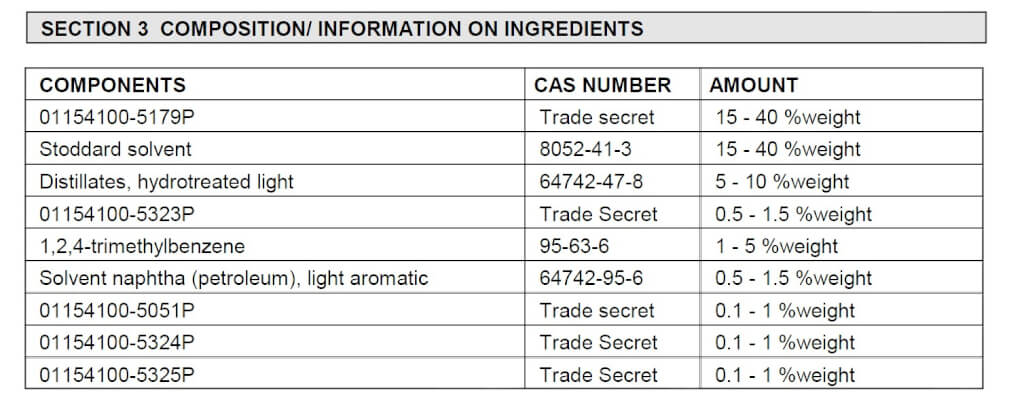
Techron Concentrate Plus (SC) MSDS
Chevron TECHRON Bulk Gasoline Additive (added as a fuel injector cleaner at bulk storage sites)
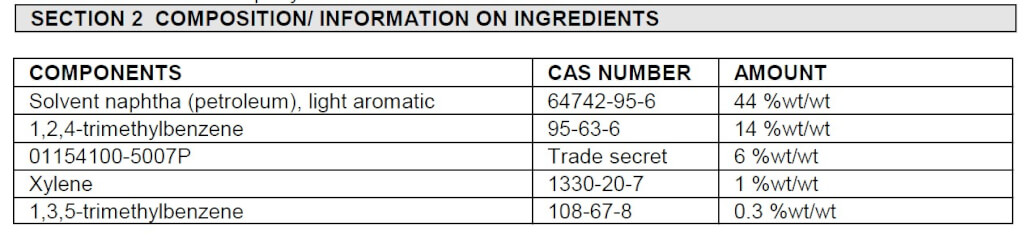
Chevron TECHRON Bulk Gasoline Additive MSDS
Gumout All-In-One® Complete Fuel System Cleaner (Sold in bottles at retail stores)
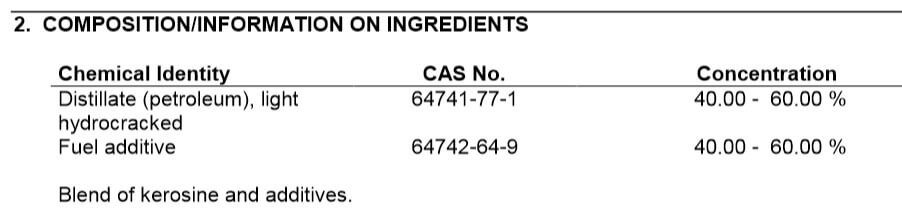
Gumout All in One complete fuel system cleaner MSDS
Lucas Deep Clean™ Fuel System Cleaner (Sold in bottles at retail stores)

Lucas Deep Clean™ Fuel System Cleaner MSDS
Royal Purple Max-Clean Fuel System Cleaner & Stabilizer (Sold in bottles at retail stores)
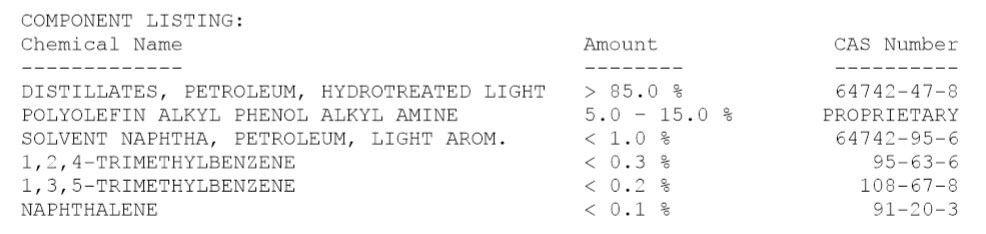
Max-Clean Fuel System Cleaner & Stabilizer MSDS
STA-BIL fuel stabilizer (Sold in bottles at retail stores)

STA-BIL fuel stabilizer MSDS
ACDelco Upper Engine and Fuel Injector Cleaner (Sold in bottles at GM dealers and online)

ACDelco Upper Engine and Fuel Injector Cleaner MSDS
As you can see, each product has a different chemical mix, ranging from distilled petroleum products to polyether amines (PEA) glycol ethers and aryl alcohol. As you go from a general multipurpose cleaner like Seafoam and Gumout Multi System tune up, you’ll see the ingredients change from light oils and Naphtha to PEA, glycol ethers, trimethylbenzene and proprietary products. Keeping in mind that all Top Tier fuels require fuel injector cleaners, it’s worth reviewing the Chevron Techron bulk product that’s added at the fuel depot prior to delivery to the gas station.
©, 2015 Rick Muscoplat
Posted on by Rick Muscoplat