
When to Use an Anti-Seize Product and When to Avoid It
When to Use an Anti-Seize Product: What It Does, Where to Use It, and Where It Should Never Go
Quick Summary
If you’ve ever removed a spark plug, exhaust bolt, 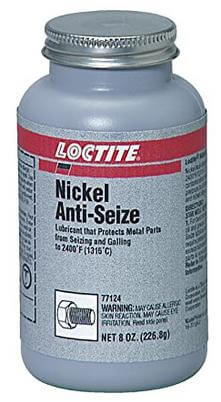 wheel stud, or oxygen sensor that seemed welded in place by rust and corrosion, you already understand when to use an anti-seize product. Anti-seize compounds are designed to prevent:
• Galling
• Corrosion
• Rust bonding
• Thread seizure in high-temperature or harsh environments.
They are not conventional lubricants and should not be used everywhere.
The key takeaway is simple:
• Use it on threaded fasteners that are likely to corrode, rust, or seize in service
• But never use it where the manufacturer specifically prohibits it or where torque specifications are based on dry threads.
What Is Anti-Seize?
Anti-seize is a specialized assembly compound designed to prevent metal-to-metal parts from sticking together over time. Unlike ordinary grease, anti-seize contains microscopic metallic particles suspended in a grease carrier.
The compound remains between mating surfaces and threads, preventing corrosion, galling, fretting, and thread seizure even after years of exposure to heat, moisture, road salt, and chemicals.
I’ve used anti-seize throughout my automotive career on exhaust components, spark plugs, oxygen sensors, wheel hubs, and industrial equipment where disassembly years later would otherwise be nearly impossible.
The purpose isn’t lubrication during operation. Its primary purpose is to ensure that parts can be removed later without damage.
What’s in Anti-Seize?
Most anti-seize compounds contain:
• A grease or synthetic carrier
• Metallic particles
• Corrosion inhibitors
• Anti-wear additives
• Oxidation inhibitors
The metallic particles vary depending on the type:
Regular Anti-Seize (Aluminum-Based)
Contains:
• Aluminum powder
• Graphite
• Petroleum or synthetic carrier
This is the most common and least expensive version found in automotive stores.
Copper Anti-Seize
Contains:
• Copper flakes
• Graphite
• Corrosion inhibitors
Copper provides excellent thermal conductivity and high-temperature protection.
Nickel Anti-Seize
Contains:
• Nickel particles
• Specialized corrosion inhibitors
• Synthetic carrier
Nickel formulations are designed for extreme temperatures and harsh chemical environments.
When to Use an Anti-Seize Product
Understanding when to use an anti-seize product is essential because improper application can create problems just as easily as it can prevent them.
Common applications include:
• Spark Plug Threads — In the early days of long-lasting spark plugs, many technicians used a tiny amount on spark plugs installed in aluminum cylinder heads. However, most modern spark plugs come with a hard anti-seize plating on the spark plug threads, and spark plug manufacturers often recommend installing them dry. Always follow vehicle manufacturer recommendations.
Want to know more about why you should never use it on spark plug threads? Read Understanding why manufacturers no longer recommend anti-seize on spark plug threads
Oxygen Sensor Threads — Most replacement oxygen sensors come pre-coated with anti-seize. If not, use only oxygen-sensor-safe anti-seize on the threads. Never contaminate the sensing tip.
Exhaust Fasteners — Exhaust manifold bolts, flange bolts, and exhaust clamps are among the best applications for anti-seize. Without protection, removal years later can be extremely difficult.
These parts experience:
• Extreme heat
• Rust
• Thermal cycling
• Corrosion
Wheel Hub Mating Surfaces — A thin coating on the hub face can help prevent wheels from rusting onto the hub assembly. Only a very thin film is needed.
Trailer Hitch Components — Receivers, draw bars, hitch pins, and adjustable hitch mechanisms benefit greatly from anti-seize protection.
Industrial Equipment — It is commonly used on:
• Stainless steel fasteners
• Pumps
• Valves
• Compressors
• High-temperature equipment
Is It a Lubricant?
This is one of the most misunderstood aspects of anti-seize. Technically, anti-seize has lubricating properties, but it is not intended to function as an operating lubricant like grease or oil.
For example:
• It should not replace wheel bearing grease.
• It should not replace chassis grease.
• It should not be used on moving pivots.
• It should not lubricate bearings.
The carrier grease eventually dries out, leaving behind metallic particles whose primary purpose is to prevent seizure, not to reduce friction during operation.
Should It Be Used on Brake Parts?
Generally speaking, no. This is another common misuse. Many people mistakenly apply it everywhere during brake service. It should never be used as a substitute for brake lubricant. Brake components require specialized synthetic brake lubricants designed for:
• High temperatures
• Rubber compatibility
• Moisture resistance
• Long-term lubrication
Using it on caliper guide pins can damage rubber boots and interfere with proper caliper movement.
Limited Brake Uses
Some technicians apply a very thin coating:
• Between wheel hubs and brake rotors
• On rotor locating screws
• On parking brake hardware mounting surfaces
But even here, use minimal amounts.
It should never contaminate:
• Brake pads
• Rotors
• Friction surfaces
Where It Should Never Be Used
Knowing when to use an anti-seize product also means knowing when not to use it. Avoid anti-seize on:
Wheel Stud Threads — Most vehicle manufacturers specify dry wheel studs. Adding anti-seize changes friction characteristics and can increase clamping force beyond intended specifications.
Torque-To-Yield Fasteners — Many modern engines use torque-to-yield bolts. These fasteners depend upon precise friction values. Anti-seize can dramatically alter those values.
Brake Caliper Guide Pins — Use dedicated brake lubricant instead.
Rubber Components — Some anti-seize compounds can damage rubber seals and boots.
Electrical Contacts — Unless specifically designed for electrical applications, anti-seize may interfere with conductivity.
Oxygen Sensor Tips — Only threads should receive anti-seize. Never contaminate the sensing element.
Does It Wash Off?
Generally, no. Quality anti-seize compounds are designed to resist:
• Water
• Salt spray
• Road chemicals
• Humidity
• Temperature cycling
Over time, the carrier grease may dry or evaporate, but the metallic particles remain in place and continue protecting the mating surfaces. This long-term protection is exactly why anti-seize is so effective on exhaust systems and outdoor equipment.
Temperature Ratings of Anti-Seize
Different formulations have dramatically different temperature capabilities.
Aluminum-Based — Typical rating: Up to approximately 1,600°F (871°C)
Suitable for:
• Spark plugs
• General automotive fasteners
• Wheel hubs
Copper — Typical rating: Up to approximately 1,800°F (982°C)
Suitable for:
• Exhaust systems
• Brake hardware mounting surfaces
• High-temperature automotive applications
Nickel — Typical rating: Up to approximately 2,400°F (1,315°C)
Suitable for:
• Exhaust manifolds
• Turbochargers
• Industrial furnaces
• Stainless steel fasteners
• Chemical processing equipment
Always verify ratings from the manufacturer because formulations vary.
Copper vs. Nickel vs. Regular Aluminum
Regular Aluminum:
Advantages:
• Lowest cost
• Widely available
• Good corrosion protection
• Suitable for most automotive repairs
Disadvantages:
• Lower temperature capability
• Less suitable for severe environments
Copper
Advantages:
• Better heat transfer
• Higher temperature rating
• Excellent exhaust-system protection
Disadvantages:
• Can contribute to galvanic corrosion with some metals
• Not recommended by some manufacturers for certain sensor applications
Nickel
Advantages:
• Highest temperature resistance
• Excellent chemical resistance
• Compatible with stainless steel
• Superior anti-galling protection
Disadvantages:
• Higher cost
• Often unnecessary for routine automotive work
Final Thoughts
Knowing when to use an anti-seize product can save hours of frustration and prevent broken fasteners years down the road. It’s designed to prevent corrosion, galling, and thread seizure—not serve as a general-purpose lubricant. Used correctly, it can make future repairs dramatically easier. Used incorrectly, it can alter torque values, damage components, and create safety issues.
For most automotive repairs, the aluminum-based product is sufficient. Copper excels on exhaust components, while nickel is the best choice for extreme-temperature and industrial applications. The key is to apply only a thin coating where corrosion prevention is needed and to avoid applications where manufacturers specify dry assembly.
©, 2026 Rick Muscoplat
Posted on by Rick Muscoplat