
A Closer Look at Brake Pad Backing Plate in Disc Brake Systems
The Role of the Brake Pad Backing Plate in Automotive Braking Systems
The brake pad backing plate is a metal plate to which the brake pad material (friction material) is attached. This metal plate is usually made from steel or other high-strength materials capable of withstanding the significant forces and temperatures encountered during braking. The backing plate serves several essential functions, including providing structural support for the friction material, dissipating heat, and ensuring even wear of the brake pads.
The Backing Plate Provides Structural Support and Stability
One of the primary roles of the brake pad backing plate is to provide structural support and stability to the brake pad material. During braking, the brake pads are subjected to significant compressive forces as they are pressed against the brake rotor (disc). The backing plate ensures that these forces are distributed evenly across the friction material, preventing it from deforming or cracking under pressure. This support is crucial for maintaining the integrity of the brake pad and ensuring consistent braking performance.
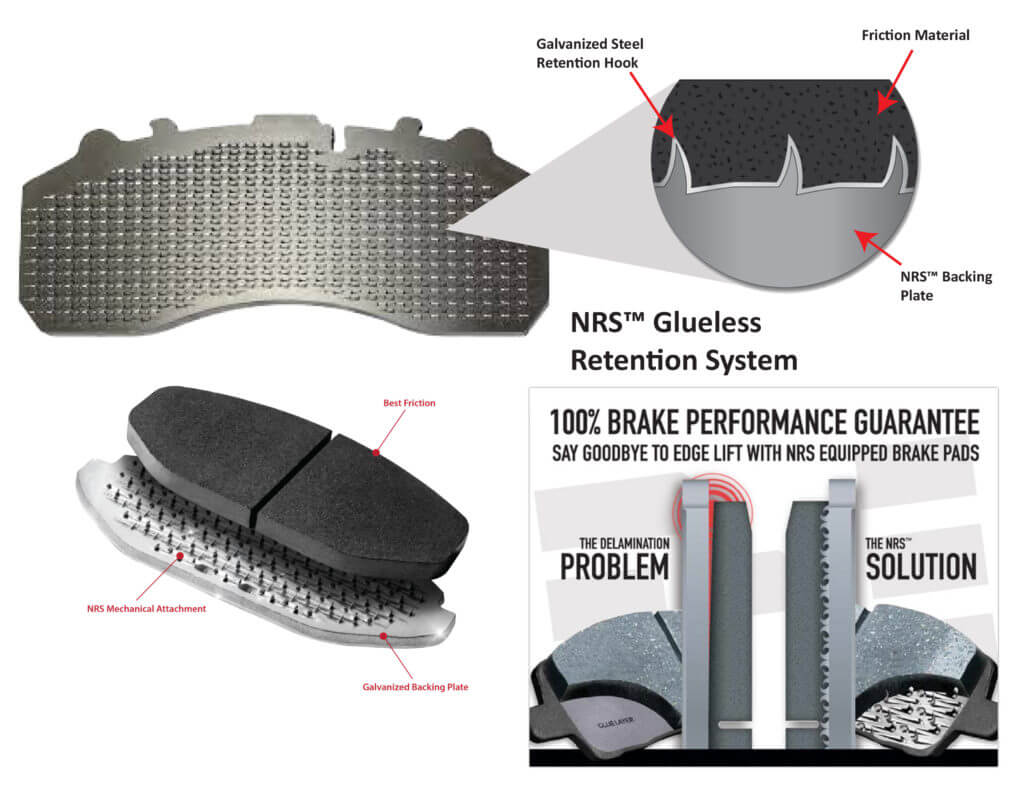
The backing plate also helps to keep the friction material securely in place. The friction material is typically bonded or riveted to the backing plate. However, newer methods mechanically attach the friction material to the backing plate, ensuring much better retention. This secure attachment is vital for preventing the material from becoming dislodged or separated during braking, which could lead to a loss of braking efficiency and potential safety hazards.
The Backing Plate Provides Heat Dissipation
Braking generates a substantial amount of heat due to the conversion of kinetic energy into thermal energy. If not properly managed, this heat can affect the performance and longevity of the braking system components. The brake pad backing plate plays a crucial role in heat dissipation. It helps conduct heat away from the friction material and into the surrounding air. This process helps to prevent the friction material from overheating, which could lead to brake fade—a condition where the brakes lose effectiveness due to high temperatures.
A Stiff Backing Plate Ensures Even Friction Material Wear
Another critical function of the brake pad backing plate is to
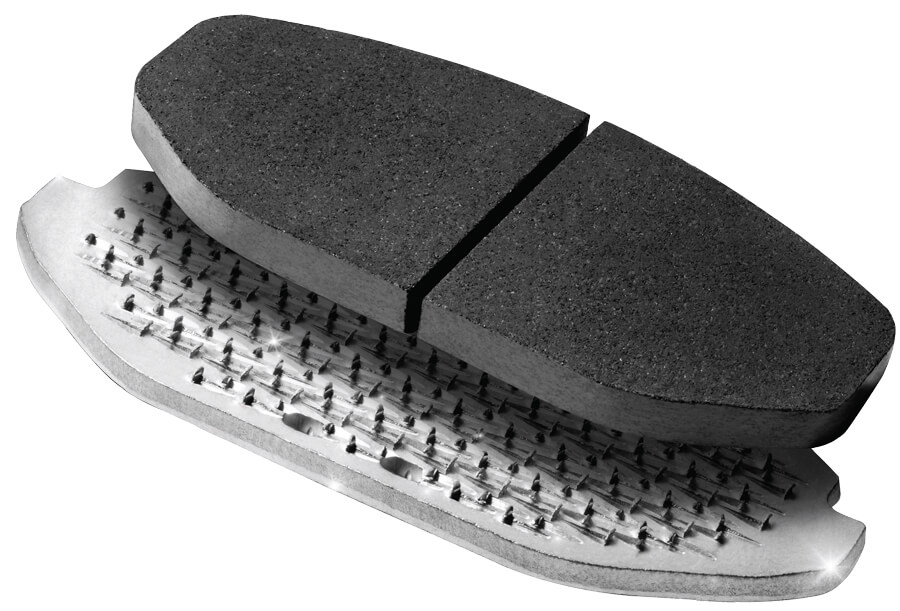
Nucap’s NRS retention system features a galvanized steel backing plate and a mechanical attachment system to bond the friction material
ensure even wear of the brake pads. Uneven wear can lead to reduced braking efficiency, increased noise, and vibrations. The backing plate helps to maintain the alignment of the brake pad relative to the rotor, ensuring that the friction material wears down evenly. This alignment is essential for maintaining consistent contact between the brake pad and the rotor, resulting in smooth and effective braking.
Furthermore, the backing plate helps to minimize brake noise and vibration. Noise and vibration, often referred to as brake squeal or judder, can occur when the brake pad does not make uniform contact with the rotor. A well-designed backing plate with proper stiffness and damping characteristics can reduce these issues, enhancing the overall comfort and performance of the braking system.
Backing Plate Materials
The material used for the brake pad backing plate is a critical factor in its performance. Black steel is commonly used low to medium quality brake pads. The steel is treated and painted to prevent corrosion. However, higher quality brake pads use galvanized steel, along with mechanical attachment techniques. The galvanized steel resists rust far longer than black steel and rust is the #1 cause of early brake pad failure.
Backing plate and friction material attachment technologies
In a disc brake system, the friction material, also called a friction block or “puck” is attached to a steel brake pad backing plate with rivets, adhesive, or a newer NRS™ mechanical retention system. The backing plate is made from steel and transfers force from the brake caliper piston evenly across the backing plate to apply the friction material to the brake rotor.
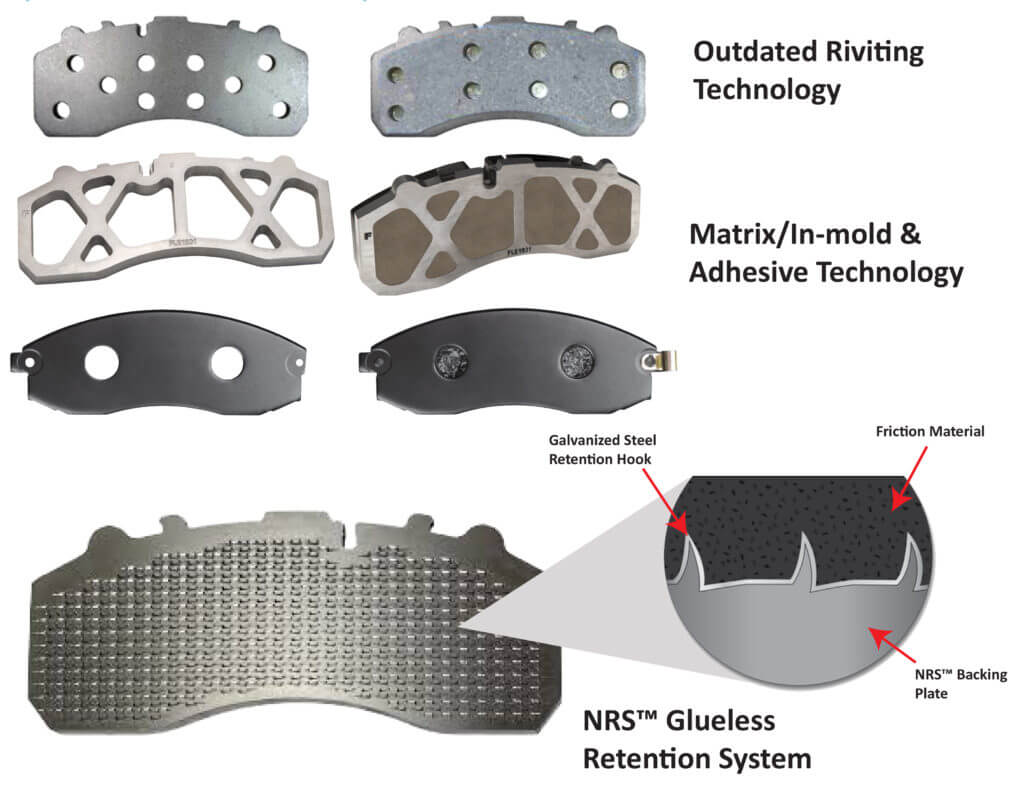
Riveted brake pad backing plates—the oldest and least reliable bonding method
Drilling or stamping holes in the steel backing plate weakens
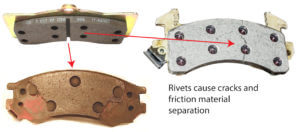
Riveted brake pads fail due to stress from flexing and damage to the backing plate cause by heat/cooling
it causing it to flex under pressure. That flexing and rust formation causes the friction material to crack and separate from the backing plate. Few manufacturers still use rivets for disc brake pads.
Matrix and In-mold brake pad backing plates
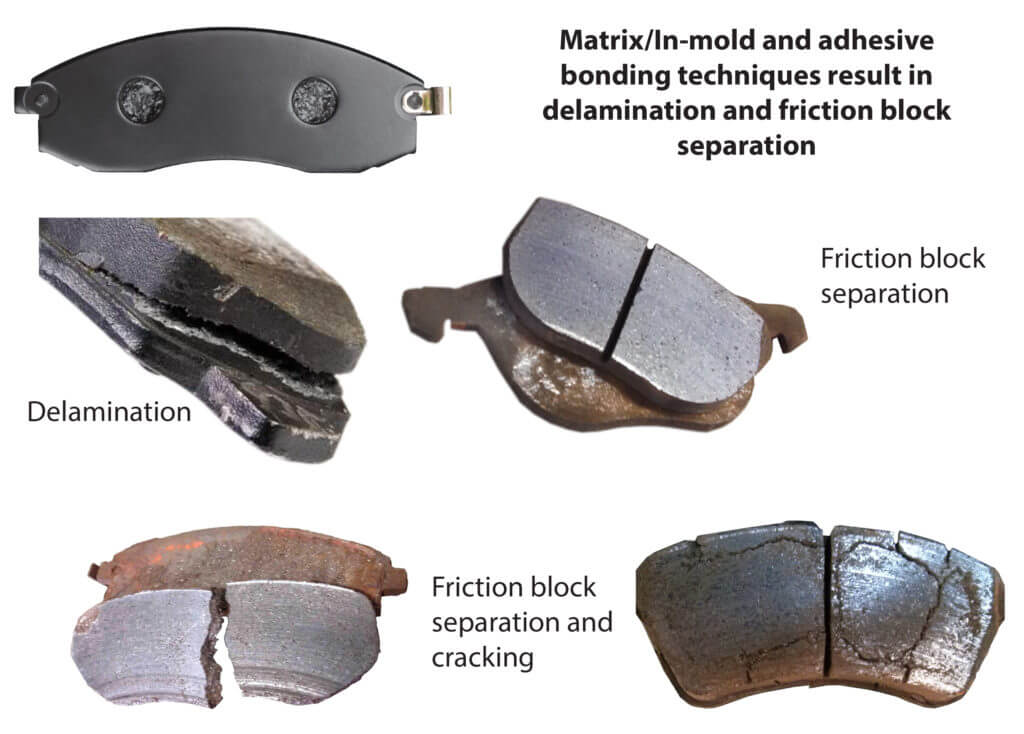
In-mold techniques are also used to bond the friction block to the backing plate. Holes and patterns are stamped into the steel backing plate and the plate is then coated with adhesive. The plate and the raw friction material are placed in a press and squeezed together under tremendous heat and pressure. The pressure forces the friction material through the opening in the backing plate. The friction block is retained with adhesive and the mechanical contact with the backing plate openings.
NRS™ Retention brake pad backing plates
NRS backing plates use a variation of the in-mold process. But the plates don’t have openings. Instead they have hooks that embed into the friction block as the raw material is forced into the mold. In addition to the hooks, NRS backing plates are made from high quality galvanized steel.
What goes wrong with a brake pad backing plate?
High-quality brake pads use top quality steel that’s stamped
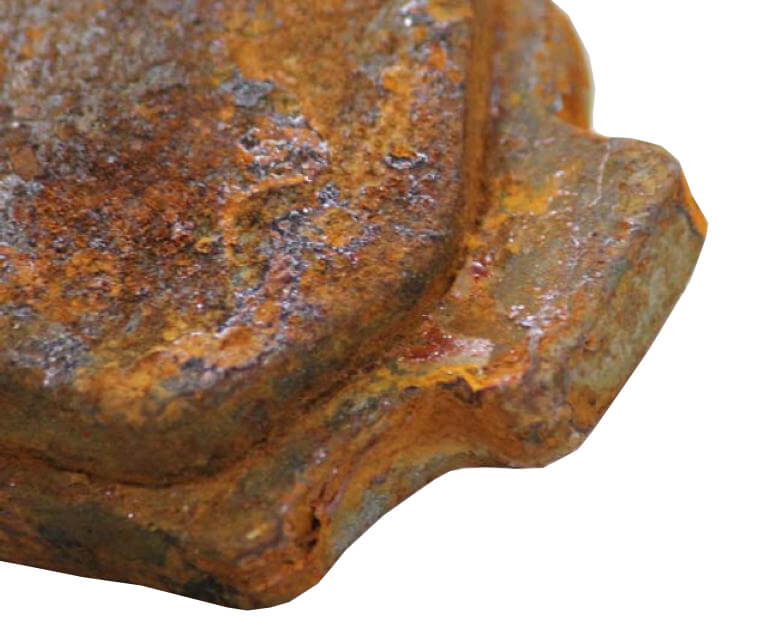
GBSC tests show that black steel backing plates rust and change dimensions
to exacting specifications. However, lower-quality brake pads often use low-quality “black steel” that’s coated with iron oxide, or “mill scale.” The mill scale must be removed before the friction block can be bonded to the backing plate. To save money, some brake pad manufacturers shot blast the backing plates to clean them. Unfortunately, shot blasting can deform and compromise the backing plate’s critical dimensions. Once compromised, those altered dimensions can affect fit, function, and even safety when installed on the vehicle.
Once the friction block is bonded, those manufacturers paint the steel backing plate to prevent corrosion. As you know, paint, even power coated paint, can’t stand up to the heating/cooling cycles found in all braking systems. The paint eventually fails and the steel starts to corrode.
Rust jacking destroys brake pads
As rust takes over and grows, it exerts force against the friction block, causing “delamination” and cracking. In other words, the growth of rust is more powerful than the bonding force of the adhesive.
NRS™ is a Trademark of NuCap Corporation.
©, 2019 Rick Muscoplat
Posted on by Rick Muscoplat