
Brake Pad Shim — how they reduce brake noise
Brake Pad Shim Guide: Quiet Braking Explained
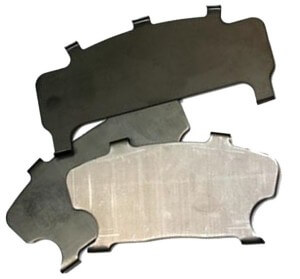
Different styles of brake pad shims
I’ve worked on hundreds of brake systems, and one component that is often overlooked but absolutely critical is the brake pad shim. Many DIYers don’t realize that it isn’t just an extra piece of metal — it’s an engineered part designed to reduce brake noise.
When I install brake pads, I always pay close attention to the shim placement and quality because they determine how quiet the brakes will be. The metal shim sits between the backing plate and the caliper piston on the inboard pad, and between the backing plate and caliper fingers on the outboard pad. In simple terms, it “decouples” the pad from the caliper to absorb vibrations. Without it, brake noise is almost guaranteed.
What It’s Made Of
The best shims are multi-layer designs made with steel and a rubber or elastomer core. This layered approach creates a vibration barrier that kills squeal before it travels into the suspension. Cheaper designs are nothing more than soft metal sheets, and while they can dampen sound somewhat, they don’t come close to the performance of a quality multi-layer design.
Every brake system produces vibration. Without a shim, that vibration passes into the caliper, steering knuckle, strut, and spring. Once those components amplify it, you hear the high-pitched squeal most drivers describe as brake noise.
Single vs. Multi-Layer Designs
From experience, I can tell you that multi-layer designs are far more effective at reducing brake noise than single-layer versions. If you want a truly quiet brake job, don’t cut corners here.
High-quality shims are made from multiple layers of metal sheets and a noise-dampening rubber material. Low-quality units are just a single sheet of soft metal.
All brakes produce vibration while braking. Without a shim, the vibrations transfer from the friction material to the metal backing plate, and from there to the caliper, steering knuckle, and strut and spring. Those suspension components amplify the vibrations, causing unpleasant squeal and screech.
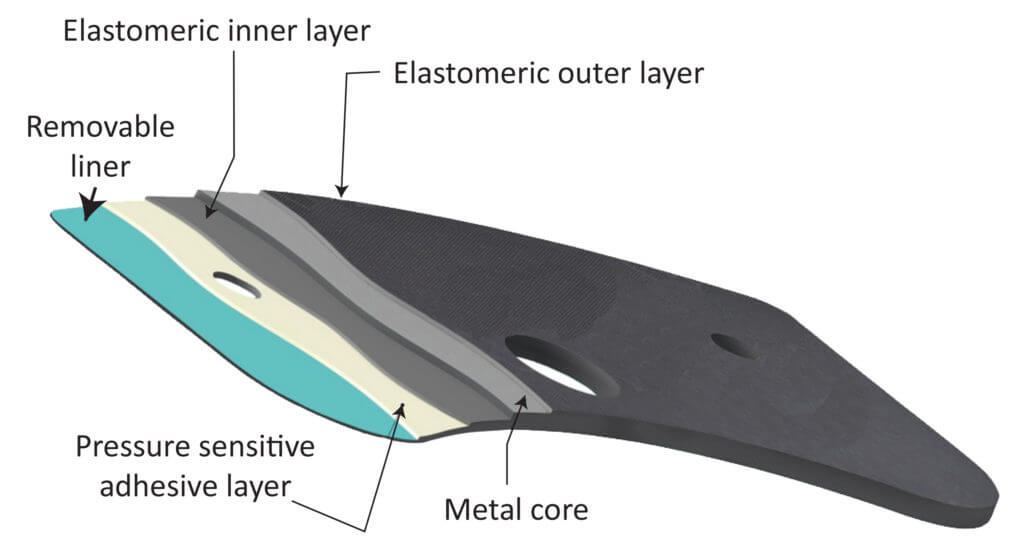
Notice the multiple layers of vibration-dampening materials in a high-quality noise reduction brake pad shim
The shim should never be permanently attached to the backing plate
Some brake pad manufacturers rivet or glue the shims to the brake pad backing plate. That’s not a good design. The whole point of a noise reduction shim is to “decouple” the vibrations from the brake pad to the caliper. Permanently connecting the shim to the backing plate defeats the decoupling.
Spring Tabs
High-quality brake pad manufacturers build their shims with spring tabs to hold the shims in place.
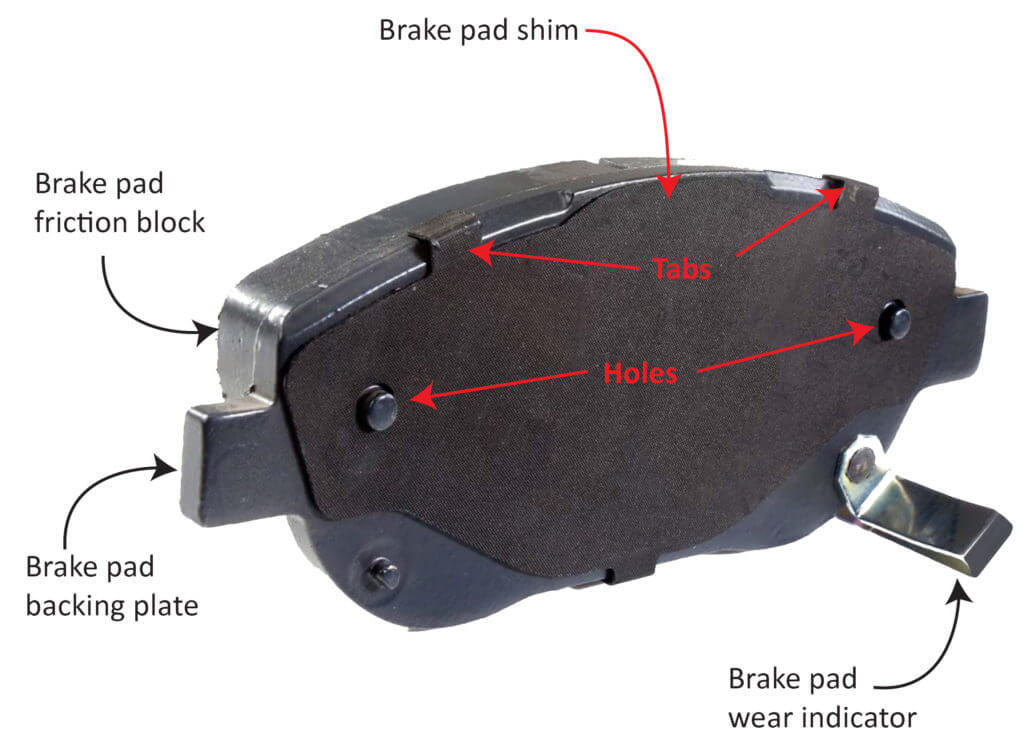
Noise reduction shims can be attached to the brake pad with tabs and holes
Rivets
Still other shims are designed to be permanently installed on the brake pad’s backing plate during pad manufacturing. This method ensures that the shim will never migrate and will never be reused. But this design is the least effective way to reduce brake noise.
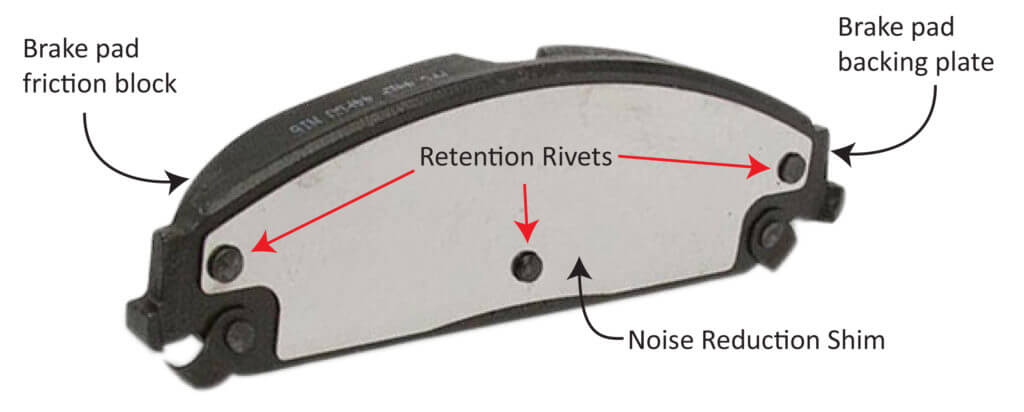
Riveted brake pad shim
Why You Shouldn’t Reuse Brake Pad Shims
Just like abutment clips, brake pad shims should never be reused. Over time, heat and corrosion degrade their noise-dampening properties. If you reinstall an old shim, you’ll almost always end up with brake noise, vibration, and harshness.
I’ve pulled apart countless brake jobs where reused shims had separated from the pad or corroded badly, leaving the vehicle with a squeal that the customer thought was “just normal.” Trust me — with the correct shim, you can make brakes run nearly silent.
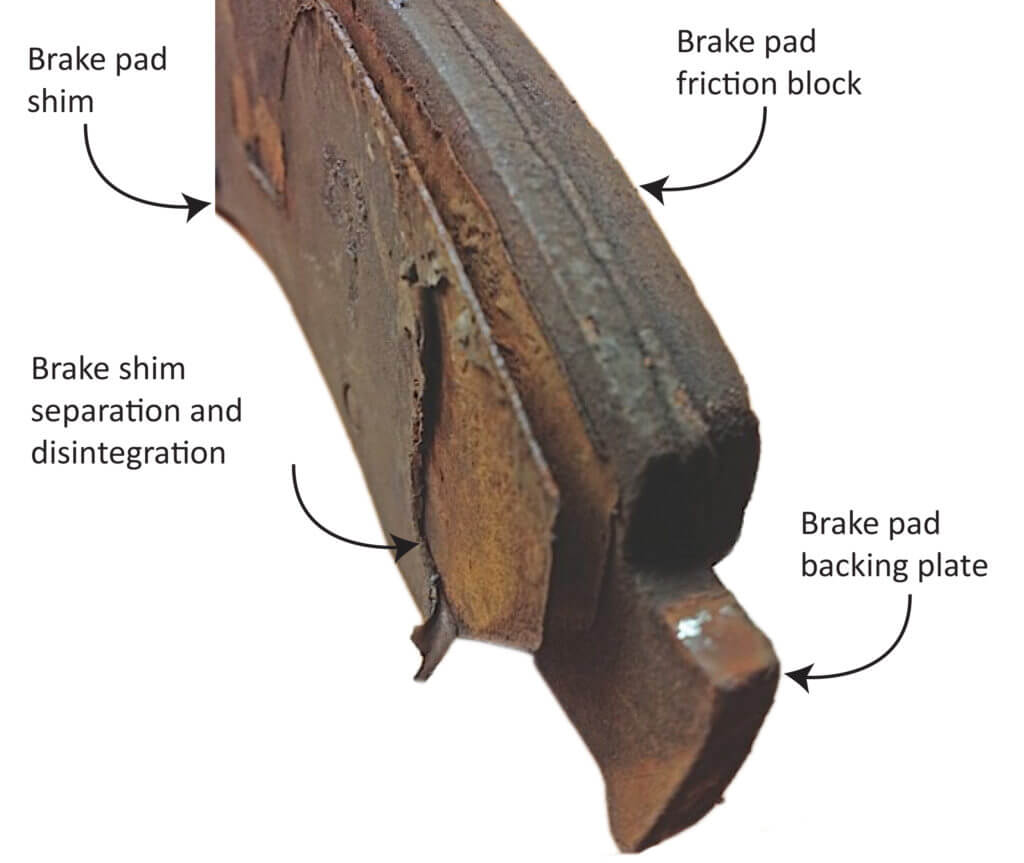
Notice how a rusted backing plate has caused the noise reduction shim to separate from the backing plate
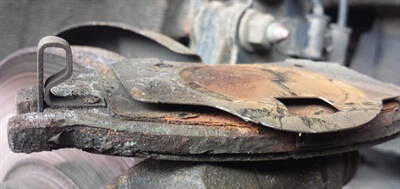
Corroded backing plate and shim
For more information on how noise reduction shims work, see this video at ADVICS Brakes
© 2019 Rick Muscoplat
Posted on by Rick Muscoplat