
TP Valve Failure Symptoms Every Homeowner Should Know
What Causes a Water Heater TP Relief Valve to Leak?
Quick Summary
A water heater temperature-pressure relief valve protects against dangerous overheating and excessive pressure. It automatically opens if pressure or temperature exceeds safe limits. Common TP valve failure symptoms include:
• Dripping discharge pipe — For more information on what causes dripping from the T&P valve, see this article Water Heater Relief Valve Dripping? Here’s What It Means
• Intermittent hot water release
• Corrosion
• Rumbling noises
• And steam discharge.
Ignoring these warning signs can create dangerous operating conditions and increase the risk of catastrophic tank failure.
A T&P Valve Keeps You Safe
A water heater temperature pressure relief valve—commonly called a T&P valve or TPR valve—is one of the most important safety devices in your home. As someone who has diagnosed countless water heater failures over the years, I can tell you this: a properly functioning T&P valve prevents catastrophic tank rupture caused by excessive pressure or overheating. When these valves fail, the warning signs are usually easy to spot if you know what to look for. Common TP valve failure symptoms include dripping water, intermittent discharge, corrosion around the valve body, popping noises from the tank, or—in severe cases—violent discharge of steaming hot water. Ignoring these symptoms can create dangerous pressure conditions inside the tank.
What a Water Heater T&P Valve Actually Does
Most homeowners think of a T&P valve as “that little valve with the pipe sticking down the side of the tank.” In reality, it’s a precision-engineered emergency safety device.
A temperature-pressure relief valve protects the water heater against:
• Excessive water pressure
• Dangerous overheating
• Thermal expansion
• System control failures
The valve automatically opens when either the temperature or the pressure exceeds the safe operating limits. Without this valve, a water heater could literally explode from internal pressure buildup.
That’s not exaggeration.
When water becomes superheated inside a sealed tank and the tank ruptures, the water instantly flashes into steam and expands dramatically. Water can expand approximately 1,600 times its original volume when converted to steam. That explosive force can launch a water heater through floors and walls like a rocket.
How a Temperature Pressure Relief Valve Works
Most residential water heaters use a spring-loaded valve design.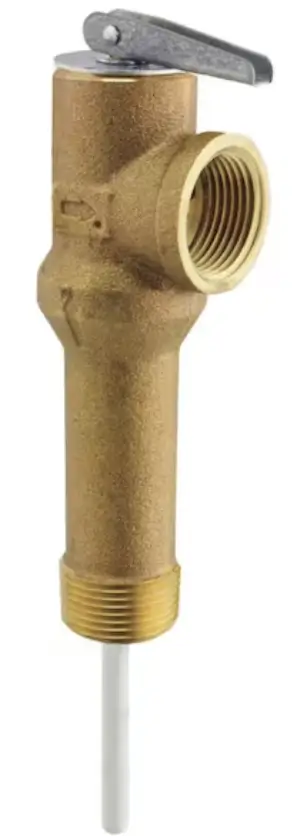
Inside the valve is:
• A calibrated spring
• A pressure-sensitive disc
• A thermostatic sensing probe
Under normal conditions, spring pressure keeps the valve tightly closed. But if tank pressure or temperature rises beyond the preset safety limit, the internal force overcomes the spring tension, and the valve opens.
Most residential water heater T&P valves are designed to open at 150 PSI or 210°F. The valve then discharges hot water through a dedicated discharge tube until pressure and temperature return to safe levels. Once conditions normalize, the spring resets the valve to its closed position again.
Why T&P Valves Are Absolutely Necessary
In modern plumbing systems, especially closed systems with check valves or pressure-reducing valves, thermal expansion can create dangerous pressure spikes. As water heats, it expands. If there’s nowhere for that expansion to go, pressure rapidly increases inside the tank.
That’s why the T&P valve exists.
It’s the final backup safety device if:
• The thermostat sticks
• The gas control fails
• An electric element overheats
• Water pressure becomes excessive
• An expansion tank fails
• System controls malfunction
A T&P valve is essentially the last line of defense between safe operation and catastrophic tank failure.
The Most Common TP Valve Failure Symptoms
Continuous Dripping From the Discharge Pipe — This is the most common complaint I see. A small but continuous drip from the discharge tube is one of the classic TP valve failure symptoms.
Possible causes include:
• Sediment trapped on the valve seat
• Thermal expansion tank problems — See this article on The Benefits of a Water Heater Expansion Tank
• Excessive house water pressure
• A weakened valve spring
• Mineral buildup inside the valve
Many homeowners mistakenly replace the valve without addressing the underlying pressure issue.
Intermittent Hot Water Discharge — If the valve occasionally
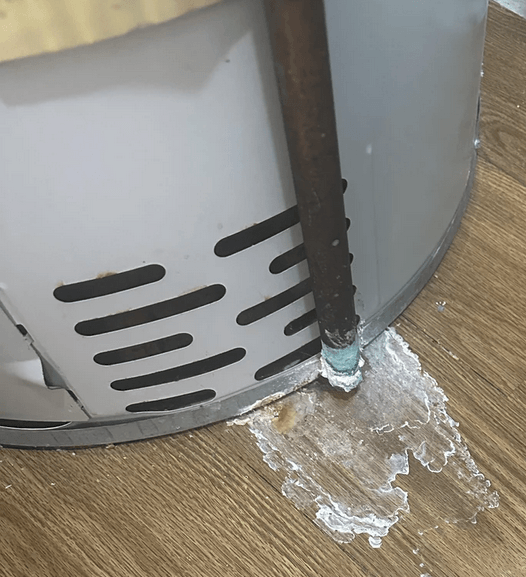
Occasional dripping from the T&P valve can be caused by excessive water pressure, a failed expansion tank, or a failing T&P valve.
spits out bursts of hot water, it often responds correctly to excessive pressure or overheating.
Common causes include:
• Failed expansion tank
• Water pressure spikes
• Thermostat malfunction
• Overheating burner or heating elements
This is one of the more serious symptoms of a TP valve failure because it may indicate unsafe operating conditions.
Corrosion or Mineral Deposits Around the Valve — Over time, small leaks create corrosion around the valve body or discharge pipe.
I frequently see:
• White mineral crust
• Rust stains
• Corroded threads
• Water streaking on the tank
Once corrosion begins, the valve often won’t reseal properly.
Popping or Rumbling Sounds From the Tank — Although sediment buildup often causes these noises, overheating conditions can also contribute. If a failing thermostat allows temperatures to rise excessively, the T&P valve may begin opening intermittently to relieve pressure. That combination of overheating and discharge is a major warning sign.
Violent Steam or Scalding Water Discharge — This is an emergency situation. A properly functioning T&P valve releases water forcefully when dangerous conditions occur.
If you see:
• Steam
• Boiling water
• Loud discharge
• Repeated valve activation
Shut off power or gas to the heater immediately and contact a qualified plumber. These severe TP valve failure symptoms can indicate runaway overheating.
Why T&P Valves Fail
In my experience, most temperature-pressure relief valves fail from one of four causes:
Mineral Buildup — Hard water deposits accumulate on the valve seat, preventing proper sealing. This is especially common in areas with hard water.
Excessive Pressure — High municipal water pressure or failed expansion tanks force the valve to operate repeatedly, wearing out the spring and seat.
Corrosion — Over time, constant exposure to hot water corrodes internal components. Older valves become unreliable even if they aren’t actively leaking.
Lack of Maintenance — Many valves are never tested or inspected. Manufacturers and inspectors commonly recommend periodic testing to verify operation.
The Importance of Proper Discharge Piping
The discharge tube attached to the T&P valve is just as important as the valve itself.
Proper discharge piping should:
• Be heat-rated material — No PEX, PVC or CPVC
• Remain full-size (usually 3/4-inch)
• Drain by gravity
• Terminate visibly
• Never be capped or threaded at the end
Improper discharge piping can prevent safe pressure relief. I’ve seen dangerous installations where homeowners capped leaking discharge pipes instead of fixing the actual problem. That creates an extremely hazardous condition.
My Professional Advice on T&P Valves
I never recommend ignoring even minor symptoms of a TP valve failure. A dripping valve may seem harmless, but it often signals:
• Excessive pressure
• Expansion tank failure
• Unsafe overheating
• Valve deterioration
And if the valve itself fails completely, the water heater loses its primary emergency pressure protection. In my opinion, any leaking, corroded, or questionable T&P valve deserves immediate inspection.
©, 2026 Rick Muscoplat
Posted on by Rick Muscoplat