
Water Heater Relief Valve Dripping? Here’s What It Means
Common Causes of a TP Valve Leaking
Quick Summary
Most temperature-pressure relief valve (TP valve) leaks come down to excessive household water pressure, water heater overheating, thermal expansion, or a worn-out valve. Sometimes it’s a simple fix like flushing debris or replacing the valve. Other times, it’s a sign of a bigger issue, like a failing water heater thermostat or a missing expansion tank in a closed system. The key is diagnosing the root cause before just swapping parts.
What a TP Valve Actually Does (And Why It Leaks)
The temperature and pressure relief valve—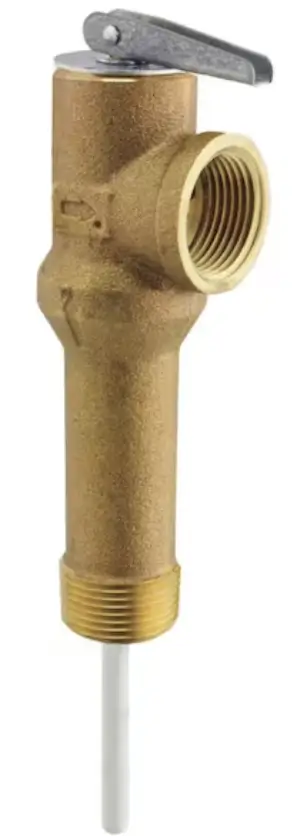 commonly called the TP valve—is designed to prevent your water heater from becoming a pressure bomb if the gas valve ever fails to shut off. It opens automatically if either temperature or pressure exceeds safe limits, typically around 150 PSI or 210°F.
When I see a TP valve leaking, I don’t automatically assume the valve is bad. That valve is usually doing exactly what it’s supposed to do—relieving unsafe conditions. A water heater relief valve dripping is often a warning sign, not just a nuisance.
Is the Water Dripping Out or Blowing Out? There’s a difference
Dripping is usually caused by over-pressure, not overheating. When a TP valve opens due to excess pressure, it releases water in brief bursts. Only a small amount of water escapes because the brief pressure relief causes the valve to close quickly. You’ll often see it happen in “stacking cycles” where hot water is used many times in a short time period. That causes the heater to repeatedly turn on, raise the water temperature, and then shut off. That raises the water temperature and pressure near the top of the tank, causing the TP to release the excess pressure.
Over time, that cycling can wear out the valve and put unnecessary stress on the tank, so I never ignore it.
A burst of extremely hot water is caused by overheating, and it’s serious! When a TP valve opens due to overheating, the discharge water is extremely hot—often close to boiling and sometimes flashing to steam. In these situations, the release is typically forceful and continuous. That’s because the heating element or burner is still actively raising the temperature, so the valve has no choice but to keep relieving pressure.
This is the more dangerous scenario because it usually indicates a runaway heating condition caused by a failed thermostat or a burner that won’t shut off. The risk of scalding is very high, and you may also hear rumbling or popping from the tank as water superheats near the bottom.
The Most Common Causes of a TP Valve Dripping
1. Excessive Water Pressure — This is one of the most common issues I run into. If your home’s water pressure is too high—typically above 80 PSI—the TP valve will open to relieve the pressure.
How I fix it:
I check the pressure with a gauge on a hose bib. Find a garden hose water pressure gauge at any home center store

for around $10. Screw it onto any hose bib and open the faucet. Record the pressure.
Water pressure test gauge
If it’s above 80 psi, you’ll need to adjust the pressure on an existing pressure-reducing valve (PRV) or install one in your home. This alone can stop a persistent water heater relief valve dripping issue.
2. Thermal Expansion (Closed Plumbing Systems) — Some water departments require a check valve or backflow preventer on the water line entering the home. This is referred to as a closed system; water can enter the home, but can’t push back against the water main pressure.
A closed system becomes a problem for water heaters because the water in the tank expands as it heats. Since the expanding water can’t flow back in the main line, it can build high pressure in your home.
If these applications, most plumbing codes 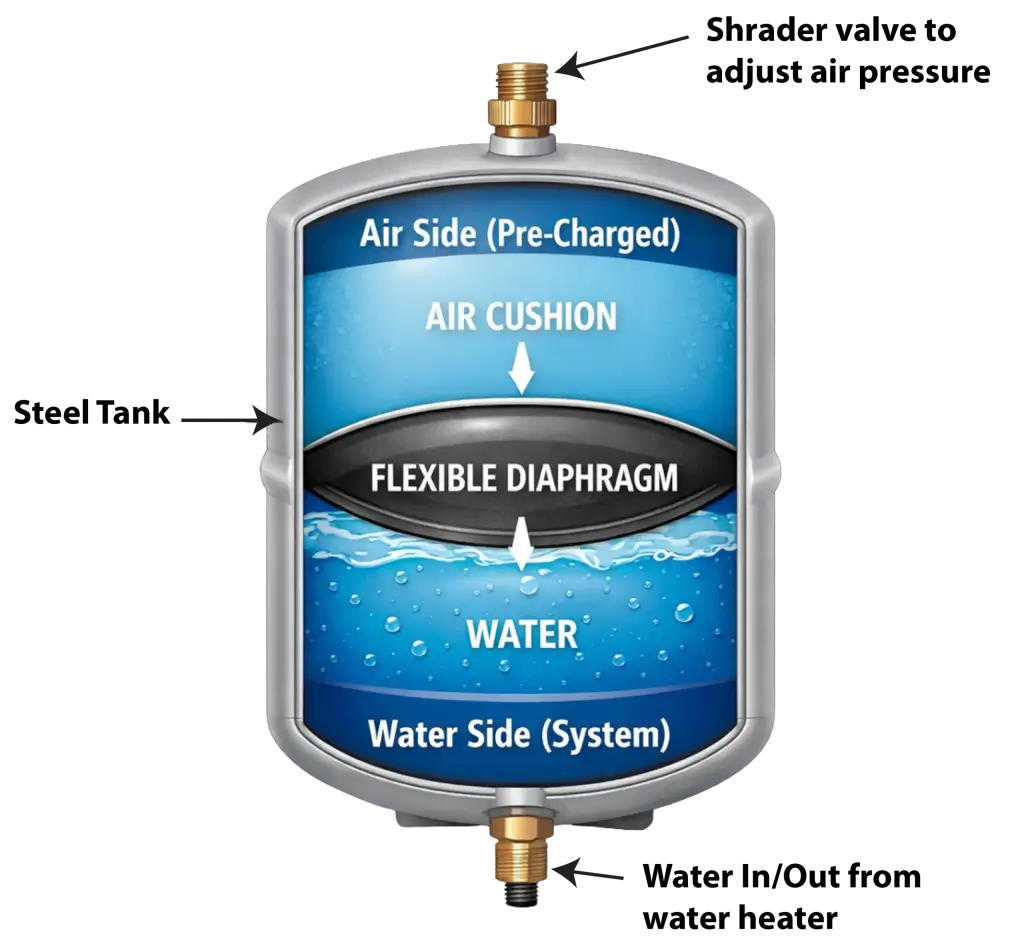 require an expansion tank to be installed near the water heater. The tank contains a pressurized rubber bladder or diaphragm. The expanding hot water enters the tank and presses against the bladder, cushioning the system against pressure spikes. This protects the water heater, pipes, and fixtures from damage due to thermal expansion, extending the system’s life and helping it meet modern plumbing codes that require pressure management in closed systems.
How I fix it:
If your home has an existing expansion tank, check whether the bladder has failed and the unit is waterlogged. If so, replace it. If your home doesn’t have an expansion tank and you’re on a closed system, install one. I
3. Overheating Water — If you’ve raised the temperature setting on the water heater and are now experiencing dripping from the TP valve, that can be an indication that the temperature is too high, forcing the heater to release excess pressure.
If you haven’t raised the thermostat setting and you’re getting a large burst of extremely hot water from the TP valve, you have a serious overheating problem caused by a failed thermostat or a faulty gas valve. Call a professional!
How I fix it:
Verify the temperature settings on the water heater thermostat; it should be around 120°F. If it’s overheating, I test and replace the thermostat or gas control valve as needed.
4. Sediment or Debris in the Valve — Over time, minerals and debris can get trapped in the TP valve seat, preventing it from sealing properly.
How I fix it:
Sometimes I can clear it by briefly lifting the test lever to flush it. If that doesn’t work, the valve needs to be replaced.
5. A Worn-Out or Faulty TP Valve — TP valves don’t last forever. Internal springs weaken, seals degrade, and eventually they leak.
How I fix it:
If everything else checks out and I still see a TP valve leaking, I replace it. It’s a relatively inexpensive part with huge safety importance.
How to Buy the Right TP Valve
Not all TP valves are the same, and choosing the wrong one is a mistake I see DIYers make all the time.
Here’s what I always match:
• Pressure rating: Usually 150 PSI
• Temperature rating: Typically 210°F
• BTU rating: Must meet or exceed your heater’s input rating
• Thread size: Most are 3/4″ NPT
• Probe length: Must match your tank design
I always recommend buying from a reputable brand like Watts or Cash Acme. This is not the place to cheap out.
How I Replace a TP Valve (Step-by-Step)
Replacing a TP valve is straightforward, but you need to do it safely.
1) Shut off the power (electric) or gas supply.
2) Shut off the water supply above the water heater and relieve pressure by opening a hot faucet.
3) Drain about five gallons from the tank so the water level drops below the height of a TP valve located on the side of the tank. If the valve is located on the top of the tank, drain just a few gallons.
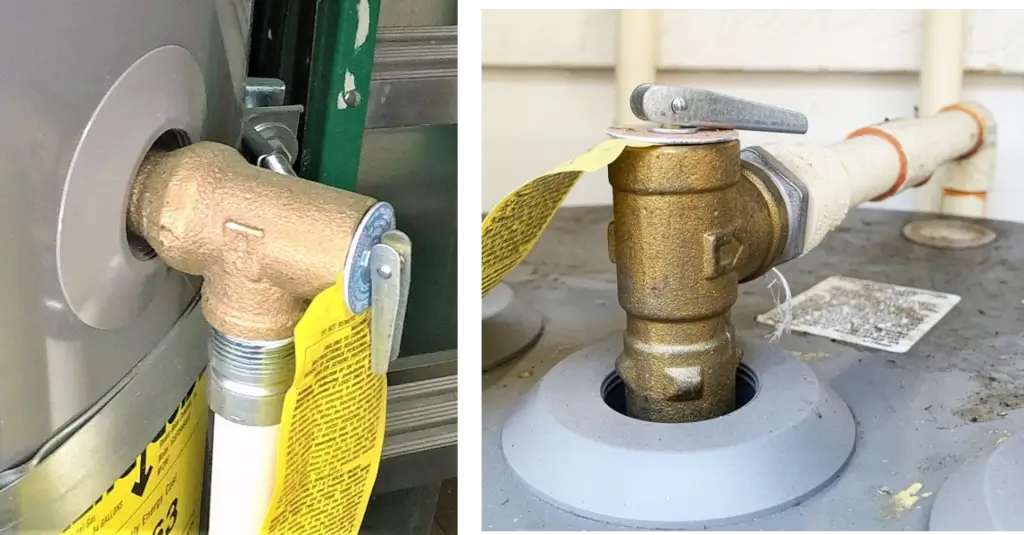
4) Unscrew the drain tube using a pipe wrench. Then use the pipe wrench to remove the old TP valve.
5) Apply several wraps of Teflon tape to the threads of the new TP valve and then apply a light coating of pipe dope.
6) Screw the new TP valve into the heater and tighten.
7) Install the drain tube.
8) Turn on the water and check for leaks. If no leaks are found, turn on the electric or gas.
Final Thoughts (From My Experience)
After working on countless systems, I can tell you this: a TP valve leaking is rarely just about the valve. It’s usually telling you something about your system—pressure, temperature, or expansion.
Fix the root cause, not just the symptom.
If you approach it the way I do—systematically and safely—you’ll solve the problem the right way the first time.
©, 2026 Rick Muscoplat
Posted on by Rick Muscoplat