
Car AC Black Death: What It Is and How to Fix It
How to Diagnose Car AC Black Death Before Replacing a Compressor
Quick Summary
Car AC black death is one of the worst failures that can happen inside an automotive air conditioning system. It occurs when the AC compressor fails internally and sends burnt oil, metal particles, Teflon debris, and sludge throughout the system. Once contamination spreads, it can clog the condenser, expansion valve, orifice tube, evaporator, and hoses.
In my experience, the biggest mistake people make with car AC black death is replacing only the compressor. That almost always leads to another compressor failure because the contamination remains trapped inside the system.
The proper repair often requires:
• Compressor replacement
• Condenser replacement
• Accumulator or receiver-drier replacement
• Expansion valve or orifice tube replacement
• Thorough flushing of all salvageable components
• Correct oil balancing and refrigerant charging
If the contamination is severe enough, the only reliable solution may be what technicians call a “firewall-forward” replacement.
What Is Car AC Black Death?
When technicians talk about car AC black death, they’re describing catastrophic compressor contamination that spreads throughout the air conditioning system.
The term comes from the black, burnt, sludge-like contamination found inside failed systems. I’ve opened systems where the refrigerant oil looked like black ink and the orifice tube screen was packed solid with debris.
This contamination usually contains:
•Burnt refrigerant oil
• Aluminum particles
• Teflon debris
• Carbonized sludge
• Compressor material
Once that material circulates through the AC system, it coats the inside of components and becomes extremely difficult to remove completely. That’s what makes car AC black death so destructive.
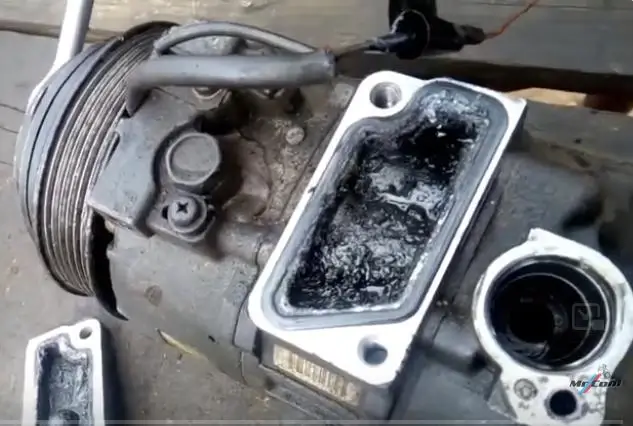
ac compressor black death
What Causes Car AC Black Death?
Over the years, I’ve seen several root causes behind car AC black death, but almost all of them involve compressor overheating or internal compressor destruction.
• Compressor Failure — This is the main cause. When an AC compressor internally fails, metal shavings and friction material spread throughout the refrigerant system.
Older GM compressors were especially known for this problem. Some compressors shed internal Teflon material that became pulverized into fine particles, contaminating the entire system.br/p><p>• Incorrect Refrigerant or Oil — Using the wrong PAG oil viscosity or mixing refrigerants can damage compressor internals quickly.
Why Car AC Black Death Is So Hard to Fix
One of the reasons the car AC black death is so feared in the automotive industry is that the contamination doesn’t simply flush out easily. The sludge and debris often bond to the inside surfaces of components.
You may flush the system and think it’s clean because black material comes out, but much of the contamination may still remain inside the condenser, evaporator, or hoses.
Modern parallel-flow condensers make the problem even worse.
Older tube-and-fin condensers could often be flushed successfully. But modern condensers contain extremely small passages that trap debris permanently.
In cases of severe contamination, I automatically replace the condenser because flushing rarely removes all contamination.
Symptoms of Car AC Black Death
Here are the most common symptoms I see when diagnosing car AC black death.
1) Weak or Warm Airflow — The debris can restrict refrigerant flow through the expansion valve or orifice tube.
2) Compressor Noise — Grinding, squealing, or knocking sounds are common.
3) Black Oil in the System — This is the biggest warning sign.
When I recover refrigerant or disconnect lines and see blackened oil, I immediately suspect severe contamination.
4) High System Pressures — Restricted refrigerant flow can create dangerously high head pressures.
5) Repeated Compressor Failures — This is extremely common when contamination wasn’t fully removed during a previous repair.
6) Clogged Orifice Tube or Expansion Valve — The screen may become packed with metal debris or sludge.
How I Diagnose Car AC Black Death
When I suspect car AC black death, I never just throw a compressor on the vehicle. I inspect the entire system first.
Step 1: Recover the Refrigerant — I check the oil condition during refrigerant recovery. Dark or burnt oil is a major red flag.
Step 2: Inspect the Orifice Tube or Expansion Valve — This is often the quickest way to confirm contamination. A clogged orifice tube filled with black sludge or metal debris usually confirms compressor failure.
>Step 3: Inspect Compressor Oil — If the oil contains:
• Metal flakes
• Black sludge
• Burnt smell
• Glitter-like particles
the system is contaminated.
>Step 4: Check Condenser Flow — Restrictions inside the condenser often reveal severe contamination.
>Step 5: Determine What Components Can Be Saved — Some hoses and evaporators can sometimes be flushed successfully.
But condensers often cannot.
How I Fix Car AC Black Death
Properly repairing car AC black death is expensive because shortcuts usually fail.
Components I Usually Replace
• Compressor
• Condenser
• Accumulator or receiver-drier
• Expansion valve or orifice tube
Components I May Flush Depending on Contamination Severity:
• Evaporator core
• Refrigerant lines
• Some hoses may be flushable.
Why I Always Replace the Receiver-Drier or Accumulator
Once exposed to contamination and moisture, the desiccant material inside can break down and spread additional debris.
Proper Vacuuming Is Critical
After repairs, I always evacuate the system thoroughly to remove:
• Air
• Moisture
• Non-condensable gases
• Correct Oil Balancing Matters
Too much or too little oil can destroy the replacement compressor.
Why Many Flush Jobs Fail
I’ve seen many failed repairs where someone tried to save money by flushing everything and installing only a new compressor.
The problem is that standard flush guns often cannot effectively remove bonded contamination.
Some dealerships once used specialized industrial flushing equipment and extremely aggressive flush chemicals specifically designed for severe contamination. Even then, success wasn’t always guaranteed.
That’s why many manufacturers eventually recommended replacing nearly everything forward of the firewall in severe cases.
To learn more about AC compressor failures, read Top AC Compressor Failure Causes and How to Prevent Them
Can You Prevent Car AC Black Death?
In many cases, yes.
• Fix Cooling Fan Problems Quickly
• High head pressure kills compressors.
• Don’t Ignore Noisy Compressors
• Early compressor noise often warns of impending failure.
• Repair Refrigerant Leaks Promptly
• Low refrigerant means low oil circulation.
• Use the Correct Oil and Refrigerant
• Mixing refrigerants or using incorrect PAG oil viscosity can destroy a compressor.
• Replace the Receiver-Drier Anytime the System Is Opened. This helps control moisture contamination.
• Keep the Condenser Clean — Blocked airflow increases system pressure dramatically.
Final Thoughts on Car AC Black Death
In the automotive AC world, black death is one of the most expensive and frustrating failures you’ll encounter.
I’ve seen people spend hundreds of dollars replacing compressors, only to destroy the replacement unit because contamination remained trapped inside the system.
The key is understanding that this isn’t just a compressor failure.
It’s a full-system contamination problem.
If the contamination is severe, replacing only one component almost never works long-term. Proper diagnosis, aggressive cleaning, and replacing heavily contaminated parts are the only reliable solutions.
©, 2026 Rick Muscoplat
Posted on by Rick Muscoplat