
Top AC Compressor Failure Causes and How to Prevent Them
What Causes AC Compressor Failure (Real Mechanic Insights)
Quick Summary
The most common causes of AC compressor failure are low refrigerant (and oil), contamination, and improper charging.
• When refrigerant leaks, the system also loses oil—this is the #1 reason compressors fail.
• Moisture and air create acid inside the system, leading to “black death” contamination.
• Overcharging the system increases internal pressure and physically damages compressor components.
• Most failures are preventable if you diagnose correctly and recharge by weight, not guesswork.
Why Most AC Compressors Fail (And Why It’s Usually Preventable)
In my experience, AC compressor failure causes are rarely random. I’ve diagnosed hundreds of systems, and the pattern is always the same—something upstream caused the failure.
The compressor gets blamed, but it’s usually the victim.
If you want to understand what causes AC compressor failure, you have to think of the system as a closed loop in which the refrigerant carries oil. When that loop is disrupted, the compressor is the first component to suffer.
Let me walk you through the real-world causes I see every day—and how I diagnose them.
Cause #1: Low Refrigerant = Low Oil (The #1 Killer)
This is the biggest one, and it’s responsible for the majority of failures. When a system leaks refrigerant, it doesn’t just lose refrigerant—it loses oil. That’s because the refrigerant carries oil through the system. So when someone keeps running the AC with low refrigerant, they’re essentially starving the compressor of lubrication.
Here’s what happens internally:
• The compressor piston Teflon seals begin to wear
• Metal surfaces start contacting each other
• Heat builds up rapidly
• Internal scoring begins
Eventually, the compressor starts shedding 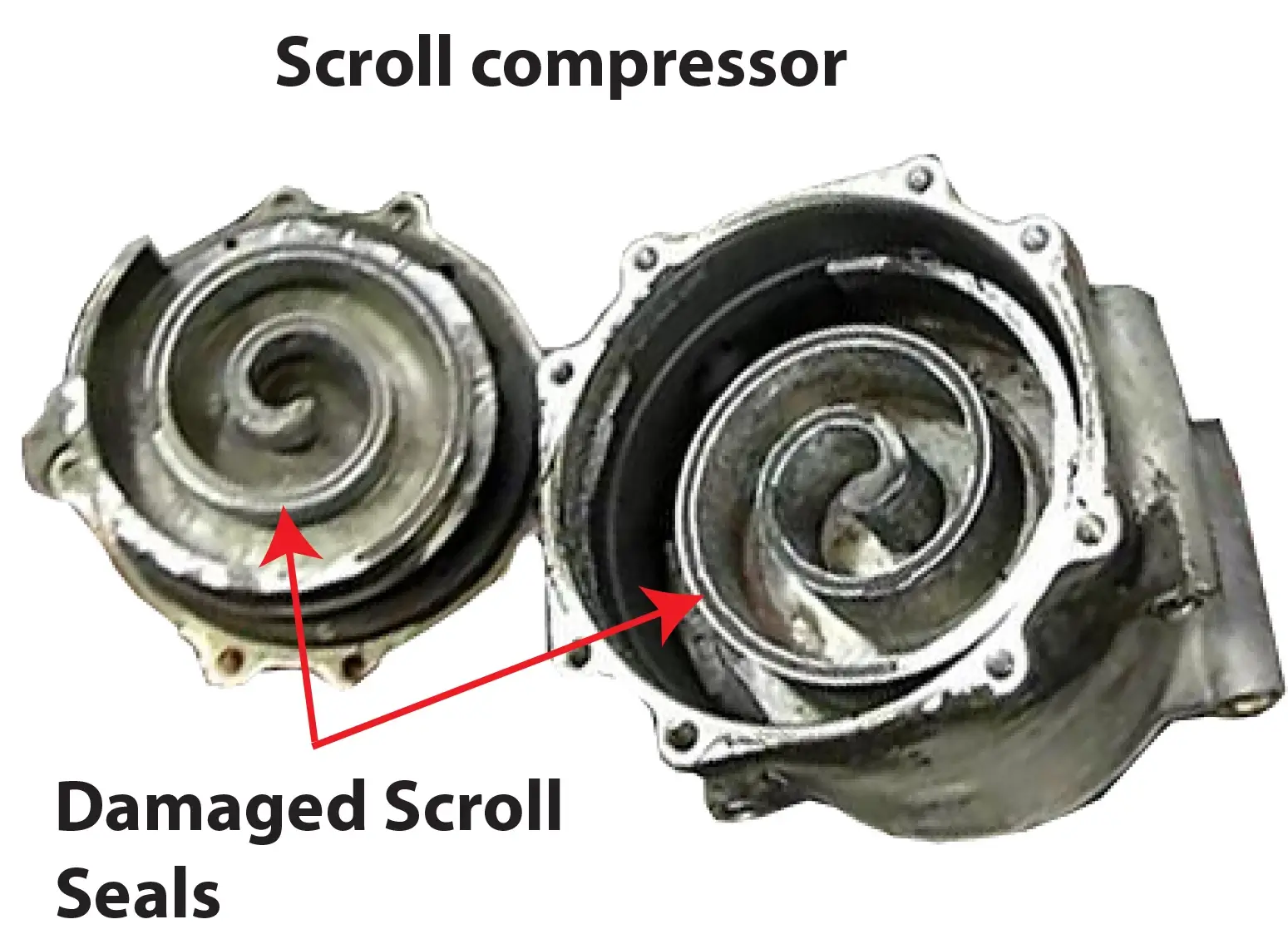 metal particles into the system. At that point, it’s no longer just a compressor problem—it’s a system-wide contamination issue.
This is why I always tell people: if you’re trying to understand the causes of AC compressor failure, start with refrigerant loss.
Cause #2: Contamination and “Black Death”
Once lubrication fails or moisture enters the system, things get ugly fast. When air and moisture mix with refrigerant oil, they form acids. Those acids attack internal components and break down the oil.
This leads to what we call “black death.”
You’ll recognize it immediately:
• Black sludge inside the lines
• Contaminated oil
• Plugged expansion devices
• Metallic debris throughout the system
At this point, simply replacing the compressor won’t fix anything.
Once an AC system is contaminated with Black Death, the repair must include:
• A new compressor
• Replace the condenser
• Replace the Receiver/drier
• Replace the expansion device
• Perform a full system flush
Anything less, and the new compressor will fail again.
For more detailed information on AC Black Death, read Car AC Black Death: What It Is and How to Fix It
Cause #3: Overcharged AC System
This one surprises a lot of DIYers. People assume more refrigerant equals colder air. That’s completely wrong.
When a system is overcharged:
• Head pressures increase
• Compressor load increases
• Internal seals are overstressed
• Bearings and valves wear prematurely
In extreme cases, I’ve seen compressors lock up due to overpressure alone. So when I evaluate what causes AC compressor failure, I always check charge level first—and I always use a scale, never pressure alone.
Cause #4: Improper Oil Balance (The Silent Killer)
This is one of the most overlooked AC compressor failure causes. Too little oil causes immediate wear. Too much oil reduces cooling and increases internal stress.
Here’s the problem: when parts are replaced, the oil balance changes.
If you don’t:
• Measure oil removed
• Adjust oil in the new compressor
• Account for replaced components
You’re setting the system up for failure. I’ve seen brand-new compressors fail in weeks because someone guessed the oil amount.
Cause #5: Debris Left in the System
When a compressor fails, it spreads debris everywhere.
That debris:
• Clogs orifice tubes
• Restricts expansion valves
• Circulates back into the new compressor
Modern condensers make this worse because they trap debris and can’t be flushed effectively. That’s why one of the biggest causes of AC compressor failure after replacement is skipping the condenser replacement. If I see a repeat failure, this is one of the first things I check.
Cause #6: Moisture Intrusion During Repairs
This is a big one that doesn’t get enough attention.
Any time the system is open:
• Air enters
• Moisture enters
That moisture reacts with oil and refrigerant, forming acids.
If you don’t:
• Replace the receiver/drier
• Pull a deep vacuum
• Verify vacuum hold
You’re leaving moisture inside the system. And moisture is one of the fastest ways to trigger long-term compressor damage.
In other words, don’t make your AC repair a multi-week project. Keep the new parts sealed, especially the receiver/drier. Then, install the parts and immediately pull a vacuum.
My Diagnostic Strategy for AC Compressor Failure Causes
How I Prevent AC Compressor Failure (Real-World Strategy)
If you want to avoid compressor failure entirely, here’s what I recommend:
• Fix leaks immediately—don’t “top off” the refrigerant with a DIY kit
• Always recharge by weight
• Replace the receiver/drier when opening the system
• Flush components after a failure
• Replace the condenser when contamination is present
• Measure and match oil precisely
Do those things, and you’ll eliminate nearly all common AC compressor failure causes.
©, 2023 Rick Muscoplat
Posted on by Rick Muscoplat