
AC Compressor Failure Symptoms You Should Never Ignore
Top AC Compressor Failure Symptoms and What They Mean
Quick Summary
The most common AC compressor failure symptoms are
• Warm air— Your AC never gets cold, and you know it has a full refrigerant charge
• The air only gets cold when you’re driving at highway speeds — A worn compressor can’t do its job at low engine RPMs, but it can produce enough cold at highway RPMs.
• Unusual noises — A failing compressor can make grinding, clunking noises
• Oil leaks — Refrigerant oil will seep out of worn seals and gaskets, and the lack of oil can cause rapid compressor failure.
• Inconsistent cooling — Your air feels cool, cold, warm, all in a period of 15 minutes.
Ignoring early AC compressor failure symptoms almost always leads to full system contamination and expensive repairs.
For more information on car AC compressors, read Car AC compressor: How it works and how it fails
Why You Should Never Ignore AC Compressor Failure Symptoms
I’ve diagnosed hundreds of AC systems, and I can tell you this—AC compressor failure symptoms don’t show up all at once. They start subtly, and most people ignore them.
That’s how a simple leak turns into a complete system failure.
Symptom #1: AC Blows Warm Air or Isn’t Cold Enough
This is the most common—and most misunderstood—symptom. If your AC is blowing warm or just slightly cool air, it doesn’t automatically mean the compressor is completely dead. But it does mean something is wrong.
Here’s what I look for:
• Weak cooling at idle because the compressor is worn and can’t compress enough refrigerant at low RPM.
• Your AC gets slightly cooler air at higher RPMs
• But you never quite get truly cold air
A worn compressor can’t build proper pressure. Or the clutch may not be engaging at all. Either way, this is one of the earliest symptoms of an AC compressor failure, and it’s often tied to low refrigerant and oil levels.
Symptom #2: AC Compressor Noise (Grinding, Screeching, or Clicking)
Noise is one of the clearest indicators. When I hear a compressor making noise, I immediately pay attention.
Common sounds include:
• Grinding (internal damage)
• Screeching (clutch slipping)
• Clicking (engagement issues)
A failing compressor clutch can create a metallic screech as it slips against the pulley. In my experience, AC compressor noise symptoms are often the last warning before total failure.
Symptom #3: Oil Leaks Around the Compressor
This is one of the most overlooked AC compressor failure symptoms. If I see oil around the compressor, I know there’s a leak.

This is a typical AC compressor shaft seal. It’s a two-piece unit with a ceramic sealing face.
Look for:
• Oily residue on the compressor body
• Oil flung around the pulley area
• Streaks on the hood insulation
That oil is mixed with refrigerant, so if it’s leaking out, your system is losing both refrigerant and lubrication.
That’s a direct path to compressor failure
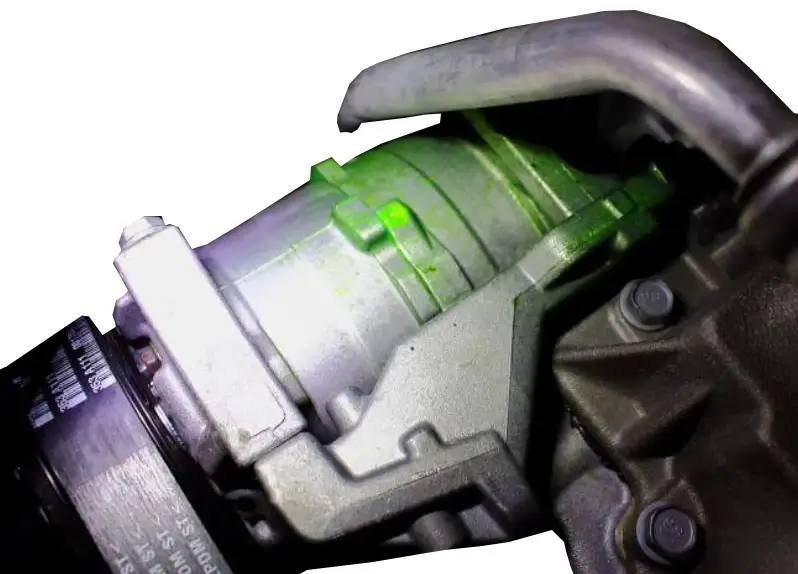
Fluorescent leak dye has been added to this system and shows a leak on the compressor body gasket
Symptom #4: Intermittent Cooling (Cold Then Warm)
This is one of my favorite diagnostic clues because it tells a story.
You might notice:
• Your AC starts cold, then turns warm
• The airflow drops suddenly
• The cooling comes back after a few minutes
This usually points to low refrigerant or internal inefficiency.
Here’s what’s happening:
• The evaporator gets too cold
• Ice forms and blocks airflow
• The ice melts, and cooling returns
This cycling behavior is a classic AC compressor failure symptom tied to low refrigerant and oil loss.
Symptom #5: AC Only Works While Driving
If the AC is cold on the highway but warm at idle, I immediately suspect a weak compressor.
At higher RPMs:
• The compressor spins faster
• The higher rotation speeds compensate for internal wear
At idle:
• It can’t build enough pressure
• So cooling drops off
This is one of the most telling car AC compressor failure symptoms I see in the real world.
Symptom #6: Visible Signs of “Black Death” Contamination
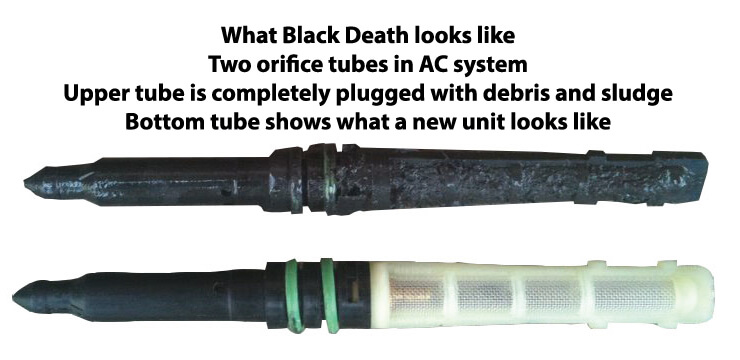
This is the worst-case scenario. If I open a system and see black sludge, I know the compressor didn’t just fail—it contaminated the entire system.
Signs include:
• Black residue in lines
• Metallic debris
• Plugged expansion devices
At this point, the compressor isn’t the only problem. The entire system must be cleaned or replaced. This is the end stage of ignored AC compressor failure symptoms.
What Causes These Symptoms (And Why They Matter)
Every one of these symptoms traces back to a root cause.
The most common ones I see are:
• Low refrigerant (and oil loss) due to system leaks
• Moisture contamination due to air and moisture intrusion due to refrigerant leaks
• Improper recharge procedures
• Overcharged systems
• Internal wear from lack of lubrication — As mentioned above, any time your system leaks refrigerant, it also leaks oil. Many DIYers think they can just recharge the system and call it a day. But if you don’t add oil, you’re running the compressor with less oil, which causes extra wear.
Understanding these causes helps you correctly interpret AC compressor failure symptoms rather than guessing.
My Professional Diagnostic Strategy
When I diagnose a system showing AC compressor failure symptoms, I follow a process:
• Verify refrigerant level (by weight, not pressure guesswork)
• Inspect for oil leaks
• Listen for compressor noise
• Check clutch engagement
• Evaluate cooling performance at idle vs RPM
This tells me whether the compressor is:
• Weak
• Starving for oil
• Contaminated
• Or completely failed
How to Prevent AC Compressor Failure
If you want to avoid these problems entirely, here’s what I recommend:
• Fix leaks immediately
• Never run your AC when it’s low on refrigerant
• Always recharge by weight
• Replace the receiver/drier when opening the system
• Add the correct oil amount every time
Follow that, and you’ll avoid nearly all AC compressor failure symptoms before they start.
©, 2022 Rick Muscoplat
Posted on by Rick Muscoplat