
A Guide to Finding the Right Brake Line Fitting
Understanding Brake Line Fitting: Types and Measurements
Any auto parts store can help you match up your old rounded-over brake line fitting with a new one. But that assumes you manged to get the old one off and can get to the parts store. However, if you need to find the fitting yourself, this article will show you how to find the right one.
Here’s how to measure your current brake line fitting
Start by determining the type of flare used on the line: either inverted, bubble, or DIN. Next, there’s the brake line diameter, the threaded diameter, and thread count (thread pitch).
To measure thread count you’ll need a thread pitch gauge like this:
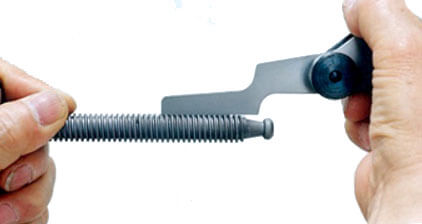
For SAE applications you’ll be measuring threads per inch. For metric applications, you’ll be measuring threads per millimeter.
Most domestic and Asian brands use an inverted or bubble flare on the brake line ends
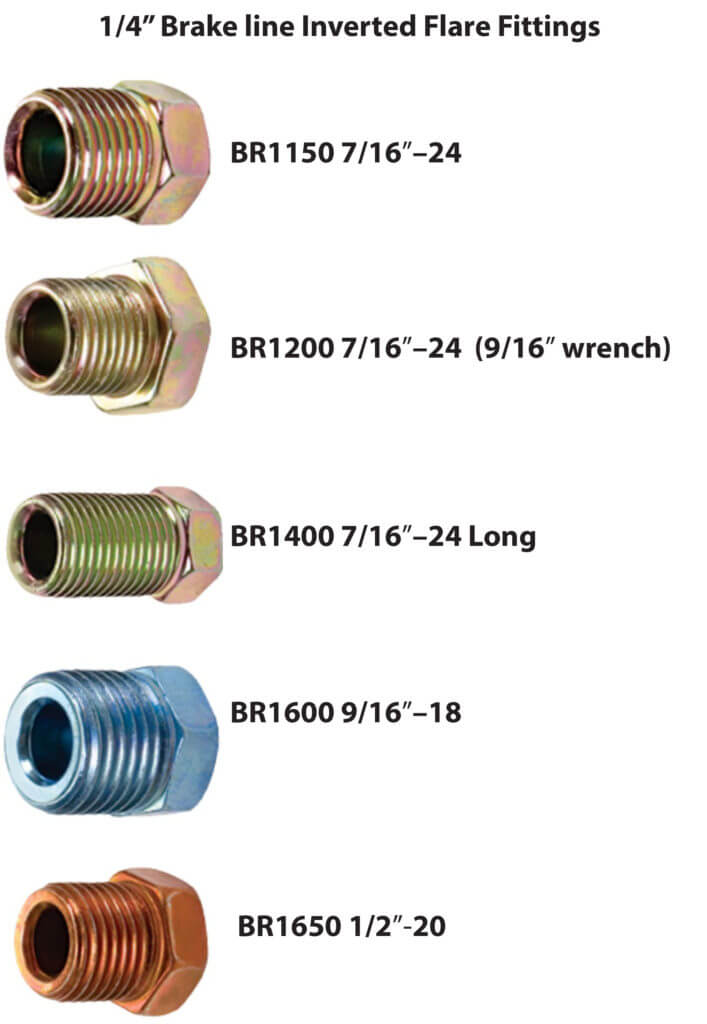
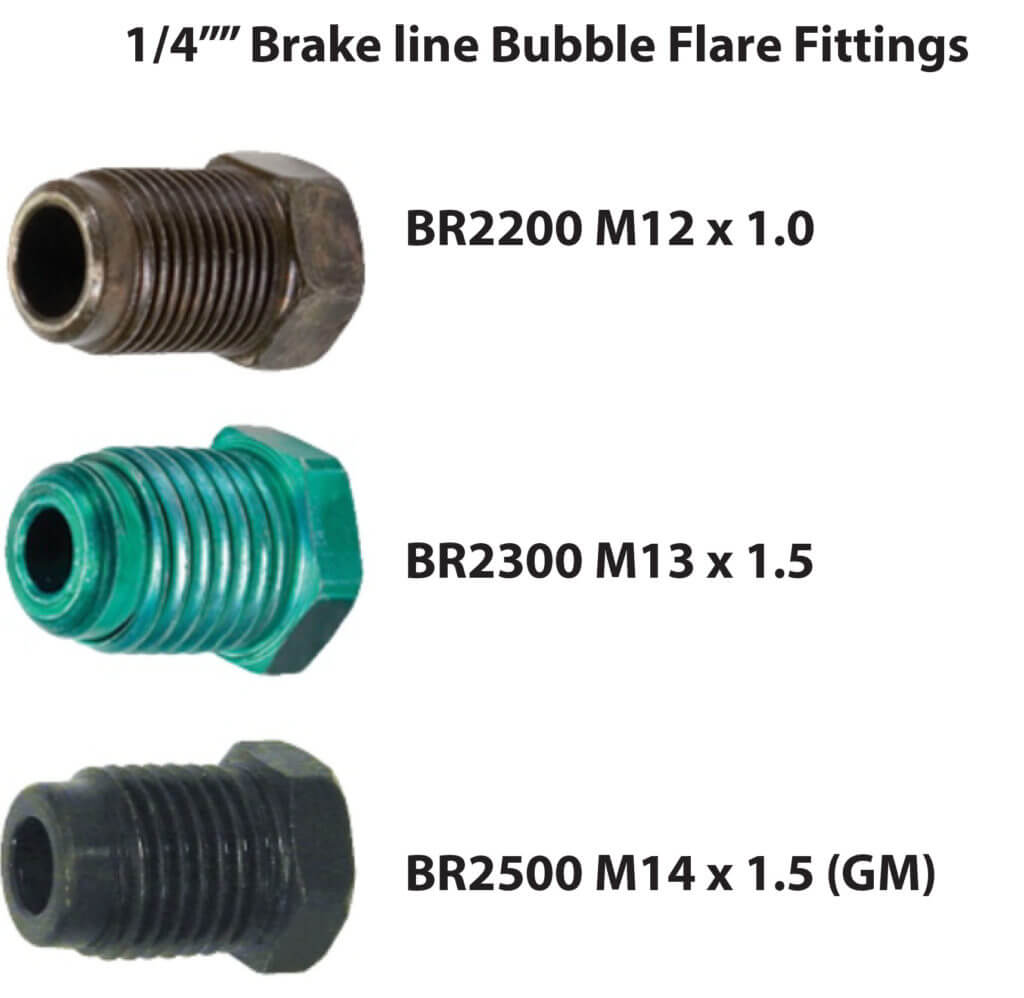
See the images below for the differences in flare types
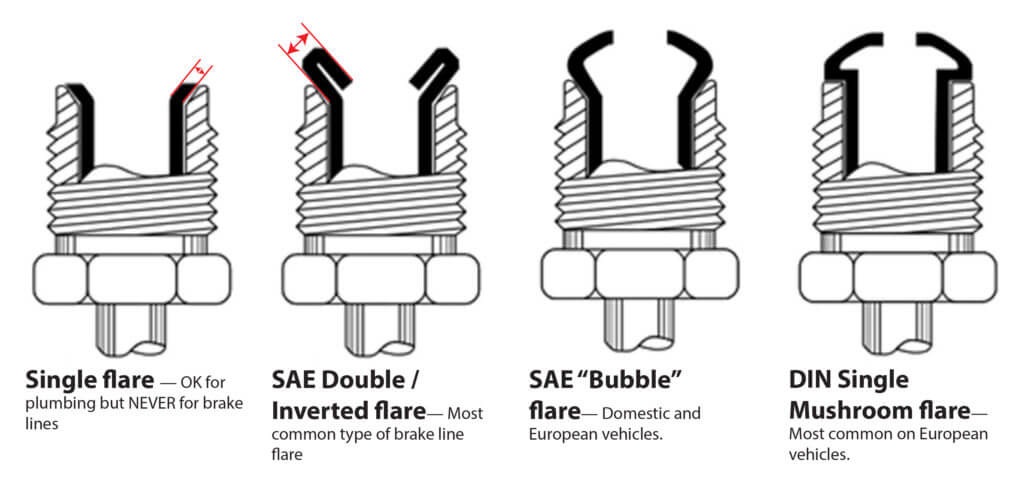
The two most common fittings for cars, light trucks and SUVs
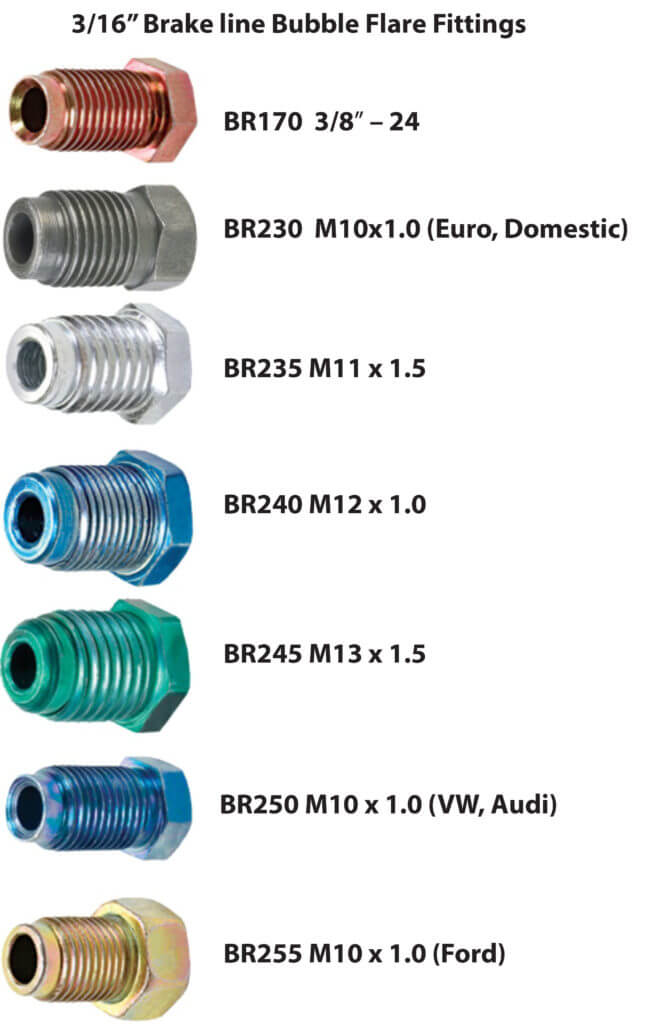
Most cars and light-duty SUVs and CUVs use 3/16″ diameter brake lines. Larger trucks often use 1/4″ lines.
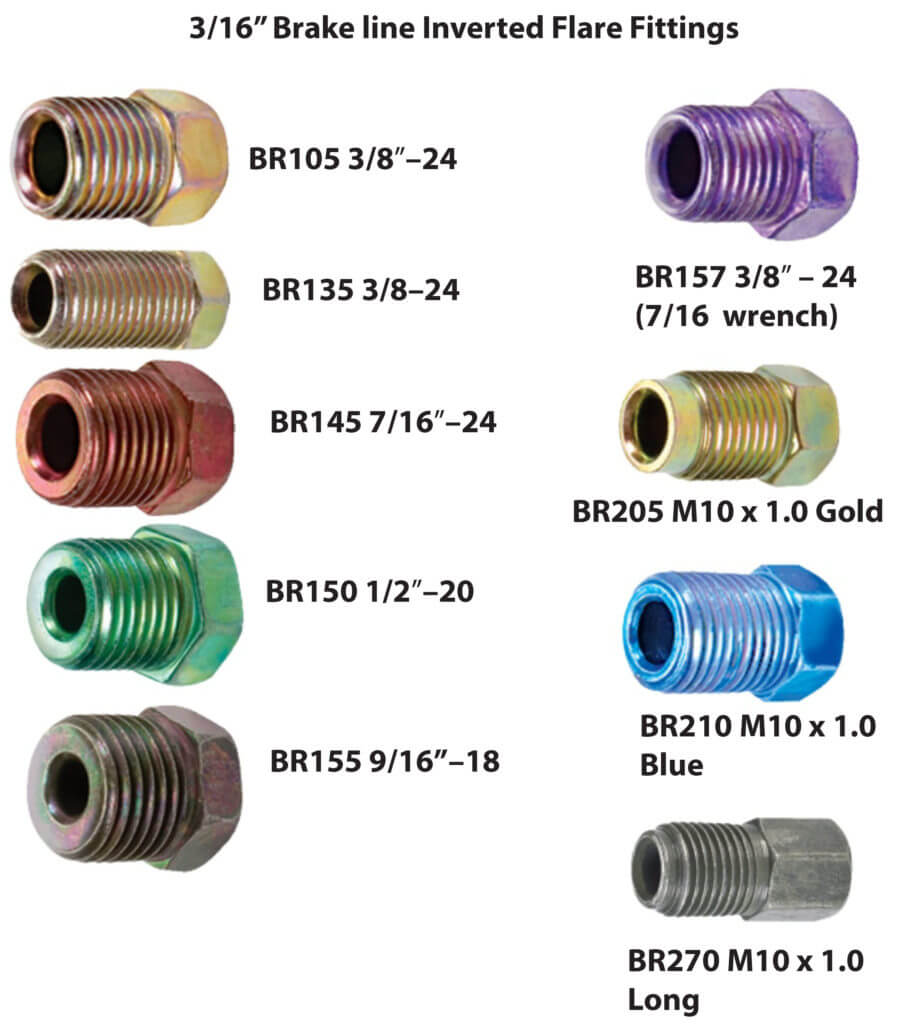
If you look at the open end of the fitting, you’ll see the opening is tapered to match an inverted flare
©, 202 Rick Muscoplat
Posted on by Rick Muscoplat