
Car Paint Explained: Enamel vs Urethane vs Clear Coat Systems
Best Car Paint for DIY Projects (Expert Guide)
Quick Summary
Not all car paint systems are created equal. Enamel is simple and budget-friendly but lacks durability. Urethane is tougher, more chemical-resistant, and longer-lasting. Base coat clear coat systems deliver the best appearance and protection, but require more skill and additional steps. For most DIYers, single-stage urethane offers the best balance of ease and durability, while base coat clear coat remains the professional standard for long-term results.
Article
Understanding the Three Main Car Paint Systems
After decades of working on cars and trucks, I can tell you that choosing the right car paint system matters just as much as how you apply it. The three main types you’ll encounter are:
• Enamel (single-stage)
• Urethane (single-stage or two-stage)
• Base coat clear coat (two-stage system)
Each has its place, but they behave very differently in terms of durability, application, and finish.
Enamel Car Paint: Simple and Affordable
Enamel car paint is the oldest and most straightforward system. It’s typically a single-stage paint, meaning the color and gloss are built into one layer. Enamel cures either by air drying (oxidation) or with a hardener added. Once applied, it forms a relatively hard surface without requiring a separate clear coat.
Advantages
• Easy to apply—ideal for beginners
• Lower cost than other systems
• Requires fewer materials and steps
• Can be brushed, rolled, or sprayed
Disadvantages
• Limited UV resistance
• Fades and chalks over time
• Less chemical and scratch resistance
• Harder to repair and blend
• Longevity — A typical enamel car paint job lasts 3–7 years, depending on exposure and maintenance.
My Take — I only recommend enamel today for budget jobs, older work trucks, or equipment where appearance isn’t critical.
Urethane Car Paint: The Workhorse Upgrade
Urethane car paint is a big step up from enamel. It uses modern chemistry that creates a tougher, more flexible coating. Urethane is typically mixed with a hardener (catalyst), which triggers a chemical curing process. This results in a durable, fuel-resistant finish.
Advantages
• Excellent durability and flexibility
• Strong resistance to chemicals, fuel, and UV
• Better gloss retention than enamel
• Available as a single-stage or base coat clear coat
Disadvantages
• More expensive than enamel
• Requires proper mixing and safety equipment (respirator)
• Shorter working time (pot life)
• Longevity
• A properly applied urethane car paint job can last 10–15 years or more.
My Take — For most DIYers, single-stage urethane car paint is the sweet spot. It’s forgiving enough to apply and tough enough to last.
Base Coat Clear Coat Car Paint: Professional-Level Finish
This is the system used on virtually every modern vehicle. If you want that deep, glossy showroom finish, this is the gold standard for car paint. It’s a two-stage system. The base coat provides the color, but doesn’t contain any gloss component. That’s in the second stage, the clear coat. The clear coat is all gloss, no pigment. It’s what provides UV protection and gives the paint a 3D appearance.
The base coat flashes off quickly, and then multiple layers of clear coat are applied on top.
Advantages
• Best appearance and depth
• Superior UV protection
• Easier to repair and blend
• Longest-lasting finish
Disadvantages
• More complex application process
• Higher material cost
• Requires careful timing between coats
• More sensitive to application errors (runs, orange peel)
• Longevity— A properly applied base coat, clear coat car paint job can last 15–20+ years.
My Take — This is the best system for restoration or high-end work, but it requires skill, patience, and proper equipment.
How Each Type of Car Paint Is Applied
Enamel Application: Add a hardener and mix. Spray 2–3 coats. Allow to cure. Use basic spray equipment.
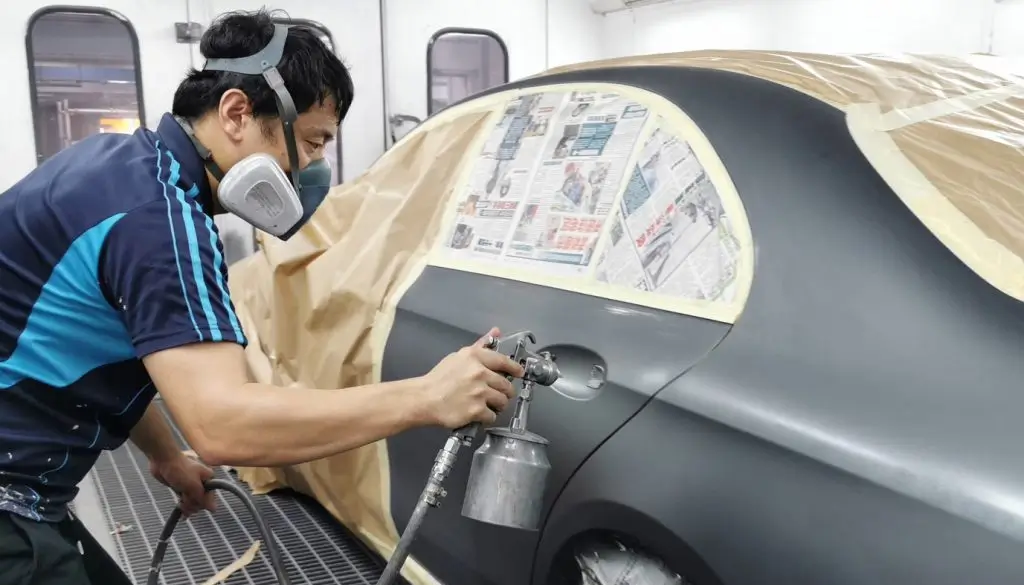
Urethane Application: Urethane car paint requires more precision. Mix the paint with hardener and reducer (based on the temperature and humidity present when applying). Apply multiple coats, allowing proper flash time between coats. Maintain consistent gun technique. You must use a proper respirator due to toxic isocyanates.
Base Coat Clear Coat Application: This is where skill matters most. Apply base coat in thin, even layers. Allow proper flash time. Apply 2–3 coats of clear coat. Wet sand and polish if needed. This system rewards experience but punishes mistakes.
Which Car Paint System Is Best for DIYers?
If you’re working in a home garage, here’s my honest recommendation:
Best Overall: Single-Stage Urethane because it’s easier than base coat and clear coat, and is much more durable than enamel. It provides good gloss without needing a clear coat.
Easiest: Enamel. Lowest barrier to entry but lowest durability.
Best Finish: Base Coat Clear Coat. Provides professional-level results, but is the hardest for beginners
Final Verdict: Choosing the Right Car Paint
If I’m doing a quick driver-quality job, I’ll reach for a urethane car paint every time. It’s durable, forgiving, and delivers solid results.
If I’m restoring a vehicle or want that deep, factory look, I go with base coat clear coat car paint—no question.
And if the goal is just to protect metal on a budget, enamel car paint still has a place.
The key is matching the system to your skill level, budget, and expectations. Because at the end of the day, even the best car paint won’t perform if it’s applied poorly.
©, 2026 Rick Muscoplat
Posted on by Rick Muscoplat