
Fuel pump replacement cost and replacement tips
How Much It Costs to Replace a Fuel Pump: A Comprehensive Guide
The fuel pump is responsible for transporting fuel from the gas tank to the engine at the right pressure and volume, ensuring the engine runs smoothly. When a fuel pump fails, it can leave you stranded, unable to start your vehicle, or cause your engine to run erratically. Replacing a faulty fuel pump is necessary, but the cost of this repair can vary significantly depending on several factors. This article will explore the various aspects that influence the cost of replacing a fuel pump, giving you a clear understanding of what to expect.
Factors Affecting the Cost of Fuel Pump Replacement
The cost of replacing a fuel pump can vary widely based on several factors:
1) Make and Model of the Vehicle— The make and model of your vehicle play a significant role in determining the cost of a fuel pump replacement. Luxury and performance vehicles, such as BMW, Mercedes-Benz, or Audi, often have more expensive parts and labor costs due to the complexity of their systems. In contrast, more common or older vehicles may have less expensive fuel pumps and require less time to replace.
2) Type of Fuel Pump— The type of fuel pump your vehicle uses also affects the replacement cost. In-tank fuel pumps, which are submerged in the fuel tank, are more common in modern vehicles and are generally more expensive to replace due to the labor involved in accessing the fuel tank. External or inline fuel pumps, which are easier to access, are typically less expensive to replace.
3) Access Panel versus Tank Drop— Some carmakers provide a fuel pump access panel under the back seat, making fuel pump replacement far less labor-intensive. If your vehicle doesn’t have an access panel, the technician will have to drain and then remove the fuel tank, adding hours to the job.
4) Labor Costs— Labor costs can vary depending on where you have the repair done. Dealerships typically charge higher labor rates than independent repair shops. Additionally, the complexity of the job can affect labor costs. Replacing an in-tank fuel pump may require removing the fuel tank, which can be labor-intensive and time-consuming, driving up the cost.
5) Parts Costs— The cost of the fuel pump itself can vary depending on the brand and quality. OEM (Original Equipment Manufacturer) fuel pumps are often more expensive than aftermarket options, but they may provide better reliability and a longer warranty. Aftermarket pumps can be cheaper, but quality can vary, and they may not last as long as OEM parts.
Ballpark fuel pump replacement cost
Generally speaking, an in-tank fuel pump replacement costs between $1,000 and $,1500, using an OE pump. But the final price depends on whether your vehicle has a back seat access panel or requires dropping the fuel tank. It also depends on whether the shop uses an aftermarket fuel pump or an OE fuel pump.
If your car has a fuel pump access panel, the job will be cheaper than one where they have to drop the tank.
The fuel pump in a port-injected engine is located inside the fuel tank. Some vehicle manufacturers install and access panel under the back seat, allowing them to easily replace the fuel pump. Unfortunately, other car makers don’t make it that easy. For those vehicles, the tech has to drain the tank and remove it from the vehicle, adding many hours of labor to the job. In other words, if you have an access panel, the job will be at least $200 to $400 cheaper than if the tech has to lower the fuel tank.
My thoughts on an OE versus aftermarket pump
Aftermarket fuel pumps are much cheaper than dealer fuel pumps and some brands are as good as an OE pump. For example, Delphi is a Tier 1 supplier to carmakers, and a Delphi pump is considered to be very good. However, other aftermarket brands have a high failure rate. Even though they’re cheaper than Delphi or OE, they’re not as reliable. If you plan on keeping the vehicle, insist on a dealer pump. Why risk replacing a cheap fuel pump again in a few years?
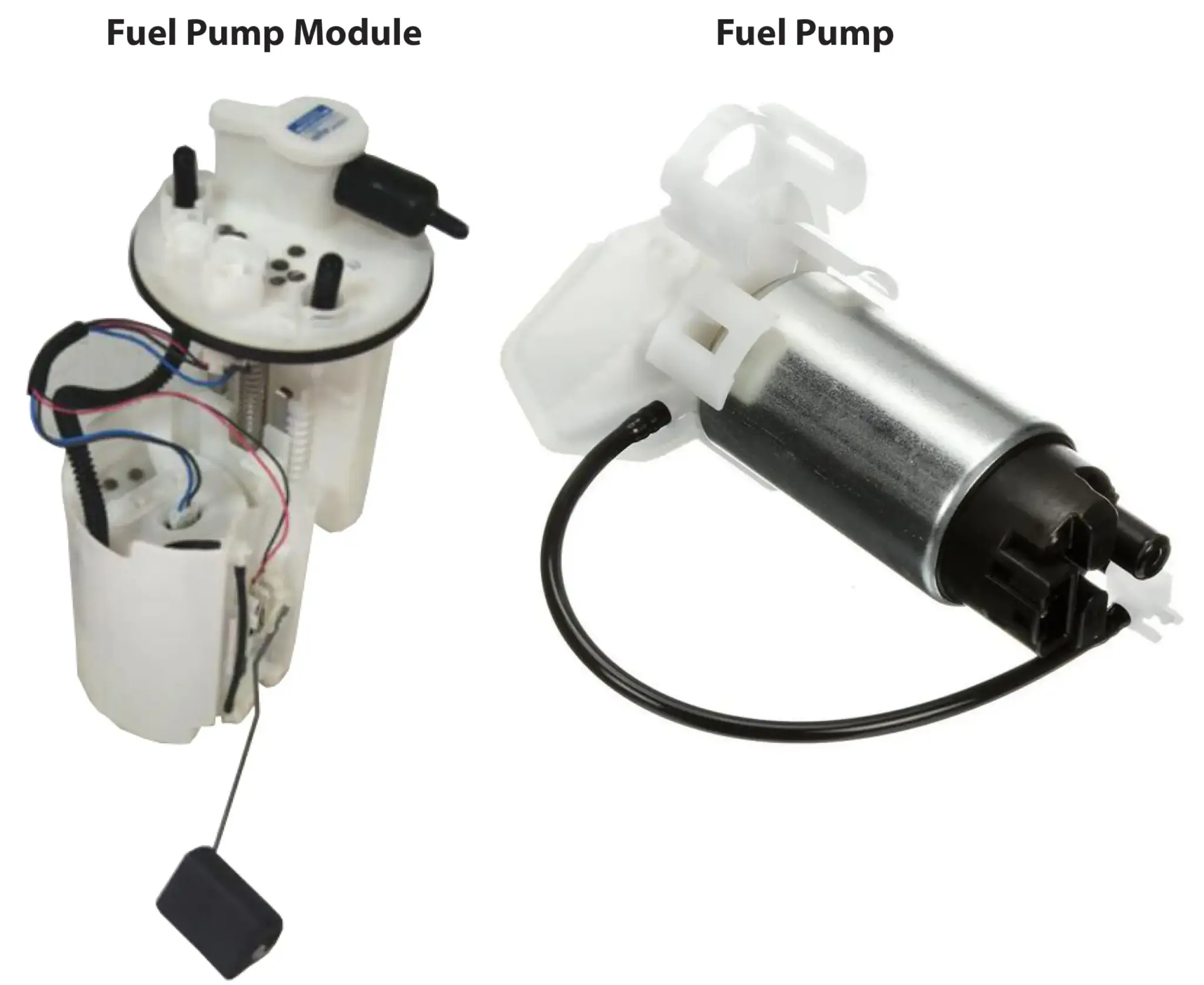
Complete module or just the pump?
Shops have the option of replacing just the pump or the entire fuel pump module. The module includes the fuel pump housing, new connecting hoses and a new fuel level sending unit. A fuel pump module costs a bit more than just the fuel pump. But it takes less labor to install since the tech doesn’t have to disconnect and reconnect the hoses to the pump.
Fuel pump replacement tip: Replace the entire fuel module
A new module costs a bit more, but it includes a new fuel level sending unit and factory fuel pump connections. So, the labor required to remove the oil pump from the module and install the new pump is less.
If you have a newer vehicle with direct injection, you have two fuel pumps
Direct injection engines require up to 2,000 psi to inject fuel directly into the cylinder. Those engines have two fuel pumps: one in the tank and a second pump mounted on the engine. The high-pressure pump runs off the camshaft, taking in 50 psi fuel from the tank and boosting it to 2,000 psi.
High pressure fuel pumps cost about 30% more than an in-tank pump. However, they’re easier to install since they sit on the top of the engine. Once the tech depressurizes the system, replacement takes little time since it’s just held in by a few bolts.

Because the high pressure fuel pump rides on a triangular lobe of the camshaft, lubrication is critical to longevity. If you neglect oil changes, you can damage not only the pump, but you can wear off the triangular lobes of the camshaft dramatically increasing the cost of a new fuel pump.
Replace fuel pump tip #2: Insist the shop cleans the tank
Crud in the fuel tank is the #1 cause of repeat in-tank fuel pump failures. Cleaning the tank is the best way to avoid future failures. It will add to the cost but reduce future failures.
©, 2023 Rick Muscoplat
Posted on by Rick Muscoplat