
How to Repair a Plastic Gas Tank Without Replacing It
Step-by-Step Plastic Gas Tank Repair Guide for DIY Mechanics
If you’ve ever had to deal with a leaking gas tank, especially a plastic one, you know how frustrating—and dangerous—it can be. As someone who’s been fixing vehicles for decades, I’ve patched up more than a few damaged tanks, and I’m going to walk you through how to patch a hole in a plastic gas tank the right way.
Let’s be clear: plastic gas tank repair isn’t as simple as slapping on some epoxy and hoping for the best. Especially when you’re working with high-density polyethylene (HDPE), which is notoriously hard to bond to, but it can be done if you follow the right steps and use the right materials.
Step 1: Know What You’re Working With
Plastic or Metal? It Changes Everything
Before you can even think about how to patch the tank, you’ve got to identify what it’s made of. Metal tanks are relatively easy to fix with epoxies or brazing. But plastic? That’s a whole different animal.
Most plastic gas tanks are made from:
• High-density polyethylene (HDPE)
• Polypropylene (PP)
• Recycled polyethylene (regrind plastic)
• Ethyl vinyl alcohol (EVOH)
HDPE and PP are especially challenging because they have low surface energy, which means most adhesives won’t bond to them effectively.
If you post your question online, everyone will tell you to repair your plastic tank using an epoxy like JB Weld. But if you read the FAQ on their gas tank repair products page, you’ll discover that JB Weld doesn’t make an epoxy that works with HDPE gas tanks: “We do not offer a lasting repair for poly gas tanks at this time” JB Weld. So epoxy is not an option.
Step 2: Understand the Problem with HDPE
Why Your Gas Tank Patch Might Fail
HDPE is a fantastic material for fuel tanks because it’s lightweight and corrosion-resistant. But it’s a nightmare for adhesives. I’ve had many folks bring me vehicles with failed epoxy repairs on HDPE tanks. Trust me—it won’t hold.
That’s why, for plastic gas tank repair, I only recommend two viable options:
1) A thermal plastic welding kit (plastic repair kit)
2) A specialty chemical bonding system like Tech-Bond, which claims to work on HDPE
TechBond is one of the few companies that claims a repair system that works on plastic gas tanks. See their site for more information.
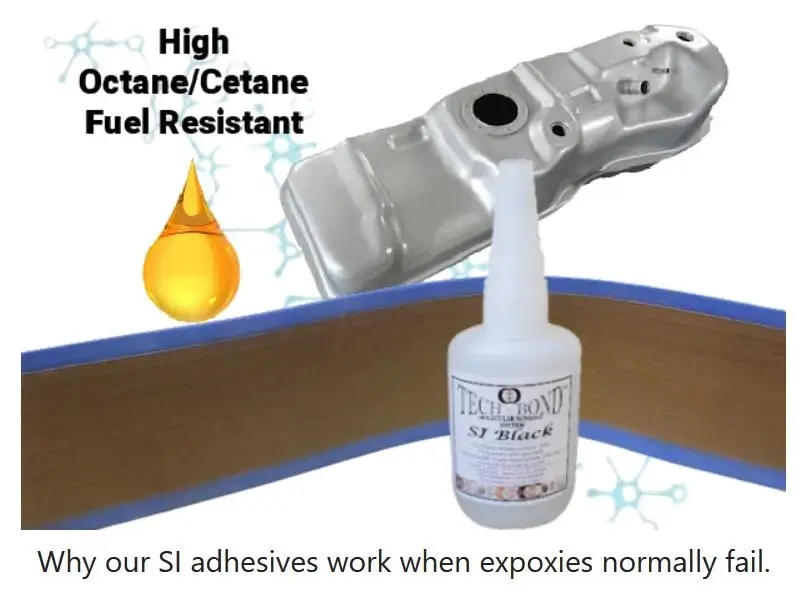
Use a plastic repair kit on an HDPE or PP gas tank
Aside from TechBond, the only other way to repair a plastic gas tank made from HDPE or PP is to invest in a plastic repair kit. The kit contains a hot-melting iron and an assortment of different types of plastics to use as filler material.
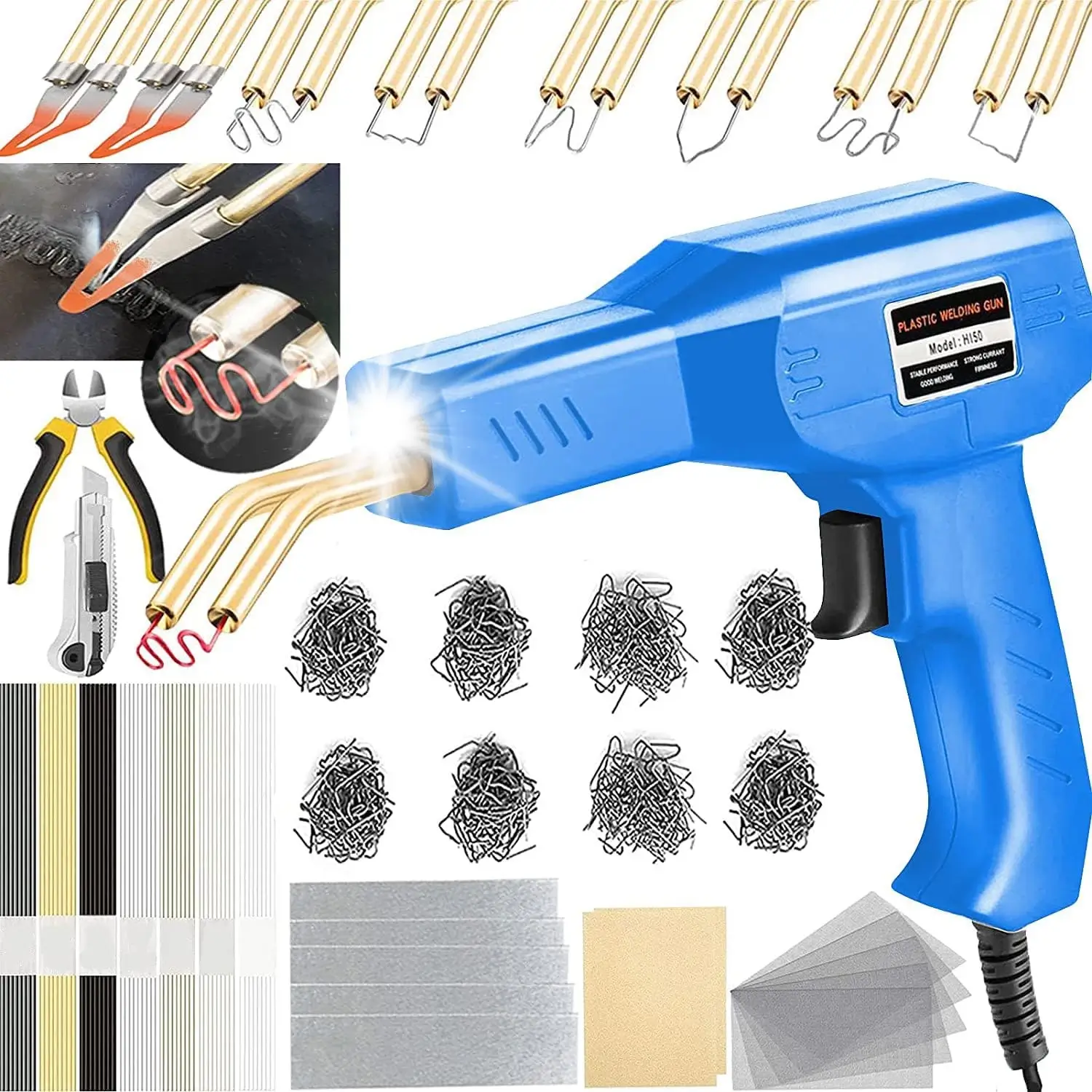
Plastic repair kit
Step 3 to repair a gas tank — locate the leak source
On a metal tank, look for signs of gasoline puddles, wet spots, or tank corrosion. Most small leaks on the gas tank can be repaired, but very large leaks or leaks in metal seams can’t be repaired. In those cases, the tank must be replaced.
On plastic tanks, the most common leak point is where gasoline thieves have drilled a hole to drain the gas.
Step 4: Drain the Tank Before you Start The Repair
Safety First—Never Attempt to Patch a Full Tank
This isn’t optional. If there’s fuel in the tank, do not attempt a plastic gas tank repair. Even vapors can ignite if you’re using a hot tool.
Safely drain the fuel and leave the cap off for several hours to allow fumes to dissipate. Work in a well-ventilated area away from sparks or open flames.
Step 5: Clean the leak site
No Adhesive or Plastic Weld Will Stick to a Dirty Tank
You must clean the leak area thoroughly. I scrub it down with a degreaser, rinse it, and dry it thoroughly. For plastic tanks, I use coarse sandpaper (no grinders—too dangerous) to rough up the surface and give the filler material something to bite into.
If you’re using a bonding agent like Tech-Bond, follow their specific surface prep instructions. For thermal welding, prep is just as critical. Melted plastic won’t fuse properly to a slick or contaminated surface.
If the tank is rusted, remove the rust with sandpaper. Avoid using a grinder or even a wire wheel due to the danger of creating sparks. Use sandpaper to rough up areas around the leak on plastic tanks.
Step 6 — Apply the patching material for metal gas tank repairs
Option 1: Using a Plastic Repair Kit with Welding Iron— This is my go-to method. These kits come with a hot iron and plastic filler rods that match the tank material. You melt the filler rod into the crack or hole, fusing it directly to the tank. It’s like metal welding, only with plastic. If done correctly, it’s a permanent plastic gas tank repair.
Just be sure you’re using the right type of filler rod (usually HDPE or PP). If you don’t match the material, it won’t bond well.
Option 2: Tech-Bond or Other Specialty Adhesive Systems— Tech-Bond claims to chemically bond to low surface energy plastics like HDPE. While I haven’t had as much hands-on experience with their product as I have with welding kits, I know a few pros who swear by it.
Regardless of method, follow the instructions to the letter. Shortcuts here will cost you a lot more down the road—possibly even a new tank.
On metal tanks, gas tank epoxy is your best bet.
Adhesive or Putty: If using a repair kit, follow the provided instructions to apply the adhesive or putty to the leaking area.
After applying the repair materials, allow sufficient time for them to cure and bond properly. Follow the manufacturer’s instructions for curing time.
Step 7: Test the gas tank for leaks
Don’t Refill Until You’re Sure
Once the repair cools or cures (depending on whether you welded or bonded), give it plenty of time to set. Afterward, I test the patch by adding a small amount of gasoline to the tank—not enough to be dangerous, just enough to cover the repair area.
If it stays dry after 15–20 minutes, it’s likely good. If you see even the smallest bead of fuel, you’ll need to redo the repair.
Step 8: Monitor and Maintain
I always tell my customers that any plastic gas tank repair should be considered semi-permanent unless the tank is replaced. Some last for years, others for months. It all depends on how well the prep and bonding were done—and the conditions the vehicle is driven in.
Keep an eye on the repaired area over the next few weeks to ensure that the fix holds up. Regularly check for any signs of new leaks or deterioration.
©, 2023 Rick Muscoplat
Posted on by Rick Muscoplat