
How to Fix a P0299 Turbocharger Underboost Code
P0299 Turbocharger Underboost: What It Means and How to Fix It
Quick Summary
Any time you see a P0299 code, you know the engine isn’t getting the turbocharger boost pressure it expects. In most cases, the root cause can be:
• A wastegate that isn’t sealing
• A boost leak in the charge air system
• Or a control issue with the solenoid or vacuum system.
The key to fixing it isn’t guessing—it’s following a disciplined diagnostic strategy that verifies boost, checks for leaks, and tests the control system before ever condemning the turbo.
What the P0299 Code Really Means
Over the years, I’ve learned that the P0299 Turbocharger underboost code is one of those faults that can send many techs down the wrong path. It sounds serious—and sometimes it is—but more often than not, the turbo itself isn’t the problem.
Here’s what’s happening behind the scenes. The engine computer is constantly comparing how much boost it wants versus how much boost it’s actually getting. When the turbo fails to meet that demand, the system flags it as P0299.
From the driver’s seat, the symptoms are usually pretty clear. The vehicle feels sluggish, especially under load. Acceleration is weak, and in diesel applications, you may see excessive black smoke. That smoke tells me something important right away—fuel delivery is there, but airflow isn’t keeping up. That imbalance is classic Turbocharger underboost behavior.
Where I Start: The Most Common Causes Of a P0299 Turbocharger Underboost Condition
The Wastegate — One of the biggest culprits. If it’s stuck open—or even slightly leaking—the turbo can’t build pressure. Wastegates fail due to:
• Rust
• Worn shafts
• Cracked seats caused by extreme heat. When that happens, exhaust gases bypass the turbine, and boost never builds the way it should.
Charge Air Leak — After the turbo compresses air,
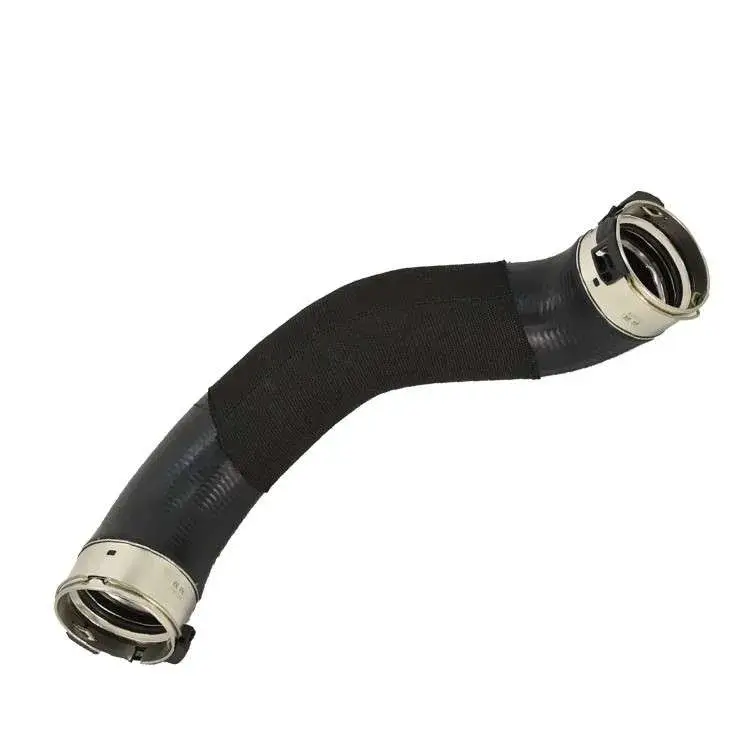
Turbocharger charge air hose
it must travel through piping, an intercooler, and a series of rubber couplers before reaching the engine. Any leak along that path robs the system of pressure.
Here’s a tip about charge air leaks: the leak is almost never where you expect it to be. It’s usually on the underside of a rubber boot—right where oil collects over time. That oil slowly breaks down the rubber until it splits. You won’t see it from above, and you may not even hear it, but it’s enough to trigger a P0299 Turbocharger underboost condition.
Turbocharger Control System Failure — Modern turbos rely on solenoids and vacuum or pressure signals to regulate the wastegate. If the solenoid sticks or the vacuum supply is compromised, the system can’t control boost properly. I’ve tested plenty of these that worked fine once, then failed after I cycled them a few more times or introduced heat. That’s why a quick test isn’t enough—you have to stress the system a little.
And yes, sometimes the turbo itself can be worn out. But in my experience, that’s further down the list. I only go there after I’ve ruled out leaks and control issues.
How I Diagnose a P0299 Step by Step
When I approach a P0299 Turbocharger underboost code, I follow a process. Not a checklist, but a flow—because every step tells me something that guides the next move.
Step 1: View Scan Tool Data — Monitor the commanded boost versus actual boost during a road test. If the actual boost consistently falls short, I know I’m chasing a real underboost condition and not a false trigger.
Step 2: Inspect the Charge Air System — Don’t just
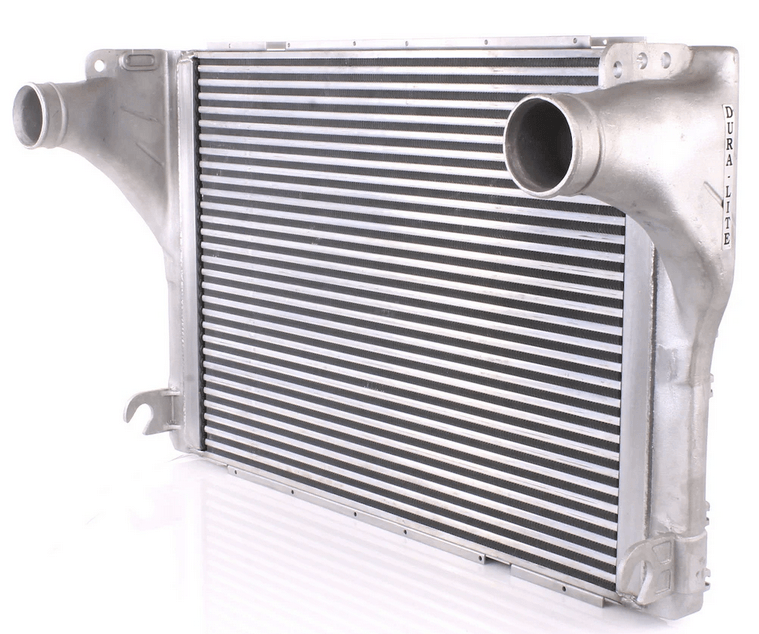
Charge air cooler
do a cursory visual inspection. Disconnect the charge air hoses and check for deterioration, cuts, or tears in the rubber. Check the condition of the clamps.
Next, examine the charge air cooler (intercooler) itself, looking for possible leaks. If I suspect a leak, I’ll pressure test the system. More often than not, that’s where the problem reveals itself.
Step 3: Inspect and Operate the Wastegate — Hook up a hand vacuum pump and watch how the actuator responds. It should move smoothly and hold pressure without bleeding off. Then command the solenoid
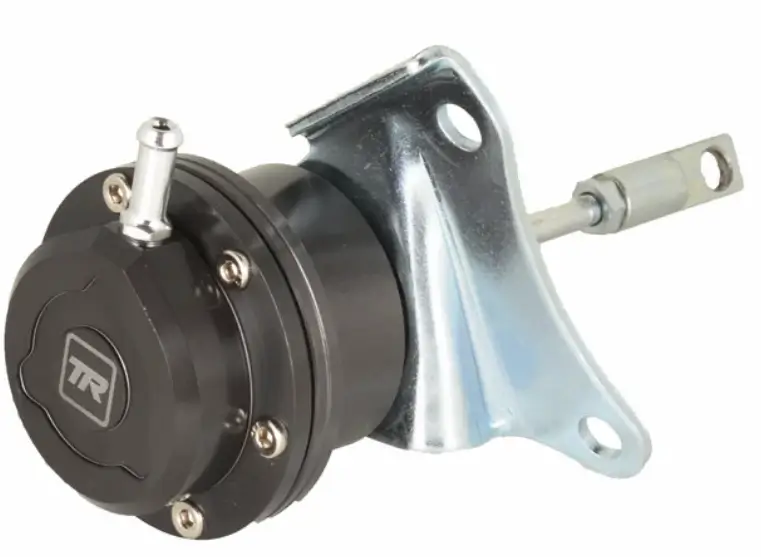
Wastegate actuator
using a scan tool—or power it manually—and watch how the system reacts. And I don’t stop at one test; I cycle it several times, because intermittent failures love to hide during the first pass.
Step 4: And the entire Wastegate Control System — Check vacuum lines, verify electrical signals, and make sure everything is routed and connected correctly. It doesn’t take much—a small leak or a weak signal—to throw off boost control.
Only after all of that do I consider the turbo itself. I’ll inspect for shaft play, look for signs of oil contamination, and check the condition of the compressor and turbine. If everything else checks out and the turbo can’t deliver, then—and only then—does replacement make sense.
What I’ve Learned About Fixing Turbocharger Underboost
If there’s one thing I’ve learned about diagnosing P0299 Turbocharger underboost codes, it’s this: the simplest problems are often the hardest to find. A loose clamp. A split hose you can’t see. A solenoid that fails only when it’s hot. These are the kinds of issues that trigger P0299, and they’re easy to miss if you’re rushing or guessing.
That’s why I always rely on a structured diagnostic approach. It keeps me from jumping to conclusions and helps me zero in on the real cause.
Because at the end of the day, fixing a P0299 isn’t about replacing parts—it’s about understanding how the system works and proving where it’s failing.
©, 2026 Rick Muscoplat
Posted on by Rick Muscoplat