
Is a fuel induction service necessary?
Is a Fuel Induction Service Necessary for Your Vehicle?
Quick Summary
Carbon buildup on intake valves is one of the most common long-term issues in modern direct-injection engines. Because fuel no longer washes over the intake valves, oil vapor and combustion byproducts stick and harden over time. Some brands and engine designs are more susceptible than others, but no direct-injection engine is immune. Frequent oil changes help slow the process, but chemical cleaners, commonly called air induction or fuel induction cleaning, rarely remove severe deposits. Once severe carbon buildup on intake valves occurs, mechanical cleaning is the only reliable fix. Prevention strategies exist, but they reduce—not eliminate—the problem.
To learn more about the causes of carbon buildup on direct injection engines, see this article
A fuel induction service can be beneficial, but whether it’s necessary depends on your vehicle’s condition and driving habits. Here are some key points to consider:
Article
What is a Fuel Induction Service?
A fuel induction service involves spraying a cleaner into the intake manifold to remove minor carbon deposits from the throttle body and intake valves. The goal is to remove carbon deposits and other buildup that can accumulate over time, potentially improving engine performance, fuel efficiency, and emissions.
Do Chemical Cleaners Really Remove Carbon Buildup?
This is one of the most misunderstood and controversial aspects of carbon buildup on intake valves. Pour-in fuel additives are ineffective for direct-injection engines because the fuel never contacts the intake valves. No matter what the label claims, fuel system cleaners cannot remove valve deposits in a DI-only engine.
Spray-in intake cleaners are slightly more effective, but still limited. Aerosol cleaners introduced through the intake can soften light deposits, but they cannot remove thick, hardened carbon. The cleaner cannot dwell long enough or reach all valve surfaces evenly. 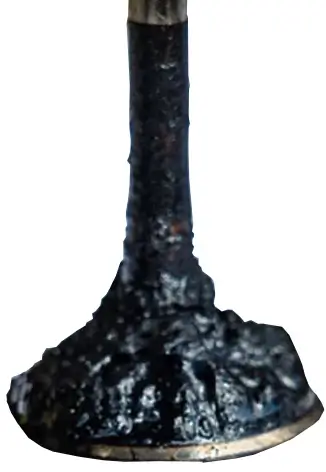
Walnut blasting remains the gold standard. This mechanical process uses crushed walnut shells to remove carbon from the valves without damaging the metal surfaces. For moderate to severe carbon buildup on intake valves, walnut blasting is the only method that consistently restores airflow and performance.
Is Fuel Induction Cleaning a Scam
Pour-in-tank cleaners are a scam
I get asked all the time whether pour-in-tank cleaners can prevent carbon buildup in direct-injected engines, and the answer is an emphatic NO. In a direct-injection engine, the fuel never touches the backside of the intake valves. So, the fuel and its detergents never contact the back of the intake valves.
How about air/fuel induction cleaners that are sprayed into the intake?
Air/fuel induction service consists of a technician spraying a cleaner directly into the intake manifold. Do those work to dissolve carbon buildup? The answer to that is: It depends on two factors: car brand and oil change intervals.
Why does a car brand play a role? If you look up direct-injection carbon deposit problems on the Internet, you’ll discover that BMW, Audi, and VW vehicles have the highest incidence of serious carbon buildup problems. That buildup is so bad that chemical sprays can’t remove it. It must be removed by walnut blasting.
European engines use variable intake runner lengths and upstream airflow control flaps. Those systems are designed to manage airflow turbulence as it enters the cylinder carefully. When everything is working perfectly, that turbulence improves combustion efficiency. But if a flap sticks, a runner doesn’t switch properly, or carbon buildup disrupts airflow, turbulence becomes chaotic rather than controlled, and that’s when deposits accelerate.
In contrast, engines from GM and Ford exhibit markedly different levels of carbon buildup. It all has to do with engine and software design, and some engines are worse than others.
Oil change intervals also play a role — it’s essential to understand that not all carbon inside an engine is the same: carbon within the combustion chamber is different from the carbon formation on an engine’s intake valves. Combustion-chamber carbon tends to be dense, tightly bonded, and relatively thin. It’s essentially “cooked” onto the surface, with low porosity and limited thickness.
In contrast, carbon on the intake valves develops under much lower temperatures and pressures. Instead of being burned on, this carbon is built up gradually from oil vapor, fuel residue, and soot. As a result, the intake carbon is far more porous and spongy, and it can grow much thicker over time.
That difference in how—and where—the carbon forms is critical. Combustion-chamber deposits and intake-valve deposits are chemically and physically different because they were created under very different conditions. Treating them as the same type of carbon leads to a misunderstanding of why certain cleaners work in one area of the engine but fail in another.
Running your engine oil past the recommended intervals accelerates the formation of hard, thick carbon deposits on the intake valves. In most cases of severe carbon buildup, the cause is driver error: drivers have followed the NORMAL service recommendations while actually operating their vehicles under SEVERE service conditions. In those cases, liquid induction cleaners are ineffective.
What’s driving the increased recommendation for air and fuel induction services?
Unfortunately, many car dealers and chain shops are exploiting the carbon buildup problem by recommending air- and fuel-induction cleaning far too often, even for car brands that don’t have carbon buildup issues. Why do they do this? Because fuel induction services generate large profit margins. A can of induction cleaner costs the dealer about $25, and the procedure takes about 20 minutes. Yet the dealers charge upwards of $275 to $375.
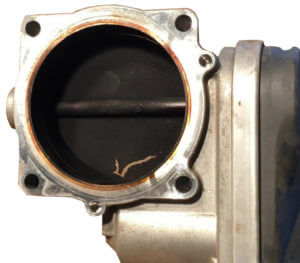
In a fuel induction service, the technician removes the electronic throttle body and manually cleans carbon buildup from the throttle body, throat, and throttle plate using a throttle body cleaner and rag. Throttle body cleaner should never be sprayed directly onto the electronic throttle body, as the liquid can seep into the electronics and damage them.
After re-installing the cleaned electronic throttle
Should you agree to a fuel induction service?
Say yes to fuel induction service if your vehicle is experiencing a performance issue and the issue has been diagnosed as a carbon buildup on the throttle body throat, intake valves, or fuel injectors.
Do NOT agree to have this performed as a “preventative” measure. If your engine starts quickly, idles smoothly, and you have good acceleration and fuel economy, you do NOT need a fuel induction service—it’s a waste of money.
©, 2018 Rick Muscoplat
Posted on by Rick Muscoplat