
How to Recharge Your Car AC System the Right Way
Car AC Recharge Guide: Step-by-Step Instructions
Quick Summary (Read This First)
If you want to recharge your car’s AC correctly, you must avoid overcharging—just 2 oz too much can ruin cooling by almost 50%.
• Always use a recharge kit without stop leak additives
• Recharge through the low-pressure port only
• Add refrigerant slowly while monitoring vent temperature, not just the gauge
• If your system needs more than half a can, it has a sizable leak—stop and fix the leak!
• The proper way to recharge a car’s AC system is evacuation + recharge by weight. I know you want to use a kit, but you’re doing a temporary fix, not a real one.
The Truth About Recharging Car AC Systems
I’ve recharged hundreds of AC systems—and I’ve fixed even more that were done wrong. Here’s what most people don’t realize:
When you recharge your car’s AC system, you’re not fixing the problem—you’re treating a symptom. An automotive AC system is sealed. If it’s low, it has a leak. That matters because every time refrigerant leaks out, oil leaks out with it, and air and moisture enter the system. And that’s where DIY jobs go sideways fast.
• The loss of oil causes accelerated compressor wear
• The introduction of air causes performance issues.
• The introduction of moisture causes an interaction with the oil and refrigerant, eventually forming acids and sludge that clog the expansion/orifice metering devices.
Step-by-Step: How to Recharge Your Car AC System (The Right Way)
Step 1: Choose the Right AC Recharge Kit — When people ask me how to recharge a car’s AC, this is where I start.
• Avoid kits with stop leak additives
• Sealers harden and contaminate shop recovery machines. If you ever bring it in for service, the shop will test for sealer and charge extra to remove the contaminated refrigerant.
• Sealers swell seals and create more leaks later
What to look for:
• Plain R-134a (or correct refrigerant for your vehicle)
• Hose with gauge
• No additives unless you KNOW what you’re doing
Step 2: Locate the Low-Pressure Port: Every car AC system has:
• High-pressure port
• Low-pressure port
• You ONLY connect to the low-pressure side
• Look for the larger diameter line
• It’s usually between the evaporator and compressor
• If you’re unsure, check the kit instructions or vehicle specs.
Step 3: Set Up the Vehicle Correctly
• Start the engine
• Set AC to MAX cooling
• Set the blower to high
• Set the system to recirculate
• Roll the windows up
This creates a consistent load condition—critical for accuracy.
Step 4: Charge by the Thermometer and the Gauge (This Is What Pros Do)
Most DIYers skip this—and that’s a mistake.
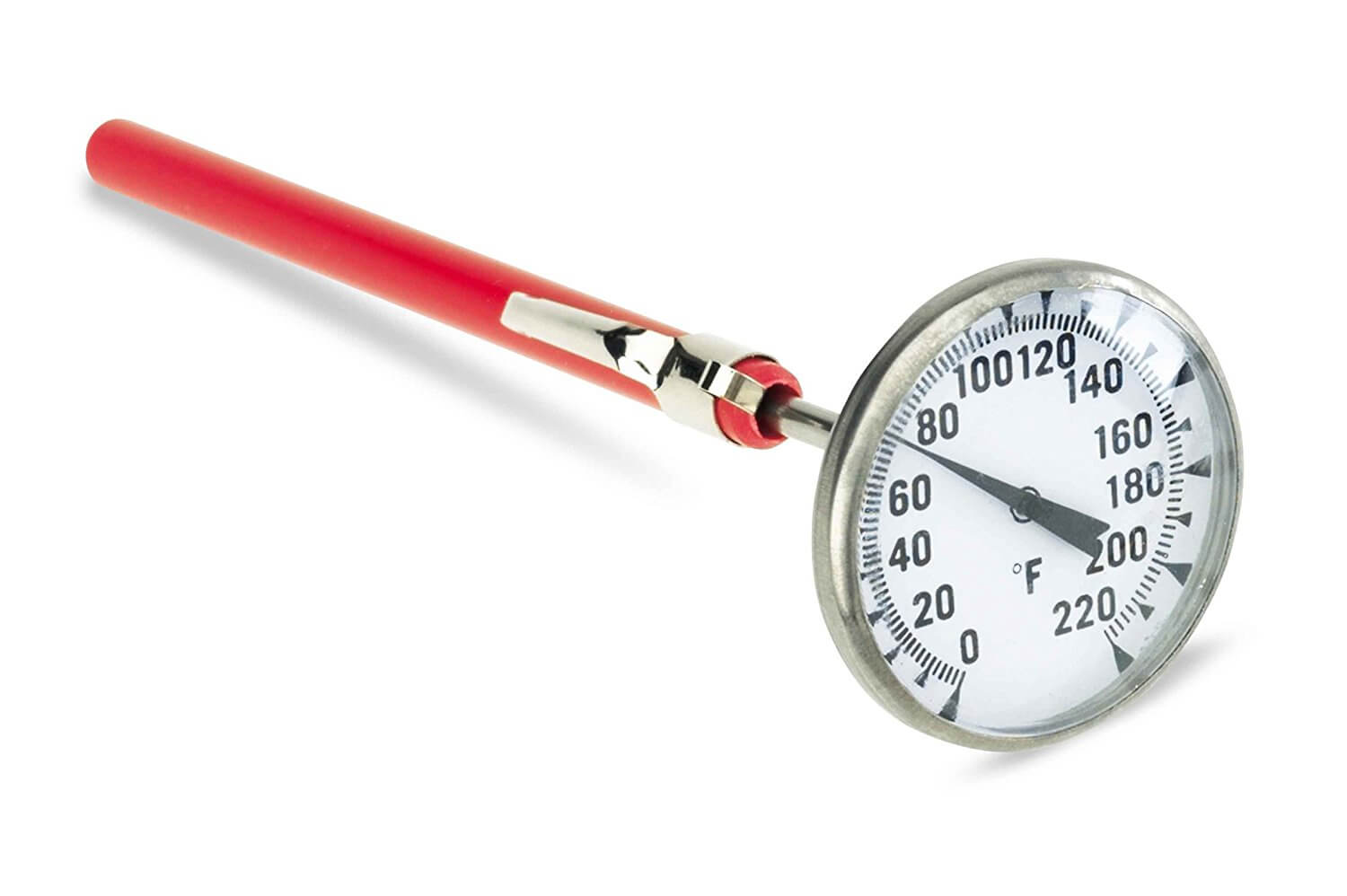
AC duct thermometer
I always stick a kitchen thermometer in the center vent.
• The center vent temperature tells more about the refrigerant charge than the gauge.
• On a 90°F day, the best case for center duct temp is around 41°F
• Realistically, 50°F or lower is good
Step 5: Add Refrigerant SLOWLY
This is also where most people mess up. It takes a few minutes for the added refrigerant to show a difference in center duct temperatures. So, add refrigerant and wiat a few minutes to see center duct results.
Here’s how I do it:
• Add refrigerant in small bursts (about 2 oz at a time)
• Wait and observe vent temperature
• Watch gauge trends—not just “green zone.”
• The goal is NOT to fill the system, it’s to improve cooling efficiency
Step 6: Know When to STOP
This is the most important part of learning how to recharge car AC.
STOP if:
• Vent temp stops dropping
• Gauge spikes abnormally
• You’ve added ~½ can and don’t get any additional cooling. At that point, you’re no longer looking at a low refrigerant issue; you’ve got more serious problems.
• More refrigerant will NOT fix the problem
• It will make it worse
The Biggest Mistakes I See (And Fix)
1. Overcharging the System — Most common mistake: Causes high pressure and poor cooling
2. Using Stop-Leak Products — Contaminates the system and causes long-term damage
3. Ignoring Oil Loss — Low oil = compressor wear, which leads to compressor failure
4. Recharging a System With a Major Leak — If your system takes more than half a can:
You don’t have a recharge problem—you have a leak problem
What’s Really Happening Inside Your AC System When You’ve Lost Refrigerant
Any time refrigerant leaks out:
• Air gets in
• Moisture gets in
• Oil leaves
And that creates:
• Acid formation
• Sludge buildup
• Internal corrosion
Eventually:
• Expansion valve clogs
• Compressor fails
• Entire system gets contaminated
This is exactly why a simple car AC recharge can turn into a full system rebuild if done wrong.
The Professional Way to Recharge a Car AC System
If you want it done right (this is what I do in the shop):
• Locate the leak using UV dye or an electronic sniffer
• Recover refrigerant
• Fix the leak
• Pull vacuum (remove air/moisture)
• Add the correct oil amount
• Recharge by weight
That’s the only way to guarantee performance.
Final Takeaway
If you’re going to recharge your car’s AC system yourself, you can get decent results—but only if you:
• Add refrigerant slowly
• Monitor vent temperature
• Avoid overcharging
• Stop if results don’t improve
Otherwise, you’re not fixing the system—you’re shortening its life
© 2012 Rick Muscoplat
Posted on by Rick Muscoplat