
P0441 Code: Causes, Diagnosis, and Real Repair Costs
What Causes a P0441 Code and How Much Does It Cost to Fix?
Quick Summary
The P0441 code is one of the most common EVAP system trouble codes found in modern vehicles. It indicates that the engine computer has detected incorrect purge flow in the evaporative emissions system. In simple terms, the computer expected a certain amount of fuel vapor to flow from the charcoal canister into the engine, but the flow didn’t match the expected value.
In my experience diagnosing EVAP problems, the most common causes of a P0441 code include a faulty purge valve, clogged EVAP hoses, a faulty charcoal canister, wiring issues, or, occasionally. Properly diagnosing the issue requires checking the purge valve for proper open/close operation and testing it with a handheld vacuum pump.
The P0441 repair cost varies widely depending on the cause. A simple purge valve DIY replacement might cost $150–$350, while replacing a charcoal canister or EVAP components can push the P0441 repair cost to $400–$900 at a typical repair shop.
Understanding how the EVAP system works makes diagnosing a P0441 code much easier, and in many cases, the repair is relatively straightforward.
What a P0441 Code Actually Means
When a vehicle sets a P0441 code, the engine control module (ECM) indicates there is an incorrect purge flow in the evaporative emission control system.
The EVAP system is designed to capture gasoline vapors from the fuel tank so they don’t escape into the atmosphere. Instead of venting these vapors, the system stores them in a charcoal canister. Eventually, the charcoal canister reaches full capacity and must be purged to allow for more vapor during a fill-up.
Under the right operating conditions, the computer opens the purge and vent valves, allowing engine vacuum to suck the stored vapors into the intake manifold, where they are burned during combustion. The vent valve allows fresh air into the canister, allowing it to purge.
The computer monitors this process carefully. Once it opens the purge and vent valves, it expects to see an increase in engine RPM based on the added fuel vapor. If it doesn’t see the expected change in RPM, it sets a P0441 code. In other words, the computer thinks the vapor flow is too high, too low, or not happening when it should.
The Most Common Causes of a P0441 Code
Over the years, I’ve diagnosed hundreds of EVAP system faults, and the causes of a P0441 code tend to follow a predictable pattern.
Faulty purge valve — These valves are constantly 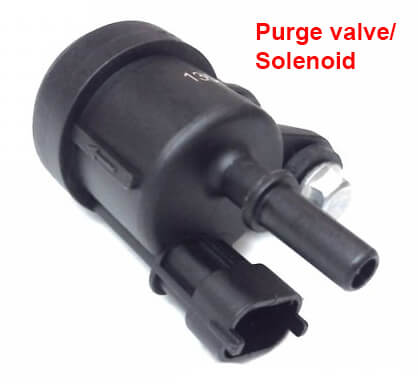 exposed to fuel vapors, and the internal valve can stick partially open or closed. When that happens, the purge flow no longer matches what the computer expects. In addition, the solenoid portion of the valve can fail, preventing it from opening.
A faulty charcoal canister — If the canister fails, engine vacuum can suck charcoal particles into the purge valve, causing it to stick open. Or, if the canister becomes totally saturated with liquid fuel from repeatedly topping off the tank, it may restrict vapor flow, triggering the code.
Cracked/damaged EVAP hoses — These hoses carry fuel vapor from the tank to the charcoal canister and then to the engine. A cracked hose can leak vacuum, while a blocked hose can prevent vapor flow.
Electrical problems — A damaged wiring harness or corroded connector may prevent the purge valve from operating correctly, which leads the computer to store the P0441 code.
How I Diagnose a P0441 Code
First, I scan the vehicle to confirm the P0441 code and check for any additional EVAP codes that might point to a larger system issue.
Next, I remove the hoses from the purge valve located in the engine compartment and check for charcoal particles. If I find particles, I know the canister has failed. If there are no particles, I move on to the electrical and vacuum tests in the following steps.
The next step is testing the purge valve. I usually command the purge valve on and off with a scan tool while monitoring engine vacuum and fuel trim data. If the valve doesn’t respond correctly, it’s likely the cause of the problem. If you don’t have a bi-directional scan tool, disconnect the electrical connector to the purge valve and apply power and ground to the solenoid, while watching the port to see if it opens and closes. If it doesn’t open, the valve is bad and must be replaced.
Next, I use a handheld vacuum pump to see if the valve holds a vacuum when the port is closed.
If the valve tests pass, I check the electrical connector for power and ground while commanding a purge operation with the scan tool.
If everything checks out, I may perform an EVAP smoke test. A smoke machine introduces harmless smoke into the EVAP system, so leaks or restrictions become visible.
95% of the time, a faulty purge valve causes a P0441 code.
Typical P0441 Repair Cost
The P0441 repair cost depends heavily on which component has failed and the labor required to access it. In my experience, here are the most typical repair scenarios.
Replacing a purge valve is usually the least expensive fix. The part typically costs between $40 and $120, and the replacement labor may add another $120 to $200. When you add in the one-hour diagnostic fee, the total P0441 repair cost is often between $260 and $395.
Replacing a charcoal canister is more expensive. These components often cost $200–$500, and labor can add another $150–$300, bringing the P0441 repair cost to $400–$900.
Diagnostic time also factors into the total. Most repair shops charge $140–$225 for EVAP diagnostics, which is often included in the final P0441 repair cost if you approve the repair.
Should You Drive With a P0441 Code?
In most cases, a P0441 code will not cause immediate drivability problems. The vehicle will usually run normally. However, ignoring the issue isn’t a good idea.
For that reason, I always recommend diagnosing and repairing the issue as soon as possible.
©, 2026 Rick Muscoplat
Posted on by Rick Muscoplat