
P0440 Code: Causes, Diagnosis, and Real Repair Costs
P0440 Code Symptoms, Causes, and Repair Cost Breakdown
Quick Summary
The P0440 code indicates a malfunction in the vehicle’s evaporative emissions control system (EVAP). This system prevents gasoline vapors from escaping into the atmosphere when you fill your tank. When the engine computer detects a leak or improper EVAP system operation, it sets the P0440 code and illuminates the check engine light.
The most common causes are a loose or defective gas cap, cracked vapor hoses, a faulty purge valve, or a leak in the charcoal canister. With the exception of the charcoal canister, most P0440 code problems are relatively inexpensive to fix. The P0440 repair cost can range from about $20 for a gas cap replacement to $400 or more if components like the charcoal canister or purge valve must be replaced (if you diagnose and fix the causes yourself).
Proper diagnosis is essential because EVAP codes can be tricky. A smoke test is usually the fastest and most accurate way to find the leak or system malfunction. In this article, I’ll explain what the P0440 code means, what causes it, how I diagnose it in the shop, and what you can expect to pay for the P0440 repair.
Article
P0440 Code: Causes, Diagnosis, Fixes, and Typical Repair Cost
The P0440 code is a generic OBD-II diagnostic trouble code that indicates a problem with the evaporative emission control system. The EVAP system captures gasoline vapors from the fuel tank and stores them in a charcoal canister. Later, the engine purges those vapors and burns them during engine operation.
When the vehicle’s engine computer runs an EVAP system self-test, it expects the system to hold a vacuum without leaking. If it detects a leak, pressure imbalance, or system malfunction, it stores the P0440 code.
Unlike some other EVAP codes that specify small or large leaks, the P0440 code simply indicates a general EVAP system malfunction, making diagnosis a bit more difficult.
Symptoms are often minimal. In many cases, the only noticeable symptom is a check engine light. However, some vehicles may show:
• Fuel odor around the car
• Slight decrease in fuel economy
• Rough idle during purge cycles
• Failed emissions test
The most common complaint I hear from drivers is simply: “My check engine light came on, and the scan tool shows a P0440 code.”
Most Common Causes of a P0440 Code
Over the years, I’ve diagnosed hundreds of EVAP system issues. The causes of a P0440 code usually fall into a handful of categories.
Loose or Faulty Gas Cap — The number one cause of a P0440 code is a loose or damaged gas cap or rust on the filler neck that prevents an air-tight seal. If the cap cannot seal properly, the EVAP system cannot maintain a vacuum during its self-test. A worn gas cap O-ring seal, a cracked cap housing, or simply forgetting to tighten the cap can trigger the code. Fortunately, this also results in the lowest P0440 repair cost.
Cracked or Disconnected EVAP Hoses — Rubber vapor hoses connect the fuel tank, charcoal canister, purge valve, and vent valve. These hoses are exposed to heat, fuel vapors, and road debris. Over time, they can crack or disconnect, causing a leak that triggers the P0440 code. Some hoses can be replaced with stock gasoline vapor-rated hose from any auto parts store, while other bent hoses must be obtained from the dealer.
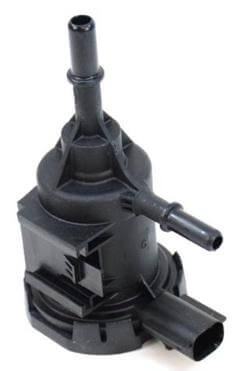
Purge valve
Faulty Purge Valve — The purge valve is commanded open to purge fuel vapors from the charcoal canister. Engine vacuum draws vapors from the canister while the purge and vent valves are open, allowing fresh air to purge the canister. The fuel vapors enter the engine intake and are burned in the engine. If the purge valve sticks open or fails electrically, it can prevent the EVAP system from sealing properly. A replacement purge valve costs $100-$175 if you replace it yourself. The purge valve is located in the engine compartment and is fairly easy to replace for a DIYer.
Bad EVAP Vent Valve — The EVAP vent valve allows fresh air into the charcoal canister during system purge. If the valve sticks open or closed, the system cannot perform its pressure tests correctly. A vent valve costs $75-$150 and is a DIY repair, though it can be a bit harder to access because it’s under the vehicle near the gas tank.
Damaged Charcoal Canister — The charcoal canister stores fuel vapors until the engine purges them. If the canister cracks, becomes saturated with liquid fuel, or becomes internally clogged, it can cause EVAP system malfunctions. A replacement charcoal canister can cost $150 to $650, depending on the year, make, and model.
How I Diagnose a P0440 Code
EVAP diagnostics require a systematic approach, involving checking and testing each component and using a process of elimination. Guessing at parts is the fastest way to waste money. Here is the process I typically follow when diagnosing a P0440 code.
Step 1: Check the Gas Cap — Inspect it. Check the gasket for cracks, verify that it clicks when tightened, and inspect the filler neck for rust. If the cap looks questionable, I replace it before going further.
Step 2: Scan Tool Data — Next, I connect a scan tool and review freeze-frame data stored with the P0440 code. This tells me the conditions under which the fault occurred.
Step 3: Visual Inspection — Inspect all EVAP hoses, connectors, and wiring. Any cracked hose or loose fitting can easily trigger the P0440 code.
Check the Purge and Vent Valves — Using a power and ground source, verify that the solenoid valve opens and closes. Next, check for any sign of charcoal particles in the purge valve or spider webs in the vent valve. If you find charcoal particles, that’s a sign that the canister has failed. In that case, flush the lines, replace the canister, and purge the valve.
Use a hand-held vacuum pump to check if the purge and vent valves hold a vacuum when closed. If they don’t replace the valve.
Typical P0440 Repair Cost
The P0440 repair cost depends entirely on the cause of the problem. If you have a shop, do the repair, expect to pay a 1-hour diagnostic fee ($140-$225), plus the labor to install the part and the part cost.
Gas cap replacement: $20 – $50
EVAP hose repair: $50 – $150
Purge valve replacement: $150 – $300
Vent valve replacement: $150 – $350
Charcoal canister replacement: $300 – $700
Can You Drive With a P0440 Code?
In most cases, a P0440 code will not affect how the vehicle drives. The EVAP system is strictly emissions-related. However, ignoring the code can lead to several problems.
First, the vehicle will likely fail an emissions test. Second, a persistent EVAP leak may allow fuel vapors to escape. Third, the check engine light could mask other, more serious engine codes. Because the P0440 repair cost is often relatively low, it’s best to diagnose and repair the issue promptly.
Final Thoughts on the P0440 Code
From a diagnostic standpoint, the P0440 code is one of the more common EVAP trouble codes I encounter. Fortunately, most cases are caused by simple problems like a bad gas cap or a small hose leak.
The key is proper diagnosis. Throwing parts at the vehicle without testing can quickly drive up the P0440 repair cost.
In many cases, the repair is inexpensive and straightforward once the leak or faulty component is identified.
If your check engine light shows a P0440 code, start with the basics: inspect the gas cap, check for damaged hoses, and have the EVAP system smoke tested if necessary.
©, 2026 Rick Muscoplat
Posted on by Rick Muscoplat