
P0100 Code Explained: Causes, Symptoms, and P0100 Repair Cost
Understanding the Typical P0100 code causes and Repair Costs
Quick Summary
The P0100 code indicates a malfunction in the mass air flow (MAF) sensor circuit. The MAF sensor measures the amount of air entering the engine, so the engine computer can calculate air density and deliver the correct air/fuel mixture. When the computer detects a signal problem from the sensor, it stores the P0100 code and turns on the check engine light.
In my experience diagnosing drivability problems, the most common causes include a dirty MAF sensor, a clogged air filter, wiring damage, vacuum leaks, or a failed sensor. Fortunately, the P0100 repair cost is often relatively low. You can check for a dirty air filter yourself. And, you can clean a dirty MAF sensor yourself with a special spray cleaner. See this article for step-by-step instructions to clean a MAF sensor.
Diagnosing and fixing a MAF sensor in a shop requires incurring a diagnostic fee, typically one hour labor charge ($140-$225) plus the cost of parts, typically $250-$450, depending on whether the shop uses an aftermarket or dealer part.
P0100 Code Explained: Causes, Diagnosis, Fixes, and P0100 Repair Cost
As someone who has spent decades diagnosing engine performance problems, I can tell you that airflow-related trouble codes are extremely common. One of the most frequent is the P0100 code, which indicates a problem in the mass air flow sensor circuit.
Because the engine computer relies heavily on accurate airflow data to determine fuel delivery, even a small problem with the mass air flow sensor can cause noticeable performance issues. Understanding what the P0100 code means and how to diagnose it correctly can save both time and money.
What the P0100 Code Means
The P0100 code is defined as Mass Air Flow Circuit Malfunction.
The mass air flow sensor measures the temperature and amount of air entering the engine. The engine control module uses that airflow information to determine air density for calculating the proper air-fuel ratio for combustion. When the computer detects an airflow signal that is missing, inconsistent, or outside the expected range, it triggers the P0100 code.
When this happens, the computer may switch to a backup calculation method to estimate airflow. The engine will usually continue running, but performance and fuel economy often suffer.
Common Symptoms of a P0100 Code
Vehicles with a P0100 code often exhibit several drivability problems.
• Rough Idle or Hesitation During Acceleration: Because the airflow reading is incorrect, the engine computer may inject too much or too little fuel.
• Poor Fuel Economy: Drivers may also notice poor fuel economy, since incorrect airflow data often causes the engine to run rich.
• Engine stalling
• Reduced engine power
• Hard starting
• Check engine light illuminated
These symptoms can vary depending on the severity of the problem and the specific vehicle.
The Most Common Causes of a P0100 Code
The most common cause is a dirty mass air flow sensor.
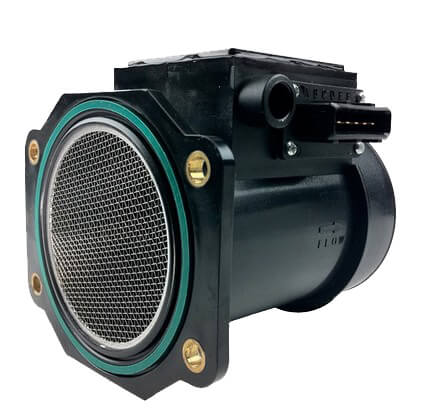
A mass airflow sensor detects the amount and density of air coming into the engine
Over time, oil vapors, dirt, and dust can coat the sensor’s delicate sensing element. When this happens, the sensor cannot accurately measure incoming air.
Another common cause is a clogged air filter. If the intake filter becomes severely restricted, it can disrupt airflow measurements and trigger the P0100 code.
Wiring problems are another frequent cause. Damaged wires, poor connections, or corroded terminals can interrupt the signal between the MAF sensor and the engine computer.
Vacuum leaks can also trigger the code. When air enters the intake system without passing through the MAF sensor, the airflow calculation becomes inaccurate.
In rare cases, a restricted exhaust system—such as a clogged catalytic converter—can disrupt airflow through the engine and cause the computer to store the P0100 code.
How to Diagnose a P0100 Code
The first step is always a visual inspection. I start by checking the air intake system and the air filter. If the filter is heavily clogged, replacing it may solve the problem immediately.
Next, locate the mass air flow sensor near the air intake housing and inspect the wiring harness and connector for damage.
If the wiring looks good, I remove the sensor and inspect it for contamination. Dirty sensors are extremely common, especially on high-mileage vehicles.
The next step is to check live sensor data with a scan tool. A properly functioning MAF sensor should show airflow readings that increase smoothly as engine RPM rises.
If the reading is erratic or stuck at one value, the sensor may be failing.
Finally, if the sensor and wiring appear normal, it’s important to check for vacuum leaks in the intake system. Many professional technicians use a smoke machine to identify hidden leaks.
How to Fix a P0100 Code
In many cases, cleaning the MAF sensor solves the problem.
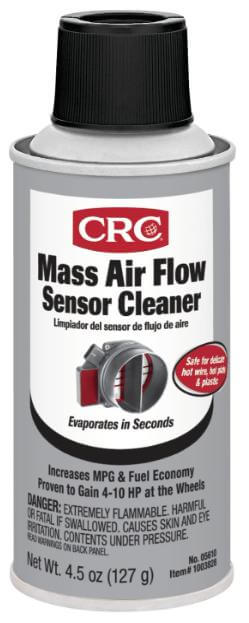
Click on the image to buy CRC MAF Sensor cleaner from Amazon.com
Specialized mass air flow sensor cleaner is designed to remove contamination without damaging the delicate sensing wires.
If the sensor is severely contaminated or electronically damaged, replacement may be necessary.
If wiring damage is found, repairing the harness or replacing connectors may resolve the problem.
Vacuum leaks must be sealed by replacing cracked hoses, intake gaskets, or damaged components.
Once the repair is completed, the technician clears the code and performs a road test to ensure the problem does not return.
Typical P0100 Repair Cost
If the problem is simply a dirty sensor and you clean it yourself, you’ll spend about $20 on a can of MAF Sensor Cleaner from any auto parts store.
Replacing the mass air flow sensor yourself typically costs $150–$400, depending on the vehicle and whether you buy an aftermarket or OE part from the dealer. If you pay a shop to diagnose and fix your P0100 code, plan to spend $350 to $600.
If wiring repairs are required, the P0100 repair cost may rise to $200–$500, depending on the complexity of the repairs. Rodent wire chewing is a common cause of wiring failure and can be quite costly.
Fortunately, compared with many more serious engine problems, the P0100 repair cost is usually moderate and often resolved quickly once the root cause is identified.
Final Thoughts on the P0100 Code
The P0100 code is a common trouble code related to the mass air flow sensor circuit. While it can cause noticeable drivability issues, it is usually not a catastrophic problem.
Most of the time, the solution is as simple as cleaning the sensor, replacing a clogged air filter, or repairing a wiring issue. Understanding the possible causes and the typical P0100 repair cost helps drivers make informed repair decisions and avoid unnecessary parts replacement.
©, 2026 Rick Muscoplat
Posted on by Rick Muscoplat