
Radiator flush versus coolant flush: There is a difference
Learn the difference between a radiator flush and a coolant flush
Every Spring and Fall, shops advertise specials on a radiator flush service. You may think a radiator flush is the same thing as a coolant flush. It’s not. A radiator flush is exactly what the term implies; the shop drains the radiator and refills it with coolant. But the radiator only holds a small portion of the coolant in your engine.
Here’s what’s involved in a real coolant flush
To do a complete coolant flush, the technician connects the cooling system flush machine
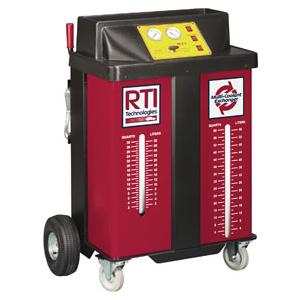
Typical cooling system flush machine
to your engine and fills it with fresh coolant. The machine pumps the new coolant through the engine and heater core to push the old coolant out where it can be recycled. A coolant flush service hookup and operation is more labor-intensive and expensive than a radiator flush.
Ask more questions before you get a radiator or flush
All late-model vehicles come from the factory with a long-life coolant formulated specifically for your engine’s metal, rubber, and plastic components. Unfortunately, many shops don’t use the factory-recommended coolant when performing a radiator flush or coolant flush. Instead, they use “universal All-Makes-All-Models” coolant. That way, they don’t have to stock the many different coolants required by all the brands.
One big problem with that approach is that not a single carmaker recommends using universal coolant. Contrary to the conspiracy theorists, it’s not because they want to cash in on coolant sales. Many companies make aftermarket coolants that meet the carmakers’ specifications. Prestone, for example, sells universal coolant. But they also make eight manufacturer-specific coolants. So, any shop can get the right coolant without having to run to the dealer.
If you’re getting a radiator flush or coolant, ensure the quote includes using the recommended coolant. Using the wrong coolant can reduce resistance to corrosion. Read this post on the damage caused by the wrong coolant.
Why carmakers use different coolants
All engine coolants use a polyethylene glycol or polypropylene glycol base, which makes up about 85% of the coolant. Older coolants used silicate or phosphate additives to prevent corrosion. Silicates coat internal metal parts to prevent galvanic action that can eat away at the radiator, heater core, water pump seals and bearings, and metal heater tubes.
However, the newer long-life coolants still use a polyethylene glycol or polypropylene glycol base but use organic acid (OAT) or hybrid organic acid technology (HOAT) anti-corrosion additives. Both these chemistries have additives that must be compatible with the seals used in the engine. Switching to a different coolant can damage the seals.
So skip the radiator flush specials. They’re worthless. If your cooling system is due for service, take your vehicle to a shop that will flush it with the factory-recommended coolant.
©, 2015 Rick Muscoplat
Posted on by Rick Muscoplat