
Rapid Clicking When Turning the Key: Common Causes
Troubleshooting Guide: Rapid Clicking Noise When Starting the Engine
Quick Summary
If you hear a rapid clicking sound instead of a normal starter sound, the problem is almost never the starter itself. Rapid clicking when turning the key is caused by low voltage reaching the starter solenoid—most often from a weak battery or poor battery cable connections. The rapid clicking noise is caused by the solenoid repeatedly engaging and disengaging because it doesn’t have enough power to stay engaged. Fixing the root cause usually takes minutes, not hours, and rarely requires replacing the starter.
Article
Troubleshooting Guide: Rapid Clicking Noise When Starting the Engine
When you turn the key and hear rapid clicking when turning the key instead of the engine cranking, it’s easy to panic and assume the starter has failed. After decades of diagnosing no-start conditions, I can tell you that the assumption is usually wrong. A car clicking when trying to start is almost always an electrical supply problem, not a mechanical failure.
Click on the sounds below to hear the various rapid clicking sounds when trying to start the engine.
Why Your Car Makes a Rapid Clicking Sound Instead of Cranking
Every starter assembly has two critical components: the starter motor and the starter solenoid. The solenoid is essentially a high-current relay with a mechanical job to do. When you turn the key, it must first pull a plunger inward to engage the starter gear with the flywheel, and then it must hold that plunger firmly in place while full battery power is sent to the starter motor.
When the voltage is low, the solenoid can’t stay engaged. It pulls in, loses power, releases, and then tries again immediately. That repeating cycle is what causes the starter makes rapid clicking noise you hear.
Any condition that limits current flow—low battery charge, corroded terminals, loose cables, or poor grounding—can cause a car to click when trying to start, even if the starter itself is perfectly fine.
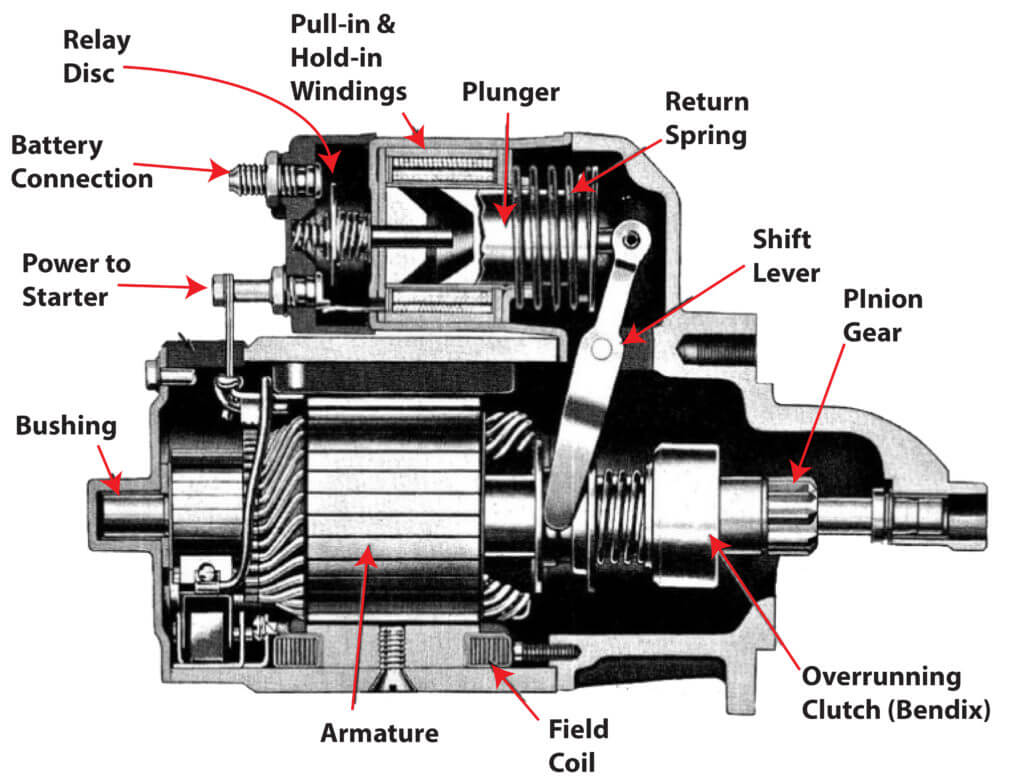
How the Starter Solenoid Really Works (And Why It Clicks)
Inside the solenoid are two windings: a pull-in coil and a hold-in coil. The pull-in coil requires relatively little power to move the plunger. The ho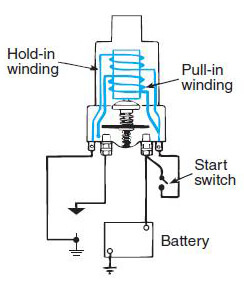 ld-in coil, however, requires significantly more current to keep that plunger seated against spring pressure.
Here’s where rapid clicking begins when turning the key. If the battery is weak or the resistance at the terminals is high, there may be enough power to activate the pull-in coil—but not enough to sustain the hold-in coil. The plunger snaps back, electrical contact is lost, voltage rises briefly, and the cycle repeats. The result is the unmistakable rapid clicking sound.
Whenever a starter makes a rapid clicking noise, I immediately think voltage drop, not starter failure.
The First Things I Check When a Car Clicks Instead of Starting
When diagnosing a car clicking when trying to start, I always begin at the battery, even if it “looks fine.” Battery posts and terminals can be coated with invisible oxide layers that dramatically increase resistance.
Cleaning the battery terminals and posts is often all it takes to stop rapid clicking when turning the key. If the engine starts afterward, I recommend driving at highway speeds for at least 20 to 30 minutes to restore the battery’s charge. Short trips won’t do it.
If cleaning doesn’t help, the next step is a proper battery test—not just a voltage check, but a load test. A weak battery can show acceptable voltage at rest and still cause the starter to make a rapid clicking noise under load.
See this post for detailed instructions on how to clean terminals and posts.
If cleaning the terminals and posts doesn’t help, have your battery tested.
Why Rapid Clicking Is So Common in Spring and Fall
I see car clicking when trying to start, complaints spike during seasonal temperature swings. In spring and fall, daytime warmth followed by cold nights causes battery terminals to expand and contract. That movement can loosen connections just enough to create resistance when everything is cold.
Cold temperatures also reduce battery output. A marginal battery that works fine in summer may suddenly cause rapid clicking when turning the key on a chilly morning. Later in the day, once everything warms up, the car may start normally—masking the real problem.
Why a Jump Start Doesn’t Always Fix Rapid Clicking
One of the most common questions I get is why jumper cables don’t solve a starter that makes a rapid clicking noise. The answer is simple: jumper cables only help if the electrical path is intact.
If the negative battery cable or ground connection has high resistance, you still don’t have a complete circuit. You’re feeding power to the positive side, but the return path to ground is compromised. In that case, rapid clicking when turning the key will continue no matter how good the jump battery is.
That’s why cleaning and tightening connections is just as important as testing the battery itself.
When the Starter Is Actually the Problem
True starter failure, causing a car to click when trying to start, is rare, but it does happen. If the battery tests good, the cables are clean and tight, voltage drop tests pass, and the clicking persists, then the solenoid contacts or internal windings may be worn.
Still, I always verify power and ground integrity first. Replacing a starter without confirming voltage delivery is one of the most common—and expensive—diagnostic mistakes I see.
©, 2020 Rick Muscoplat
Posted on by Rick Muscoplat