
Synthetic Oil versus Conventional Oil: The Differences
What are the differences between synthetic oil and conventional oil?
In the realm of automotive maintenance, one of the perennial debates revolves around engine oil: synthetic versus conventional. Each type has its proponents, and the choice between the two often depends on factors such as vehicle age, driving conditions, and personal preference. Understanding the differences between synthetic and conventional oils can empower car owners to make informed decisions that best suit their vehicles and driving habits.
What is Conventional Oil?
Conventional motor oil, also known as mineral oil, is derived from crude oil through a refining process. It has been the standard lubricant for engines for decades and continues to be widely used due to its affordability and availability. Conventional oil molecules vary in size and shape, which can affect their performance under different operating conditions.
What is synthetic oil?
Synthetic motor oil, on the other hand, is formulated in a laboratory setting using synthesized chemical compounds. This process allows manufacturers to tailor the oil’s molecular structure for specific performance characteristics. Synthetic oils generally have uniform molecules that offer enhanced lubrication properties, better resistance to viscosity breakdown, and improved performance in extreme temperatures.

In conventional oil, the molecules are of different sizes

The molecules in synthetic oil are a uniform size, so they are more energy efficient
The Performance and Protection Differences between synthetic oil versus conventional oil
One of synthetic oil’s key advantages is its superior performance under extreme conditions. Its uniform molecular structure provides better lubrication at both high and low temperatures, reducing engine wear and improving fuel efficiency. This makes synthetic oil particularly suitable for newer vehicles with high-performance engines or those subjected to heavy loads or frequent towing.
While effective for many vehicles, conventional oil may struggle to maintain viscosity and lubrication performance in extreme conditions. It tends to break down faster under high temperatures, leading to increased friction and potential engine wear over time. However, conventional oil can still provide adequate protection when changed at recommended intervals for older vehicles or those with simpler engine designs.
A Longevity and Maintenance Comparison
Synthetic oil typically lasts longer between oil changes than conventional oil. This is due to its resistance to thermal breakdown and oxidation, which helps maintain its viscosity and performance over extended periods. Some synthetic oils claim to offer protection for up to 10,000 miles or more, depending on driving conditions and the manufacturer’s recommendations.
Conversely, conventional oil requires frequent changes, usually every 3,000 to 5,000 miles, to ensure optimal engine performance and longevity. This frequent maintenance schedule can be seen as a drawback in terms of time and cost, especially for high-mileage drivers.
Cost Considerations
Cost was a bigger factor when choosing between synthetic oil and conventional oil. However, synthetic oil prices have decreased dramatically as more refiners switched away from conventional oil production.
Conventional oil remains a budget-friendly option for many drivers, particularly those with older vehicles or who adhere to strict maintenance schedules. Balancing cost with performance requirements and environmental considerations is crucial when selecting the right oil for your vehicle.
What about multi-viscosity engine oil?
Traditional mineral multi-viscosity 10W-30 oil is made from 10-weight base oil. The manufacturer adds enough Viscosity Modifiers (VM) to make the 10-weight oil behave like a 30-weight oil when hot. The polymeric additives literally uncoil and thicken the oil to flow like 30-weight. There are other ways to build a multi-viscosity oil, but I’m keeping this as simple as possible.
Multi-viscosity 10W-30 synthetic oil, on the other hand can be made from 20-weight oil that flows like 10-weight oil when cold. The manufacturer adds far less VM to make it thicken up to 30-weight when hot. Each oil manufacturer has their own recipe to achieve multi-viscosity performance. This is just one example.
No matter which brand you choose, keep in mind that VM additives break down under shear and heat loads. So, hauling a heavy load will break your oil faster than dropping off the kids at school. Viscosity Index is another factor you should consider. Think of VI as the range the oil covers. In the ’70s car makers recommended 10W-40 oil as the one-size-fits-all oil. It was a mineral oil built on 10-weight with enough VM added to build viscosity up to 40-weight. But that’s a LOT of polymeric additive. As the additive molecules sheared, they degraded and formed deposits on the piston rings causing them to stick in the lands. You’ll notice that most new car makers now recommend a much tighter VI, like 0W-20, or 5W-20.
Does synthetic oil last longer? Can I extend my oil change intervals?
Only Amsoil is willing to go out on a limb and give you specific extended oil change intervals. The other oil companies tell you to follow the car makers’ oil change intervals AS LONG AS YOU’RE COVERED BY A WARRANTY. Get it? If you extend oil changes and experience an engine oil-related engine failure, the car maker or the extended warranty company will deny your claim. Once you’re out of warranty, it’s a different story.
But it’s not much of a different story. If you read the fine print in the oil company’s warranty, you’ll see how they cover their rear end. Even Amsoil cover’s their butt. Their warranty says their oil will go 25,000 miles in normal use and 15,000 miles in severe use. However, if you read on, you’ll see that you must drive the vehicle longer than 10 miles at a time to qualify for severe use. In other words, they’re telling you that short trips disqualify you from using the 15,00o mile engine oil change interval–which only makes sense since short trips are REALLY hard on oil.
Engine oil change intervals are dependent on HOW YOU DRIVE.
Synthetic oil is a better lubricant than mineral oil, 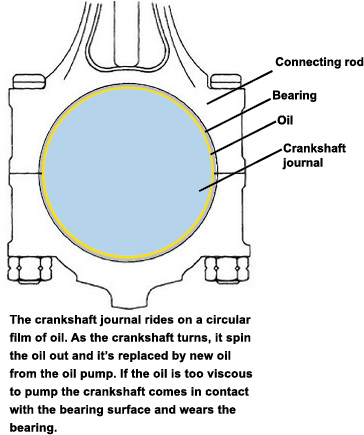 but it’s not a magic potion. It must still lubricate, carry heat away from metal parts, clean your engine, and prevent sludge and corrosion. And the life of synthetic oil and its additives depends STRICTLY on how you drive. If anyone gives you a flat mileage figure without any caveats, they’re selling snake oil, not engine oil.
If you make lots of cold-start short trips in stop and go traffic, you’ll get more fuel dilution in the oil due to rich mixtures at startup and you won’t run the engine long enough to burn it off. That’ll increase the load on the acid neutralizer additives. And, it increases the water content in the oil which contributes to sludge formation.
Or, if you leave your car outside in the winter, start it up, and drive away, you’ll use up the anti-wear additives faster. If your engine has high miles, you’ll have more blowby gasses in the crankcase, which will cause the engine oil dispersants and detergents to deplete faster. Older cars also degrade oil faster due to larger clearances. So you tell me, can anybody give you a pat answer on how long the oil will last? Nope.
Don’t believe me? Read the fine print in the oil company’s warranty. Even if the oil company provides a 300,000-mile warranty, it’ll still have exclusions. One major oil company that provides a 300,000-mile warranty requires you to change your oil according to the car maker’s schedule – EVEN IF YOU’re USING the company’s synthetic oil product. Other engine oil companies encourage users to conduct oil testing to determine when to change oil. I’m not a big fan of that method. First, when you add up the costs of the tests, you’ll spend more than just doing an oil change on an earlier schedule. Second, not all labs use the same testing methods or test for the same properties. Most labs do test for the presence of anti-wear additives and metal molecules that would indicate wear. But what about the other additives?
Read the latest Toyota bulletin on when to change your oil
Want to learn more? Here’s a link to a very popular oil site. I don’t always agrees with Bob’s “facts”, but he’s got a lot of good information. Click here to go to Bob Is The Oil Guy
Don’t know which oil is recommended for your vehicle? Just engine your vehicle information at Valvoline’s site and it’ll tell you the car makers recommendation. Click here to go to the Valvoline site.
Got a new GM vehicle? Then you must use DEXOS oil. Click here to read more about DEXOS.
Whether you change your own oil or have the shop do it, you need to know the difference between an economy oil filter and a premium unit. Click here to get oil filter smarts.
© 2012 Rick Muscoplat
Posted on by Rick Muscoplat