
The 3 Types of Automotive AC Compressors
Automotive AC System Compressor Guide
Quick Summary
Carmakers install three types of AC compressors:
• Piston compressors (fixed and variable displacement)
• Scroll compressors
• Rotary vane compressors.
Each one compresses the refrigerant differently, but the biggest real-world difference lies in how they control output and efficiency. Fixed-displacement compressors cycle on and off, while variable-displacement compressors adjust output continuously. Scroll and rotary designs offer smoother, quieter operation. Knowing how each works is the key to diagnosing failures, avoiding repeat compressor damage, and choosing the right replacement.
The 3 Types of Auto AC Compressors (And How They Really Work in the Real World)
I’ve worked on a lot of AC systems over the years, and I can tell you this—once you understand the different types of auto AC compressors, diagnosing AC problems gets a whole lot easier.
Most people think an AC compressor is just a pump, and technically, that’s true. But how that pump works—and how it controls pressure—varies quite a bit depending on the design. And those differences matter when you’re trying to figure out why a system isn’t cooling or why a compressor keeps failing.
What an Auto AC Compressor Actually Does
At its core, the compressor takes low-pressure refrigerant vapor, compresses it into a high-pressure gas, and pushes it through the system. That pressure change is what allows the refrigerant to release heat in the condenser and absorb heat in the evaporator.
One thing a lot of people overlook—and I always stress this—is that the oil travels with the refrigerant. That means if you’ve got a leak or improper charge, you’re not just losing refrigerant—you’re starving the compressor of lubrication.
That’s one of the biggest reasons compressors fail.
Piston Compressors (The Most Common Design)
When we talk about auto AC compressor types, piston compressors are by far the most common. But there are two very different versions of them.
Fixed Displacement Piston Compressors — This is the old-school design, and I still see it in a lot of vehicles.
Inside, you’ve got a swash plate connected to pistons that move back and forth. The key here is that the angle of that swash plate never changes. That means the compressor always moves the same amount of refrigerant every time it spins.
Because of that, the system controls cooling by cycling the compressor on and off using a clutch. When you apply power, the clutch engages, and the compressor starts pumping. When the system reaches the desired pressure or temperature, it shuts off. It’s simple, reliable, and easy to diagnose—but not very efficient.
Variable Displacement Piston Compressors — This is where things get more sophisticated—and frankly, more confusing for a lot of techs.
A variable displacement compressor still uses pistons, but now the swash plate angle can change. That means the piston stroke changes, and the compressor can adjust how much refrigerant it pumps.
Instead of turning on and off, the compressor runs continuously and varies its output based on system demand.

This cutaway version shows the interior components of a variable displacement air conditioning compressor
Here’s where I see people get tripped up:
Most of these compressors don’t use a traditional clutch. The pulley spins all the time, and a control valve inside the compressor adjusts the displacement.
So when someone says, “The clutch isn’t engaging,” I already know they’re dealing with the wrong type of compressor.
Scroll Compressors (Smooth and Efficient) — Scroll compressors are another one of the key auto AC compressor types, and they operate completely differently from piston designs.
Instead of pistons, you’ve got two scrolls:
• One fixed
• One that orbits inside it
As the moving scroll rotates, it traps refrigerant and gradually pushes it toward the center, compressing it along the way.
What I like about scroll compressors is how smooth they are. There’s less vibration, less noise, and fewer moving parts compared to piston designs. You’ll find these in certain Honda applications and some Ford systems, especially in earlier designs.
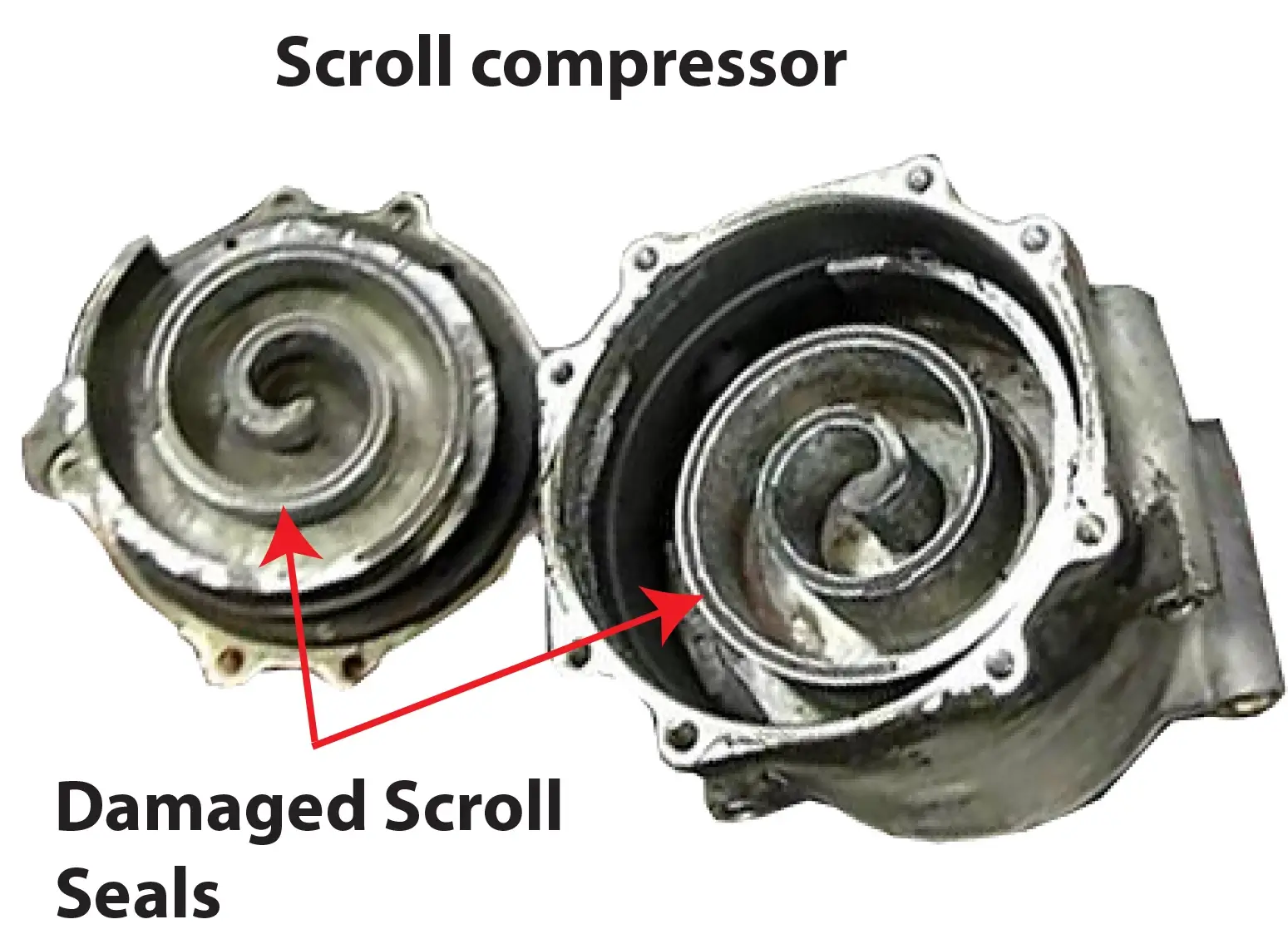
Rotary Vane Compressors (Less Common but Effective) — The third major category in auto AC compressor types is the rotary vane compressor.
This one uses a spinning rotor with sliding vanes inside a chamber. As the rotor turns, the vanes extend outward and trap refrigerant, compressing it as it moves through the housing.
These were used in some Mazda applications and a few other vehicles. They’re compact and efficient, but not nearly as common today.
From a diagnostic standpoint, they behave a lot like other compressors—but internally, they’re doing the job in a completely different way.
Why Compressor Type Matters in Real Diagnostics
Understanding auto AC compressor types isn’t just theory—it directly affects how you diagnose and repair the system.
For example:
• A fixed displacement compressor cycles on and off—so you look for clutch operation
• A variable displacement compressor runs constantly—so you look at control valves and pressure changes
• A scroll or rotary compressor may fail differently because of internal wear patterns
If you don’t know what you’re working on, you can easily misdiagnose a perfectly good compressor.
The Real Causes of Compressor Failure (What I See Most Often)
No matter which of the auto AC compressor types you’re dealing with, the failures tend to come from the same root causes.
• Improper oil charge is a big one. As noted in your source, some systems only use 4–5 ounces of oil, and overfilling can cause catastrophic pressure problems.
• Poor condenser performance is another. If airflow is restricted or the condenser is clogged, head pressure skyrockets, and the compressor takes the hit.
• Contamination. If debris gets into the system—especially the condenser—it can’t always be flushed out. That leads to repeat failures unless you replace the affected components.
©, 2026 Rick Muscoplat
Posted on by Rick Muscoplat