
Tire Sidewall Damage: Can It Be Repaired?
Can You Repair Tire Sidewall Damage?
Tire sidewall damage is common and is often caused by hitting the curb in turns. The damage can be a gouge, cut, or even a flap. The sidewall is a crucial part of the tire, providing flexibility and strength for the entire tire. When it becomes damaged, drivers always want to know if the damage can be repaired to avoid having to buy a replacement tire. If you ask for advice on an auto forum, you’ll get lots of conflicting information about whether you can leave a gouge as it is, glue a flap back in place, or plug a sidewall puncture. This article will provide a definitive answer based on advice from tire experts, along with the reasoning behind that advice. Let’s delve into the topic of whether you can repair tire sidewall damage.
The anatomy of a tire

No, it’s not safe to plug a sidewall puncture. The sidewall area flexes far more than the “crown” or tread area of the tire. A sidewall puncture immediately compromises the integrity of the tire. No reputable show would repair a puncture in the sidewall with a plug or a combination plug/patch. It simply isn’t safe
Can you plug a shoulder puncture?
No. The shoulder area handles the most stress in turns and creates the most heat. Tire plugs and patches won’t hold safely in the shoulder area.
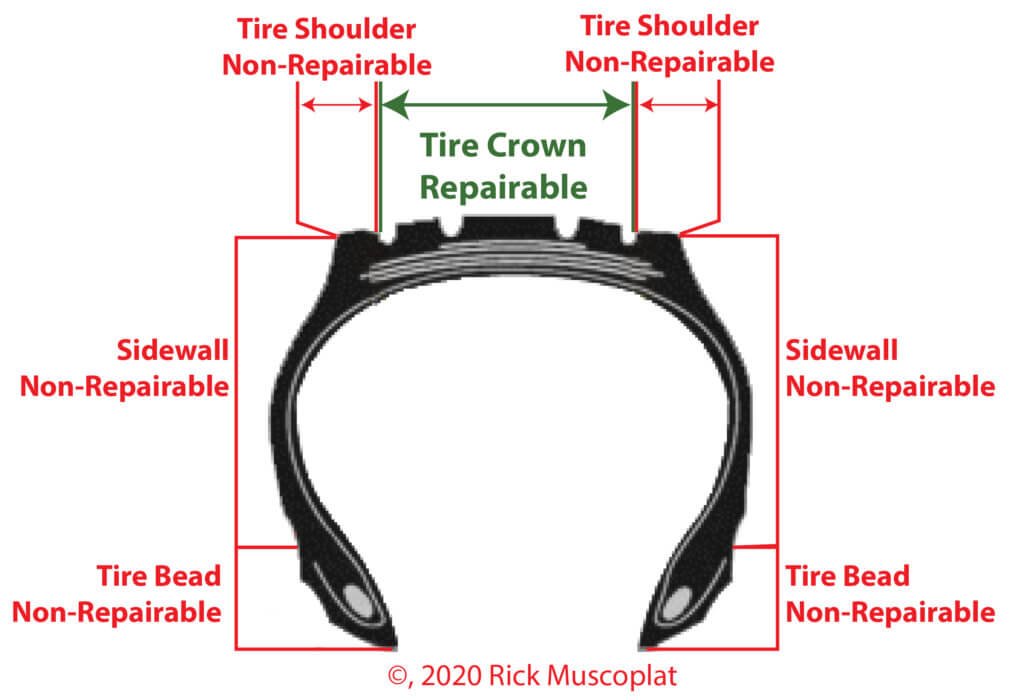
Repairable areas of a tire
This diagram shows the repairable areas of a tire. If you encounter a puncture outside of the safe areas, you cannot plug a sidewall puncture or even plug a shoulder puncture.
Why tire plugs aren’t safe
When a tire is punctured in a repairable area, the object penetrates through the surface rubber, several radial belts, and the inner liner. All three areas must be sealed in a way that prevents water infiltration and restores the integrity of the inner liner. A plug alone can never do both.
A plug can’t seal the inner liner
A rope plug, inserted from the outside cannot seal the inner liner. During a proper repair, the inner liner is cleaned and abraided using a buffing tool to prepare the surface to accept a vulcanizing patch. A double-over rope plug, covered with rubber cement and shoved into the tire from the outside, cannot seal the inner liner properly like a patch.
A plug doesn’t properly seal the belts
When you fold a rope plug in half and shove it into the tire, you’re actually forcing a “figure-8” profile into the puncture. That always leaves voids and it’s those voids that allow water to enter the belts, causing them to corrode. Once corrosion starts, the belts are compromised.
Only a combo patch/plug can do the job
A patch plug, properly installed, seals the inner liner,
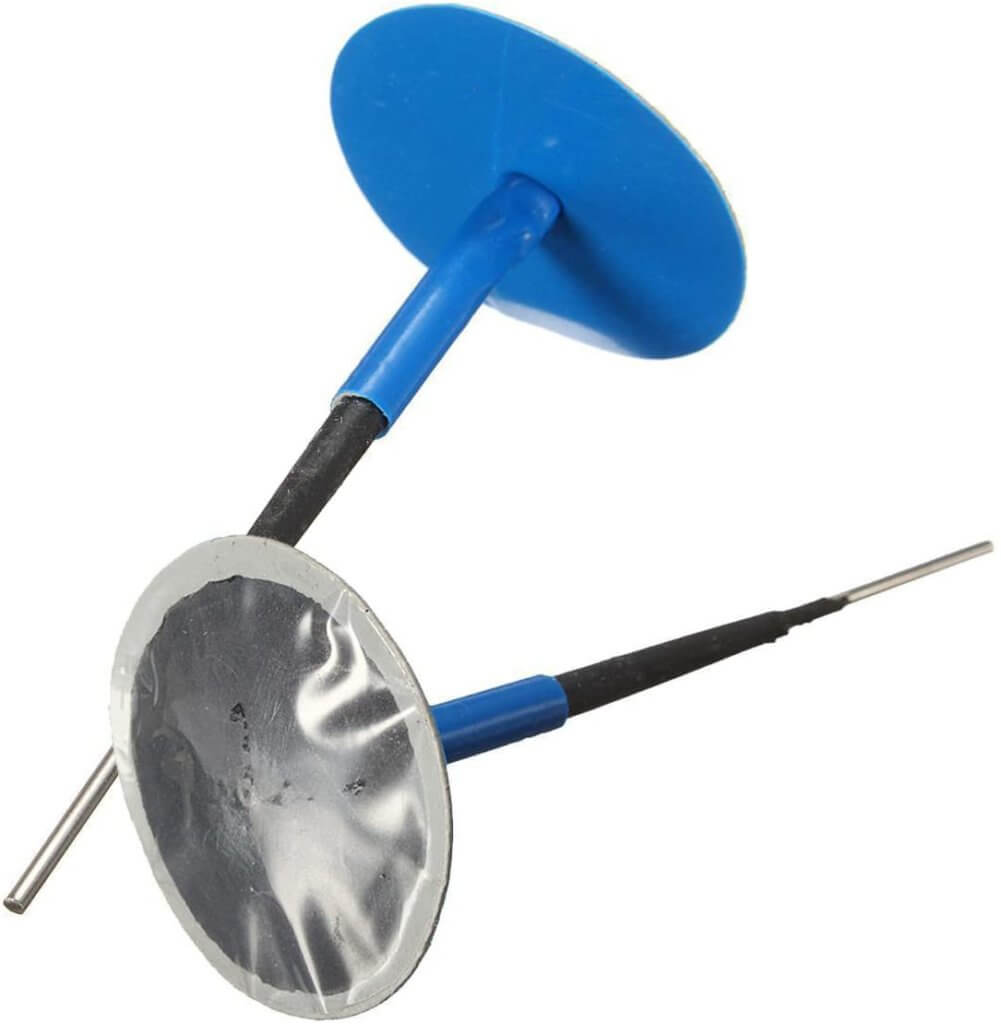
A proper patch/plug must be inserted from inside the tire, after the inner liner has been prepared
fills the belt area completely and seals out water.
©, 2020 Rick Muscoplat
Posted on by Rick Muscoplat