
What Does Negative Fuel Trim Mean? Expert Diagnosis Guide
Negative Fuel Trim: What It Means, What Causes It, and How to Fix It Fast
Quick Summary
A negative fuel trim <-10% means the engine computer is subtracting fuel because the engine is running too rich. Running rich can be caused by too much fuel or insufficient air entering the combustion process. The most common causes of negative fuel trim include:
• Leaking fuel injectors
• High fuel pressure
• Faulty sensors
• Restricted airflow,
• Evaporative system issues.
Fixing negative fuel trim requires identifying why the engine is rich and correcting the root cause—not just clearing codes.
Article
What Negative Fuel Trim Really Means
I’ve diagnosed hundreds of drivability issues, and one of the most misunderstood scan tool readings I see is negative fuel trim. Fuel trim is the engine computer’s way of adjusting the air-fuel mixture in real time. When everything is working perfectly, the computer aims for a stoichiometric ratio—about 14.7:1 air-to-fuel. But real-world conditions constantly change, so the computer makes corrections.
When you see negative fuel trim, the computer is pulling fuel away from the base calculation because the engine is running rich.
Short-term fuel trim (STFT) reacts quickly, while long-term fuel trim (LTFT) reflects trends over time. If both are negative, you’re dealing with a consistent rich condition—not just a temporary fluctuation.
What Causes Negative Fuel Trim
In my experience, negative fuel trim always comes down to one of two things: too much fuel or not enough air. The key is figuring out which side of that equation is the problem.
Excess Fuel Delivery — The most common cause I 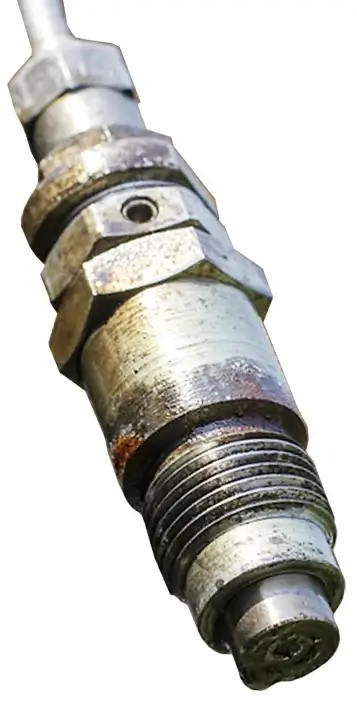 see is excessive fuel entering the engine. Leaking fuel injectors are a prime suspect. Even a slight drip can skew the mixture enough to trigger negative fuel trim.
High fuel pressure is another big one — A failed fuel pressure regulator or restricted return line can push too much fuel into the injectors, overwhelming the system.
I’ve also seen EVAP system failures cause negative fuel trim. If the purge valve sticks open, fuel vapors are continuously drawn into the intake, enriching the mixture.
Sensor Issues That Trick the Computer — Sometimes the engine isn’t actually rich—it just looks that way to the computer. A faulty mass airflow (MAF) sensor is one of the most common causes. If the MAF underreports the amount of incoming air, the computer adds fuel based on inaccurate data. The oxygen sensor then detects a rich condition, and the computer pulls fuel.
Coolant temperature sensors can also cause problems. If the ECM thinks it’s colder than it actually is, it will command a richer mixture. Then the oxygen sensors will report a rich exhaust, prompting the ECM to pull in more fuel.
Restricted Airflow — Anything that reduces airflow can also cause negative fuel trim. A clogged air filter is the simplest example. I’ve seen cases where a completely plugged filter caused significant negative trim numbers.
More serious restrictions include a dirty throttle body or a restricted intake duct. Even carbon buildup on intake valves—especially in direct-injection engines—can reduce airflow enough to cause the ECM to pull fuel.
Electrical issues — High resistance in the oxygen sensor signal circuit can cause the signal voltage to stay artificially high. Seeing the high voltage, the ECM assumes it’s dealing with a rich condition and pulls fuel.
Oil contamination — If the engine has been running rich, chances are the high fuel delivery has caused fuel dilution in the oil. As the PCV system draws fuel-laden vapors from the crankcase, the ECM senses an even richer condition, prompting it to inject more fuel.
How I Diagnose Negative Fuel Trim
1) Check both short-term and long-term fuel trims — If both are negative, that means the problem has been going on for a while.
2) Next, check fuel pressure — If it’s too high, find out why it’s so high.
3) Evaluate sensor data — Compare MAF readings to expected values based on engine size and RPM. If the numbers don’t make sense, clean or test the MAF.
4) Check injector performance — A leaking injector can often be identified by a drop in fuel pressure after shutdown or by injector balance testing with a scan tool.
5) Inspect the EVAP system — A stuck purge valve is easy to miss but can absolutely cause negative fuel trim.
How to Fix Negative Fuel Trim
If the problem is fuel-related, repair or replace leaking injectors, faulty regulators, or EVAP components.
If it’s a sensor issue, cleaning the MAF sensor often solves the problem. I always use proper MAF cleaner—never brake cleaner—because damaging that sensor creates more problems than it solves.
If airflow is restricted, I replace the air filter, clean the throttle body, and address any intake restrictions.
In more severe cases, especially with carbon buildup, an induction cleaning or walnut blasting may be necessary.
Common Mistakes I See With Negative Fuel Trim
One of the biggest mistakes I see is misdiagnosing the problem as a lean condition. That leads to replacing the wrong parts—like oxygen sensors—without fixing the real issue.
Another mistake is ignoring long-term fuel trim. If LTFT is heavily negative, the problem has been there for a while.
I also see people clear codes without fixing the cause. That might temporarily reset fuel trim, but the problem always comes back.
©, 2026 Rick Muscoplat
Posted on by Rick Muscoplat