
Battery Vent Tube: Why It’s Important For Safety
Why Some Car Batteries Require a Vent Tube
I’ve worked on thousands of vehicles over my career, and one question keeps coming up: why does a car battery need a vent tube? Most car owners have never even noticed the small elbow and hose attached to certain batteries, but that simple part plays a critical safety role.
Understanding the purpose of a battery vent tube — and knowing how to install a battery vent tube correctly — can prevent acid damage, hydrogen gas buildup, and even explosions in confined spaces.
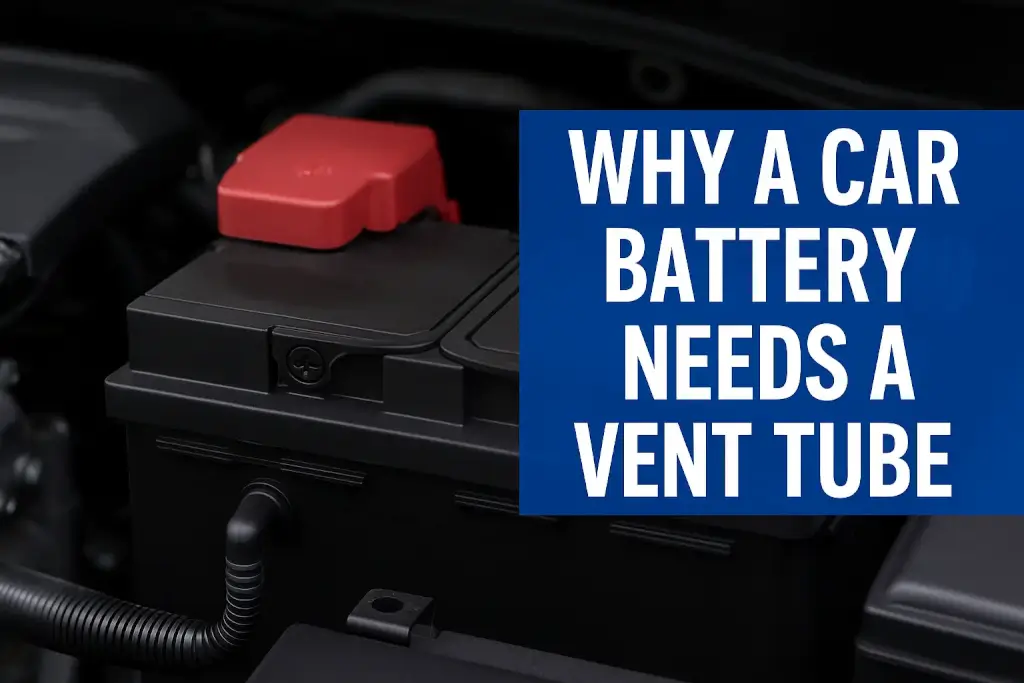
Why a Car Battery Needs a Vent Tube
Many newer vehicles place their batteries in locations like the trunk, under the rear seat, or behind fender panels. These areas don’t get the airflow that the engine compartment does.
During normal charging, all lead-acid batteries generate hydrogen gas. When mounted in enclosed areas, that gas can accumulate and ignite.
A vent tube is designed to safely channel gases produced inside the battery out of the battery housing and away from the vehicle’s interior. This feature is particularly important in certain types of sealed lead-acid batteries, like AGM batteries, which are commonly used in modern vehicles.
1. Gas Accumulation and Pressure Build-up: In sealed batteries, the gases generated during the charging and discharging process are usually recombined internally to form water, which prevents the electrolyte from drying out. However, in some circumstances, such as overcharging or excessive heat, the internal pressure can rise, causing the gases to accumulate faster than they can recombine. Without a means to safely vent these gases, the pressure could build up inside the battery, potentially causing it to swell, leak, or even burst.
The vent tube provides a controlled path for these excess gases to escape, reducing the risk of internal pressure build-up. By directing the gases out of the battery and away from critical vehicle components, the vent tube plays a vital role in maintaining battery safety and longevity.
2. Safety Concerns with Hydrogen Gas: Hydrogen gas, one of the primary gases produced during the battery’s operation, is highly flammable. In enclosed spaces, such as the engine compartment or the cabin of a vehicle, hydrogen gas can pose a significant safety risk if it accumulates and ignites.
The vent tube helps mitigate this risk by allowing the hydrogen gas to be safely expelled from the battery and directed to the outside of the vehicle, where it can dissipate harmlessly. This is particularly crucial in vehicles where the battery is located in a confined space, such as under the rear seat or in the trunk, where ventilation may be limited.
3. Preventing Acid Damage: In the event of a battery malfunction or overcharging, the vent tube also helps prevent the release of sulfuric acid vapors into the vehicle’s interior. Sulfuric acid is highly corrosive and can cause damage to metal components, electrical wiring, and upholstery. By directing any potential acid vapors away from the vehicle’s sensitive areas, the vent tube helps protect the vehicle from corrosion and other forms of damage.
What Happens If the Battery Vent Tube Is Missing
I’ve seen more than a few cases where a missing or broken battery vent tube caused corrosion on body panels, seat brackets, and trunk wiring. Here’s why:
Gas Pressure Buildup: When hydrogen has nowhere to go, pressure inside the battery increases.
Explosion Risk: Hydrogen is extremely flammable, which is why a car battery needs a vent tube in the first place.
Acid Damage: Escaping sulfuric acid mist can destroy paint and wiring insulation.
If your battery vent tube is missing, always replace it immediately.
The new battery will have vent ports on either side
Vented batteries are designed with two vent ports, one on each end of the battery. The battery is delivered with one port plugged and the other open. This design allows the installer to

Move the red plug to the unused vent port
mount the battery in the proper orientation and use either side to connect the battery vent tube simply by removing the plug and placing the plug on the opposite side.
How to install a car battery using the battery vent tube
Situate the battery in the battery tray with the posts in the proper orientation to connect to the battery cables.
Secure the battery hold-down brackets/devices. Tighten until the battery doesn’t move, but do not over-tighten. You only need enough torque to prevent battery movement. Over-torquing the hold-down devices can crack the battery case.
Determine which vent port to use for the existing vent tube. If the port is plugged, twist the plug as you pull it out. Move the plug to the open port. Then, insert the tube into the open port.
Replace the tube if it’s damaged or missing
If the tube is damaged or missing, or the elbow is broken, you can purchase a replacement vent tube kit at any auto parts store.
I strongly recommend replacing the tube if yours is missing or damaged.
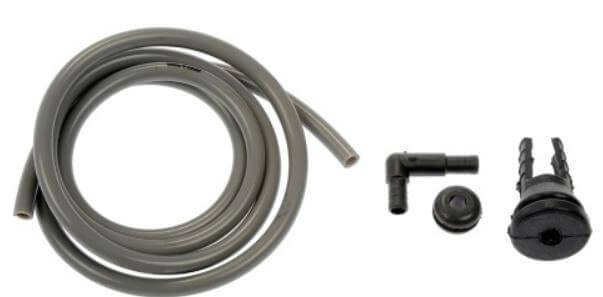
This Dorman brand vent tube kit is just $12 at Autozone
What Not to Do When Installing a Battery Vent Tube
Even experienced techs make mistakes when replacing batteries. When learning how to install a battery vent tube, keep these rules in mind:
1) Don’t leave both ports open — it releases acid vapor inside the vehicle.
2) Don’t plug both ports — pressure buildup can crack the battery.
3) Don’t reuse old brittle tubing — it may leak or fall off later.
If you follow these simple precautions, your battery vent tube will last for years and keep your cabin air safe.
Final Thoughts — A Small Part With a Big Job
I can’t overstate why a car battery needs a vent tube, whether you’re servicing an AGM or standard flooded battery, that vent tube channels dangerous gases safely outside.
Knowing how to install a battery vent tube correctly prevents costly corrosion and reduces explosion risks. It’s one of those small details that separates a quick battery swap from a professional installation
©, 2023 Rick Muscoplat
Posted on by Rick Muscoplat